Waste recycling
At O.P. Jindal Global University, waste is measured as a single university-wide figure, not building by building in isolation. Every stream that leaves the campus, or is processed on it, is weighed or recorded at a fixed point, and these figures are brought together by the Office of Sustainability into one account of what the university generates, what it recovers, and what still leaves as residual waste.
- Segregation at source
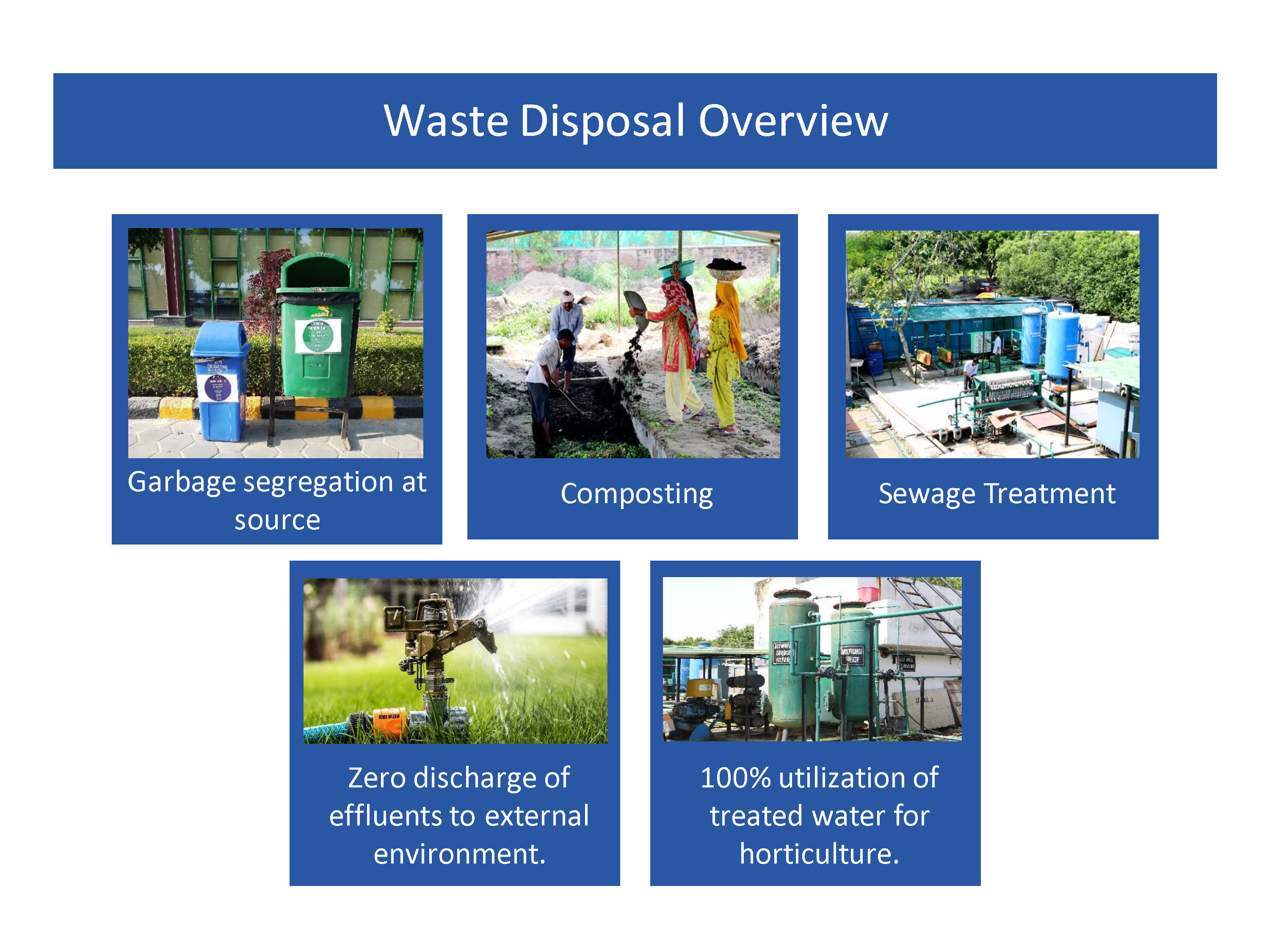
Measurement starts where waste is produced. Academic blocks, hostels, dining halls, offices and the health centre all use a colour-coded system: green bins for organic and biodegradable waste, blue bins for recyclables such as paper, metal and glass, and black bins for non-biodegradable waste. Separating waste at this stage lets each stream be weighed and counted on its own instead of being estimated from a mixed load.
-
Weighing of waste sent off campus
Dry and mixed waste is collected by our authorised partner, JBMEPL, the agency registered with the Sonipat Municipal Corporation. Each collection vehicle is weighed at a truck weighing station, and JBMEPL shares the weight records with the university. These records give us the quantity of waste leaving the campus. JBMEPL then recycles what can be recovered at its plant nearby.
-
Measuring organic waste processed on campus
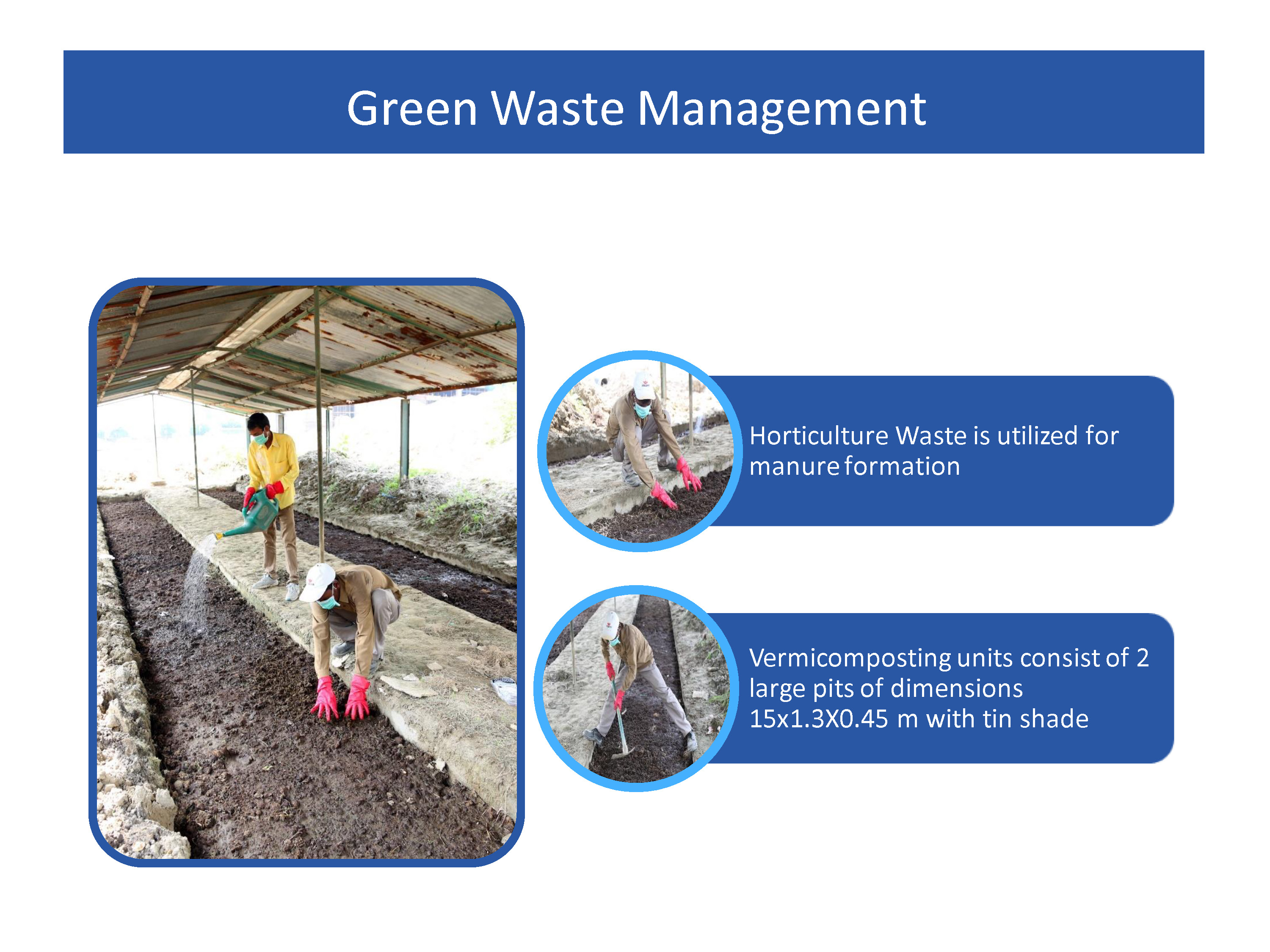
Food waste from campus kitchens and dining areas is processed in the university’s Organic Waste Converter (OWC). The quantity fed into the OWC and the compost it produces are both recorded. Horticulture waste from lawns and green areas is handled through a separate composting process , so garden waste is also kept out of landfill and counted as recovered material. \
-
Special waste streams
E-waste is collected at dedicated points and handed over to certified recyclers during periodic drives, in line with the E-Waste (Management) Rules, 2022. Biomedical waste from the health centre is segregated, stored securely and sent to a registered Common Biomedical Waste Treatment Facility. Quantities handed over for each stream are recorded by Facilities Management along with the vendor’s documentation.
Bringing the data together
We also actively keep a record of our vendor weight slips, OWC logs and handover records for e-waste and biomedical waste. The Office of Sustainability compiles these into a university-wide dataset and calculates:
- Total waste generated (all streams, in kg or tonnes)
- Waste recycled or recovered
- Recycling and recovery rate (
- Residual waste sent for final disposal
6. Audits and reporting
Waste audits are carried out twice a year to check how well segregation is working, how much is being generated, the recycling rate and how much contamination there is in the bins. The results feed into the university’s annual sustainability reporting to its governance bodies and guide the next round of improvements, whether that means more bins in a particular hostel, refresher training for housekeeping staff, or a new recycling partnership.
Waste disposal overview
Horticulture waste management process
View Policy on Waste Measurement, Disposal and Recycling