Promoting conscious water usage
At JGU, we believe that sustainable water management requires the active participation of our entire campus community. Awareness and education are key to promoting mindful water usage, and we leverage various platforms to engage students, staff, and faculty in water conservation practices. We recognise that every drop of water matters. As a global institution committed to sustainability, we promote conscious water use through a combination of efficient operations, behavioral awareness, outreach programmes, research, and teaching. Our approach integrates technology, design, and education to reduce water wastage, maximize reuse, and build a culture of conservation across and beyond campus.
Conscious Water Management through Operations
Water efficiency at JGU begins with our systems.
All water released after use in hostels, kitchens, and residential areas is channelled to seven advanced Sewage Treatment Plants (STPs) on campus. These plants employ physical, chemical, and biological treatment processes to remove contaminants and produce treated water suitable for multiple non-potable uses.
Treated STP water is reused for:
- Horticulture and irrigation
- Cooling towers
- Toilet flushing
- Construction activities such as curing, water sprinkling, and tyre washing
- Gardening, floor washing, and dust suppression
To ensure accountability and efficiency, flow metres track all water reused on campus. Hot water recirculation pumps further enhance efficiency by preventing unnecessary water drainage during winters, ensuring warm water availability without waste.
Our green spaces are designed to be both aesthetic and sustainable, with 132,966 trees and shrubs thriving through the use of only treated wastewater — no freshwater is used for irrigation.
Water-Conscious Landscaping
We prioritise native and drought-tolerant plant species that require minimal water, such as:
- Mitragyana parviflora (Kadamb)
- Bauhinia purpurea
- Erythreena indica
- Ficus infectoria
- Dalbergia sisso
- Terminalia arjuna
- Cassia siamea
Our drip and sprinkler irrigation systems ensure water is distributed efficiently, reducing evaporation losses and maintaining a healthy ecosystem.
Encouraging Behavioral Change
Sustainability at JGU is as much about mindset as it is about systems. We actively promote water-conscious habits through visual reminders, awareness drives, and campus-wide initiatives that empower every member of the community to make small but impactful changes in their daily routines.
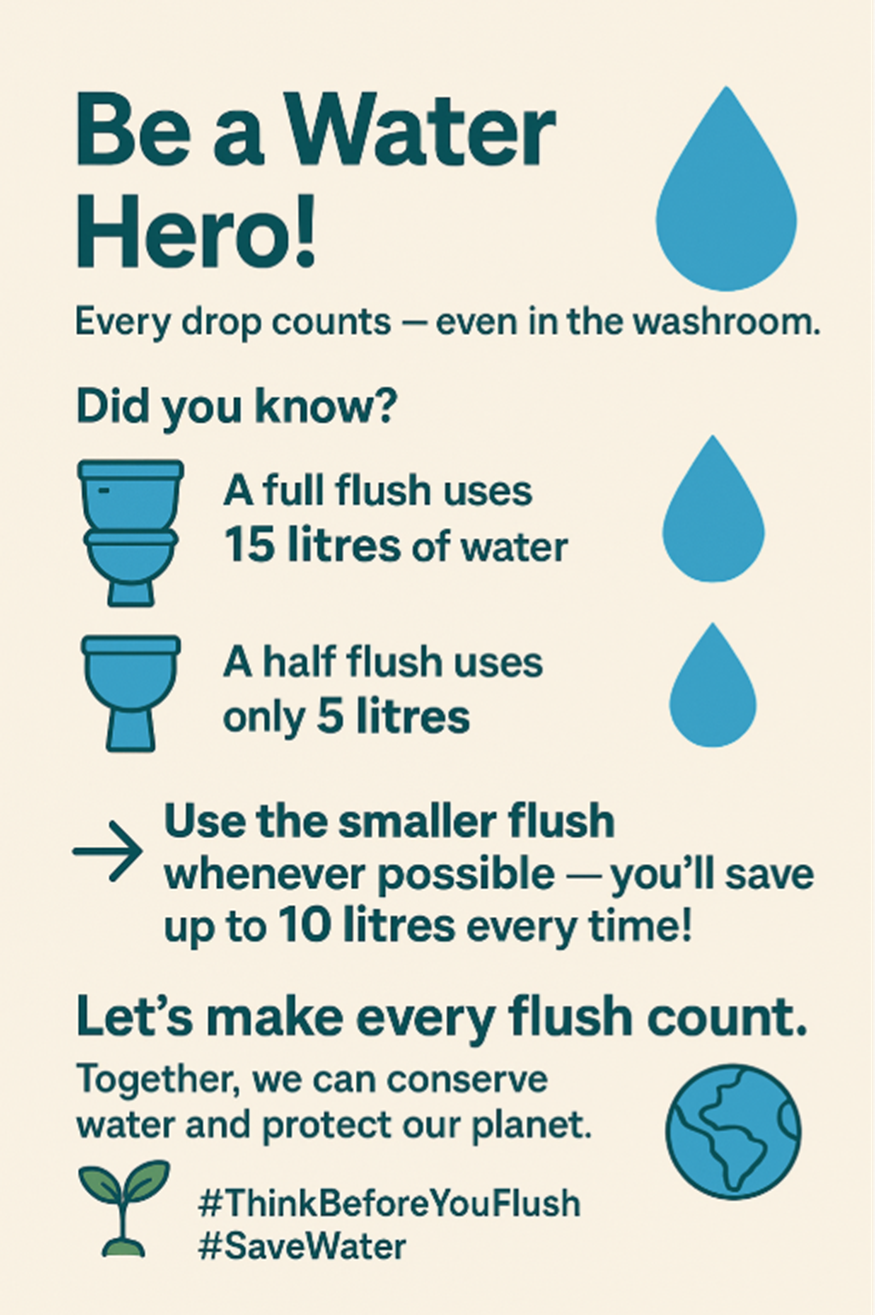
Across campus washrooms, awareness posters remind users of the water impact of every flush:
- A full flush uses 15 litres of water
- A half flush uses only 5 litres
By simply choosing the smaller flush, every user can save up to 10 litres each time. These posters are placed in all accessible washrooms, helping build lasting habits of water conservation through constant visual engagement.
Creating a Culture of Consciousness
Behavioural change at JGU goes beyond reminders — it is embedded in our campus culture. Regular sustainability workshops, student-led awareness campaigns, and orientation sessions for new residents ensure that responsible water use becomes second nature.
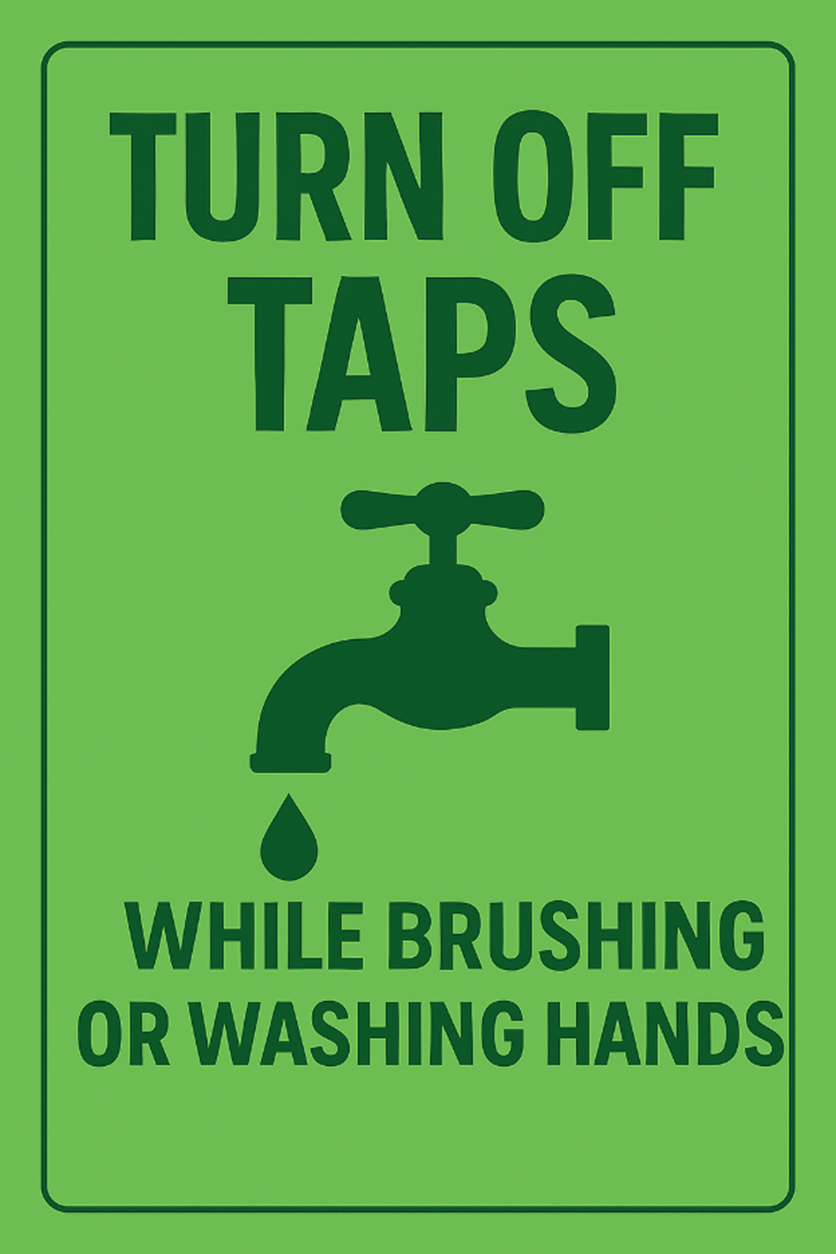
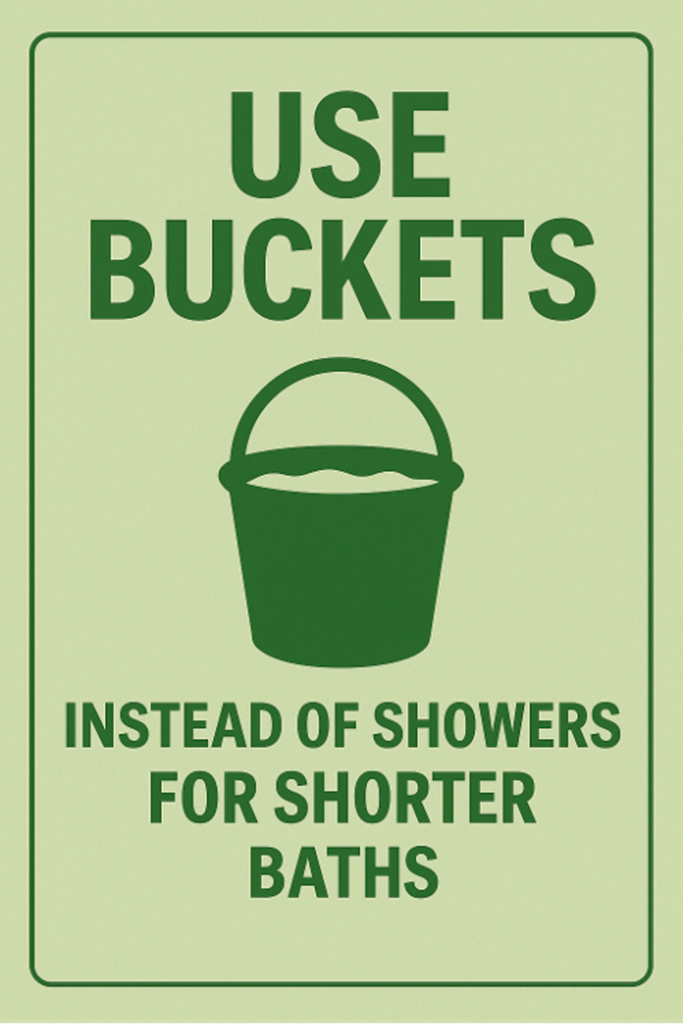
Information boards across hostels and academic buildings share water-saving tips such as:
- Turning off taps while brushing or washing hands
- Reporting leakages immediately to maintenance teams
- Using buckets instead of showers for shorter baths
Apart from the above, JGU also participates in regular Green Audits. The Green Audit Report 2023–24 highlights O.P. Jindal Global University’s commitment to sustainability through measurable progress in energy, water, waste management, and green initiatives. Water conservation measures include treated wastewater reuse and leak detection, while waste management practices focus on recycling, composting, and responsible disposal. With over 12,000 saplings planted and 59 recharge pits established, the university continues to enhance its green cover and promote a plastic-free, eco-conscious campus.
Through these consistent nudges, JGU transforms individual awareness into collective responsibility.
Student and Staff Engagement
Our Infra team also conducts routine water audits, organise inter-school competitions, and promotes creative campaigns on water conservation. These activities not only build accountability but also strengthen the idea that sustainable living begins with behavioural choices.
Washrooms across campus are designed to be accessible to all, equipped with efficient fixtures and monitored systems to minimise wastage. Regular inspections ensure that all equipment functions optimally, supporting our broader goal of operational efficiency paired with behavioural mindfulness.
Educational and Community Outreach
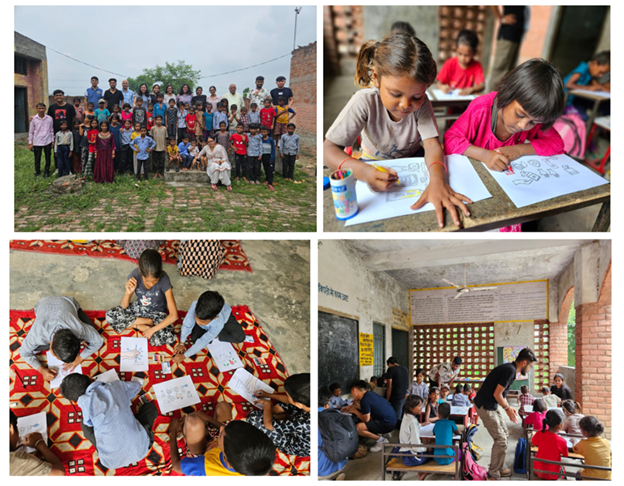
JGU’s approach to promoting conscious water usage extends far beyond campus. Through structured Water, Sanitation, and Health Outreach Programmes, students and faculty collaborate to engage rural and urban communities in sustainable hygiene and water use practices. These programmes combine interactive sessions, demonstrations, and participatory learning methods to create real-world impact.
Water, Sanitation and Health Outreach in Local Communities
- Water, Sanitation and Health Outreach Programme Field site: Three villages in the vicinity of O.P. Jindal Global University and interaction with local residents Place: Jagdishpur, Barota and Jatheri villages, Sonipat
Date: 11th August 2025
- Water, Sanitation and Health Outreach Programme Field site: Government Primary School, Jagdishpur village; Anganwadi Kendra, Jagdishpur Place: Jagdishpur Village, Sonipat Date: 1st September 2025
- Water, Sanitation and Health Outreach Programme Field site: Health and Wellness Centre and Anganwadi Kendra, Barota; Anganwadi Kendra, Barota; Community Health Centre (CHC), Badh Malik, Sonipat Place: Akbarpur Barota Village, Sonipat; BadhMalik, Rai Block, Sonipat Date: 15th September 2025
- Water, Sanitation and Health Outreach Programme Field site: Slum clusters, Haiderpur; MCD Primary School for Girls, Haiderpur; Anganwadi-cum-Creches (AWCCs) Place: Nehru Camp, Haiderpur, Delhi; Ambedkar Nagar, Haiderpur and Basti Vikas Kendra, Sanjay Camp, Haiderpur Date: 6th October 2025
- Water, Sanitation and Health Outreach Programme Field site: Govt Model Sanskriti Senior Secondary School, Beeswanmeel, Sonipat Place: Beeswanmeel, Sonipat Date: 13th October 2025
Water-Related Workshops Led by JSES
- Workshop in collaboration with Development Alternatives on “Doing Good Through Water” Site: O.P. Jindal Global University, Sonipat Date: 22nd April 2025 (Earth Day Celebration)
- First Community Engagement Workshop – Topic: Water, Hygiene and Health (पानी, सफ़ाई और सेहत) Site: Government Primary School (GPS), Jagdishpur Village, Sonipat Date: 1st September 2025
- Community Engagement Workshop on “Menstrual Health and Hygiene: SDGs Learning and Training” Site: Model Sanskriti Senior Secondary School, Badh Malik, Beeswanmeel, Rai, Sonipat Date: 13th October 2025
- Workshop on “Water Body Rejuvenation for Urban River Management, Session on Urban Water Body Diagnostic Tool”, jointly by JSES and NIUA Site: O.P. Jindal Global University, Sonipat Date: 28th October 2025
- Celebrating Wetlands: A Field-Based Workshop on Avian Behavioural Ecology Site: Dighal Wetlands, Jhajjar Date: 7th February 2026
Water-Related Field Trips Organised by JSES
- Palla Floodplains and the nearby Bakhtawar Pur agricultural fields, Delhi – 24th February 2025
- Yamuna Biodiversity Park (YBP), Delhi – 10th March 2025
- Sultanpur National Park and Bird Sanctuary, Gurugram, Haryana – 27th September 2025
- Palla Village, Delhi – 18th February 2026
- Yamuna Biodiversity Park (YBP), Delhi – 11th March 2026
- Sulabh International Toilet Museum, Delhi – 25th March 2026
These outreach efforts aim to:
- Educate children and families on the importance of hygiene and water conservation
- Demonstrate simple and practical methods for safe water use and sanitation
- Build local leadership and awareness for water-sensitive behavior in everyday life
Building Awareness through Higher Education
The message of water consciousness also flows through JGU’s academic and global engagement initiatives. For instance, the 3rd Jindal-Melbourne Distinguished Lecture, held on 7th October 2025, focused on “From Learners to Leaders: Developing Future-Ready Graduates to Shape a Better World”, delivered by Dr. Daniela Acquaro, Associate Dean (Global Engagement), Faculty of Education, The University of Melbourne.
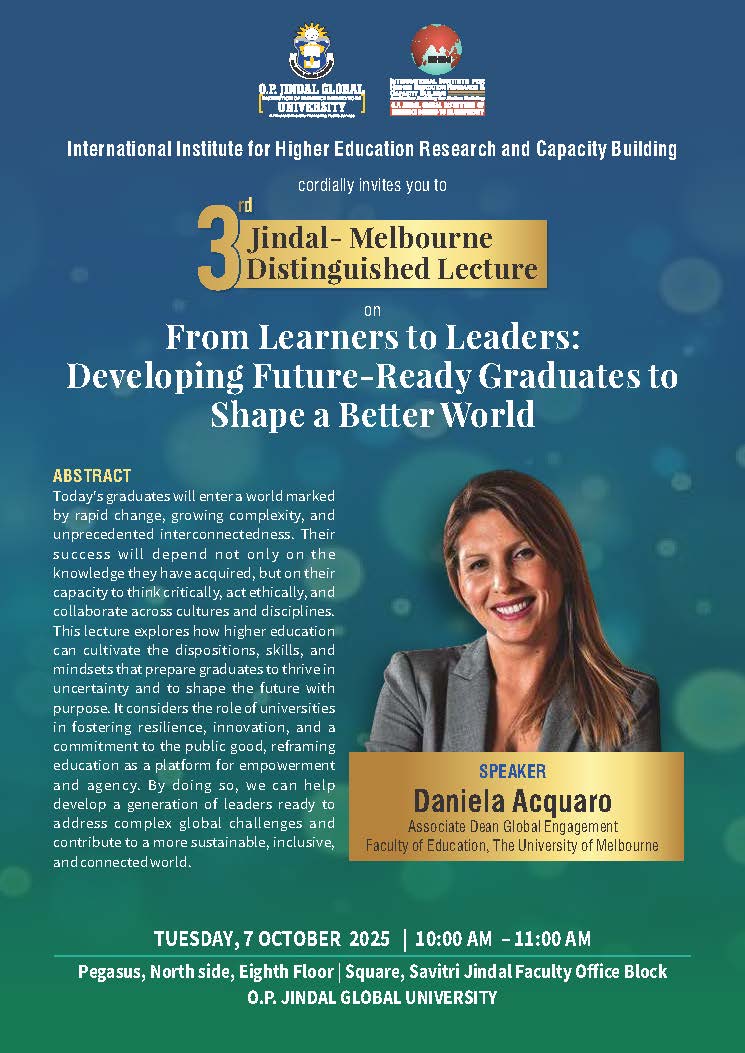
This lecture underscored how universities can cultivate dispositions, skills, and values to prepare students for sustainable leadership—connecting directly to JGU’s broader mission of developing responsible, conscious citizens who prioritise sustainable resource use, including water.
Integrating Water Consciousness in Research, Teaching & Learning
JGU’s academic community continuously engages in research, teaching, and innovation that advance sustainable water management.
Through interdisciplinary collaborations, faculty and students explore new approaches to:
- Wastewater recycling and reuse
- Water-efficient campus design
- Hydrological resilience and climate adaptation
- Policy frameworks for water governance
Courses and experiential learning opportunities ensure that water sustainability is embedded in the learning experience, inspiring the next generation of leaders to adopt and advocate for water-conscious practices in their professions and communities.
Our efforts are guided by a simple belief — responsibility begins with awareness.
From high-efficiency infrastructure and sustainable landscapes to outreach and education, JGU’s approach creates a campus ecosystem that values, conserves, and celebrates water as a shared resource.
Together, we make every drop count!