Affordable and Clean Energy
The aim of Sustainable Development Goal 7, “Affordable and Clean Energy,” is to guarantee that everyone has access to modern, sustainable and dependable energy. Agriculture, businesses, education, healthcare, communication systems and transportation networks all depend on energy, which is a fundamental component of development.
Even though there has been a lot of progress, the world is not moving fast enough to reach the 2030 targets. Nearly 2 billion people will still rely on hazardous cooking methods and polluting fuels, and about 660 million people will still lack access to electricity if present trends continue.
In our lives, energy serves two purposes. On the one hand, it promotes economic expansion and raises living standards. On the other, it is the main cause of climate change, accounting for almost 60% of greenhouse gas emissions worldwide. Because of this, switching to clean energy is both an environmental necessity and a developmental priority.
The percentage of the world’s population with access to electricity has improved, from 87% in 2015 to 91% in 2021. However, more work is needed to achieve universal access.
To achieve this objective, it is imperative that we:
-
Invest in renewable energy sources such as solar, wind and thermal power.
-
Modernise and expand energy infrastructure, particularly in developing nations.
-
Encourage the development and uptake of energy-saving technologies.
-
Encourage collaborations between institutions, governments and communities.
Promoting SDG 7 at organisations like JGU entails fostering innovation, research and public awareness of sustainable energy solutions. We help create a more just and sustainable future by supporting responsible consumption and clean energy practices.
SDG 7: Affordable and Clean Energy
Sustainable Development Goals: Progress Report | Reporting Year 2025–26
1. Introduction & Institutional Commitment
O.P. Jindal Global University (JGU), founded in 2009 and recognised as an Institution of Eminence in 2020, runs a single residential campus of about 80 acres in Sonipat, Haryana, with more than 16,000 students and over 1,100 faculty and staff. SDG 7 is central to our climate commitments, because energy is the largest source of the campus’s greenhouse gas emissions. JGU has pledged net-zero operations by 2035 as a Race to Zero signatory, and its Climate Action Policy commits it to reducing its carbon footprint and expanding solar PV, EV charging and energy-efficiency measures. We also contribute through research on solar thermal technology, renewable energy adoption, green hydrogen and energy policy, and through public lectures and seminars on India’s energy transition.
The Office of Sustainability runs annual greenhouse gas inventories under the GHG Protocol and coordinates JGU’s energy and carbon plans. The relevant policies are the Climate Action Policy, the Energy Efficient Buildings and Renovations Policy, the Sustainable Investment Policy and the Net Zero by 2035 commitment.
This report presents JGU’s progress, key initiatives and impact under SDG 7 across the following targets: 7.2 (increase the share of renewable energy), 7.3 (improve energy efficiency), 7.a (international cooperation, research and technology for clean energy) and 7.b (infrastructure and technology for modern, sustainable energy services, including community, industry and policy outreach).
2. Key Figures at a Glance
Figures refer to calendar year 2025 unless stated. The 2025 inventory covers six academic and administrative buildings. Hostel blocks SB1 to SB11, which are now run by a third-party facility manager, are included in 2024 but not in 2025, so the totals for the two years are not directly comparable.
| Indicator |
2025 |
2024 |
Target |
| On-site solar PV capacity |
2.4 MW |
|
80% of campus electricity from solar by 2030 |
| Solar electricity generated |
25,56,308.4 kWh |
11,82,486.4 kWh |
|
| Emissions avoided by solar generation |
about 2,096 tCO₂e |
|
|
| Purchased electricity |
10,760,720 kWh |
39,694,800 kWh |
Smart energy monitoring by 2026 |
| Scope 1 emissions |
6,405.61 tCO₂e |
4,505.14 tCO₂e |
Net zero by 2035 |
| Scope 2 emissions (location-based) |
7,823.04 tCO₂e |
28,858.12 tCO₂e |
Net zero by 2035 |
| Scope 1 + 2 emissions |
14,228.65 tCO₂e |
33,363.26 tCO₂e |
Annual carbon audit from 2025 |
| Diesel used in generator sets |
255,176 litres |
290,500 litres |
Replace or retrofit all diesel generators by 2027 |
| Campus lighting that is LED |
100% |
|
100% |
| EV charging points |
15 |
|
|
| Electric golf carts and electric bikes |
20 and 30 |
|
|
3. Research Progress
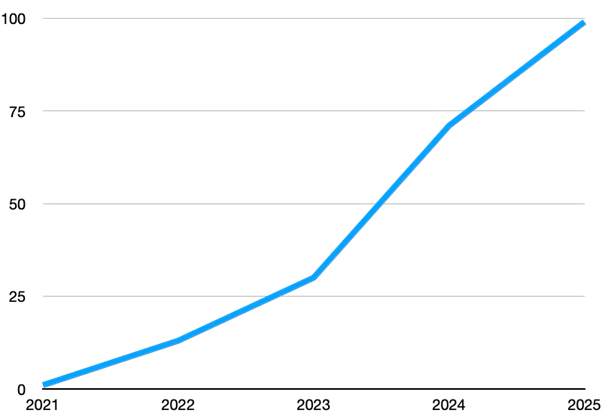
Research on clean energy at JGU has grown steadily over the past five years. Our scholarly output on SDG 7 has risen every year from 2021 to 2025, and our research dashboard marks the trend over the last year as on track. India’s national dashboard for SDG 7 shows moderate improvement, so our work is growing in a field where the country as a whole is still advancing. Research on solar thermal systems, renewable energy adoption, green hydrogen and energy policy is carried out across the Jindal School of Environment & Sustainability, the Centre for Environment, Sustainability and Human Development (CESH), the Jindal Global Business School and the Centre for Research on Digital Circular Economy for SDGs.
4. Policy & Governance
JGU’s energy and carbon policies apply to the whole campus, including buildings, utilities, vehicles and operations. The governing documents are:
-
Climate Action Policy: covers greenhouse gas reduction, alternative energy, sustainable procurement, an annual carbon footprint report under the GHG Protocol, public disclosure of Scope 1, 2 and 3 emissions, and ISO 50001 energy management.
-
Energy Efficient Buildings and Renovations Policy: requires new buildings and renovations to follow energy-efficient standards.
-
Sustainable Investment Policy: aims to decarbonise investment portfolios and to favour renewable energy and energy efficiency. It applies to university endowment funds, surpluses and reserves.
-
Annual audits: an annual green audit covers energy, water, waste and green initiatives, and plans to upgrade existing buildings include the IGBC Green Campus Rating (in process), solar expansion, LED conversion and efficient materials.
Our policy objectives are to:
-
Reach net-zero operations by 2035, by cutting on-campus fuel use by 10% a year (Scope 1), meeting 80% of electricity needs with solar by 2030 (Scope 2) and cutting academic travel emissions by 30% by 2028 (Scope 3).
-
Improve energy efficiency through LED lighting, smart energy monitoring by 2026 and energy-efficient building upgrades by 2029.
-
Replace fossil-fuel use, by replacing or retrofitting all diesel generators by 2027 and moving all university vehicles to electric or hybrid by 2028.
-
Align capital allocation with the transition by directing endowments and reserves towards low-carbon strategies.
The Office of Sustainability leads greenhouse gas accounting, carbon audits and SDG reporting. The 2025 GHG inventory was prepared with an external consultant, GreenLoop Cleantech. The Sustainable Investment Policy is audited by the Office of Sustainability and the Office of Facilities Management and reviewed annually. JGU reports progress each year through its GHG Emissions Report and Sustainable Development Report.
5. Progress Against Targets
Target 7.2: Increase substantially the share of renewable energy
JGU has 2.4 MW of on-site solar photovoltaic capacity, and it has expanded rapidly. Newly commissioned installations at Gate 1, Gate 2 and the Naveen Jindal Sports Academy have joined the existing rooftop arrays across hostels, academic buildings and the Vidya Devi Jindal Dining Block. In 2024, our solar installations generated 11,82,486.4 kWh. In 2025, they generated 25,56,308.4 kWh, an increase of more than 100% in a single year. This avoided about 2,096 tonnes of CO₂e in 2025, and it has meaningfully reduced our reliance on grid electricity and our Scope 2 emissions. Our target is to meet 80% of campus electricity needs with solar by 2030, and we are looking at extending rooftop solar to academic buildings and exploring green tariffs, renewable energy certificates and power purchase agreements.
Target 7.3: Improve energy efficiency
JGU measures its energy use through an annual GHG inventory. The 2025 inventory records 10,760,720 kWh of purchased electricity for six academic and administrative buildings, compared with 39,694,800 kWh in 2024, when the hostel blocks were still in the boundary. The change in the totals reflects the change in boundary and not operational performance.
Energy efficiency is built into our campus design. All campus lighting is LED, with an estimated energy reduction of 50% to 80%. Insulated Kingspan Quadcore panels improve the thermal envelope and lower the HVAC load by up to 20%. High-efficiency BLDC fans use 50% to 65% less power than conventional fans. Sensor lights and intelligent thermostats adjust to occupancy and temperature, saving an estimated 20% to 30%, and VRV air conditioning systems control each zone independently, with estimated savings of 15% to 40%. Variable frequency drives, timers and a hostel appliance-use policy add to these savings.
The Energy Audit examined grid electricity, solar generation, diesel generator use, air conditioning, lighting, fans, water pumps and power factor management across the entire campus. It found that grid electricity consumption fell despite a growing student and faculty population, which reflects a genuine improvement in energy efficiency. Diesel use in generator sets fell from 290,500 litres in 2024 to 255,176 litres in 2025. Looking ahead, JGU plans smart energy monitoring by 2026, building efficiency upgrades by 2029 and replacement or retrofit of all diesel generators by 2027.
Carbon management: greenhouse gas emissions from energy use
JGU measures its emissions under the GHG Protocol Corporate Accounting and Reporting Standard, and published its 2025 GHG Emissions Report for 1 January to 31 December 2025, prepared with an external firm. Scope 1 emissions were 6,405.61 tCO₂e (diesel generators, vehicle fuels and refrigerants) and Scope 2 emissions were 7,823.04 tCO₂e, a combined 14,228.65 tCO₂e on the 2025 boundary. Partial Scope 3 emissions were 41.85 tCO₂e, and we plan to extend Scope 3 coverage in 2026. The report identifies refrigerant leak management as its highest priority, and a boundary-adjusted recalculation of the base year is planned in the 2026 cycle.
| Indicator |
2025 |
2024 |
Target |
| Scope 1 |
6,405.61 tCO₂e |
4,505.14 tCO₂e |
Net zero by 2035 |
| of which refrigerants |
1,801.00 tCO₂e |
657.67 tCO₂e |
– |
| of which mobile fuels |
1,662.39 tCO₂e |
458.23 tCO₂e |
All vehicles electric or hybrid by 2028 |
| Scope 2 (location-based) |
7,823.04 tCO₂e |
28,858.12 tCO₂e |
80% solar by 2030 |
| Scope 3 (partial) |
41.85 tCO₂e |
35.83 tCO₂e |
Expand coverage in 2026 |
Target 7.a: International cooperation and research on clean energy
Clean-energy research at JGU comes from the Jindal School of Environment & Sustainability, CESH, the Jindal Global Business School and the Centre for Research on Digital Circular Economy for SDGs, which links its work to renewable energy and the water-energy-food nexus. JGU researchers have published on a solar dish Stirling system and on S-rib roughened solar thermal collectors and have written on green hydrogen. A funded study supported by the Indian Council of Social Science Research (ICSSR) examined barriers to the adoption of off-grid solar-powered agricultural pumps among farmers in Haryana and western Uttar Pradesh. Our researchers are also investigating innovative technologies such as piezoelectric tiles for energy harvesting and Direct Air Capture systems, through multinational partnerships. On 5 March 2025, the Jindal School of Government and Public Policy hosted researchers from the Council on Energy, Environment and Water (CEEW) for an open lecture on India’s energy transition.
Target 7.b: Infrastructure, technology, community and policy outreach
JGU has moved its internal transport to electric. A fleet of 20 electric golf carts serves about 9,000 students daily, and 30 electric bikes and 15 EV charging points support sustainable mobility on campus. All golf carts on campus are fossil-fuel free, which avoids about 60.7 tonnes of CO₂e a year. Our Vehicular Movement Policy, which extends to third-party vendors, creates a pollution-free, pedestrian-friendly and safe campus for a community of more than 20,000 people. A free shuttle service for employees reduces reliance on personal vehicles and lowers Scope 3 emissions, and 48% of our on-campus vehicle operators are women, which links our climate action to SDG 5.
Our work also reaches policy and the community. The Centre for International Trade and Economic Laws (CITEL) worked on a project on renewable energy schemes in the United States and local-content requirements for solar panels in Indian states, to assist the Ministry of Commerce and Industry. CESH hosts public seminars such as “India’s Decarbonization Strategy: Progress and Challenges”, and student-led events such as Earthly 3.0 in April 2024 bring sustainability to the whole campus.
6. Programmes, Research & Curriculum
-
Solar and thermal energy technology: research on solar dish Stirling systems and solar thermal collectors.
-
Renewable energy adoption and policy: studies on off-grid solar pumps for farmers, hydropower and rooftop solar adoption in India, and local-content schemes for solar panels.
-
Green hydrogen and the energy transition: policy writing and an open lecture series on India’s energy transition.
-
Digital circular economy: the Centre for Research on Digital Circular Economy for SDGs studies the water-energy-food nexus and is linked to SDGs 2, 6, 7, 9, 11, 12 and 13.
-
Environment and sustainability: the Jindal School of Environment & Sustainability and CESH, including a public seminar series on India’s decarbonisation strategy.
-
Energy and climate law: the LL.M. in Environmental Law, Energy and Climate Change, run by the Centre for Environmental Law (WWF India) with Jindal Global Law School.
-
Courses: the Energy and Sustainability elective and the Climate Finance and Markets course sit within more than 350 cross-electives on the SDGs each year.
7. Community, Partnerships & Outreach
-
Race to Zero: JGU is a signatory, supported by UNEP, EAUC and Second Nature.
-
Council on Energy, Environment and Water (CEEW): speakers at our open lecture on India’s energy transition.
-
Ministry of Commerce and Industry: a CITEL project on renewable energy schemes and local-content requirements.
-
ICSSR: funder of research on off-grid solar pumps and of faculty and SDG-focused workshops.
-
GreenLoop Cleantech: the external firm that prepared our 2025 GHG inventory.
-
Haryana State Action Plan on Climate Change: JGU’s carbon-neutrality target is aligned with it.
-
External auditors: three audits (Energy, Environment and Green), carried out to meet NAAC requirements, each received a satisfactory assessment.
8. Events & Activities Timeline
| Period |
Event |
| April 2024 |
Earthly 3.0, a student-led sustainability festival organised by The Final Stand and the JSES student council |
| 5 March 2025 |
Open lecture on India’s energy transition, hosted by the Jindal School of Government and Public Policy, with CEEW’s Karthik Ganesan, Tarun Mehta and Shruti Gauba |
| 2025 |
Public seminar “India’s Decarbonization Strategy: Progress and Challenges”, hosted by CESH |
| 2025 |
Newly commissioned solar installations at Gate 1, Gate 2 and the Naveen Jindal Sports Academy |
| May–June 2025 |
Launch of the Sustainable Development Report at the Mumbai Sustainability Conclave, and presentation at the India-Japan Higher Education Forum in Tokyo |
| March-April 2025 |
Annual GHG inventory under the GHG Protocol, prepared with an external consultant. This is a recurring calculation of emissions done every year. |
9. Awards & Recognition
-
Race to Zero: signatory (UNEP, EAUC, Second Nature).
-
QS Stars Rating: 5 Star for Environmental Impact (institution-wide).
-
External audits: all three audits received a satisfactory assessment, with the audit team certifying that JGU’s energy-saving and sustainability initiatives are well implemented and noteworthy.
10. Future Commitments & Roadmap
-
Net-zero greenhouse gas emissions across JGU operations by 2035, with a full progress review in 2028.
-
Scope 1: reduce on-campus fuel use by 10% each year, replace or retrofit all diesel generators by 2027 and move all university vehicles to electric or hybrid by 2028.
-
Scope 2: meet 80% of campus electricity needs with solar by 2030, adopt smart energy monitoring by 2026 and upgrade buildings with energy-efficient systems by 2029.
-
Scope 3: cut academic travel emissions by 30% by 2028, ensure 75% of suppliers follow sustainable practices by 2030, eliminate single-use plastics by 2026 and divert 90% of waste from landfill.
-
Planned initiatives: the IGBC Green Campus Rating (in process), additional solar PV, a refrigerant leak survey and lower-GWP refrigerants, an EV bus fleet and a boundary-adjusted recalculation of the base year in the 2026 inventory.
-
Monitoring: annual carbon audits from 2025 under the GHG Protocol, annual energy and green audits, smart metering and a building management system, and an annual review of the Sustainable Investment Policy.