L&D launches SEED Learning Management System
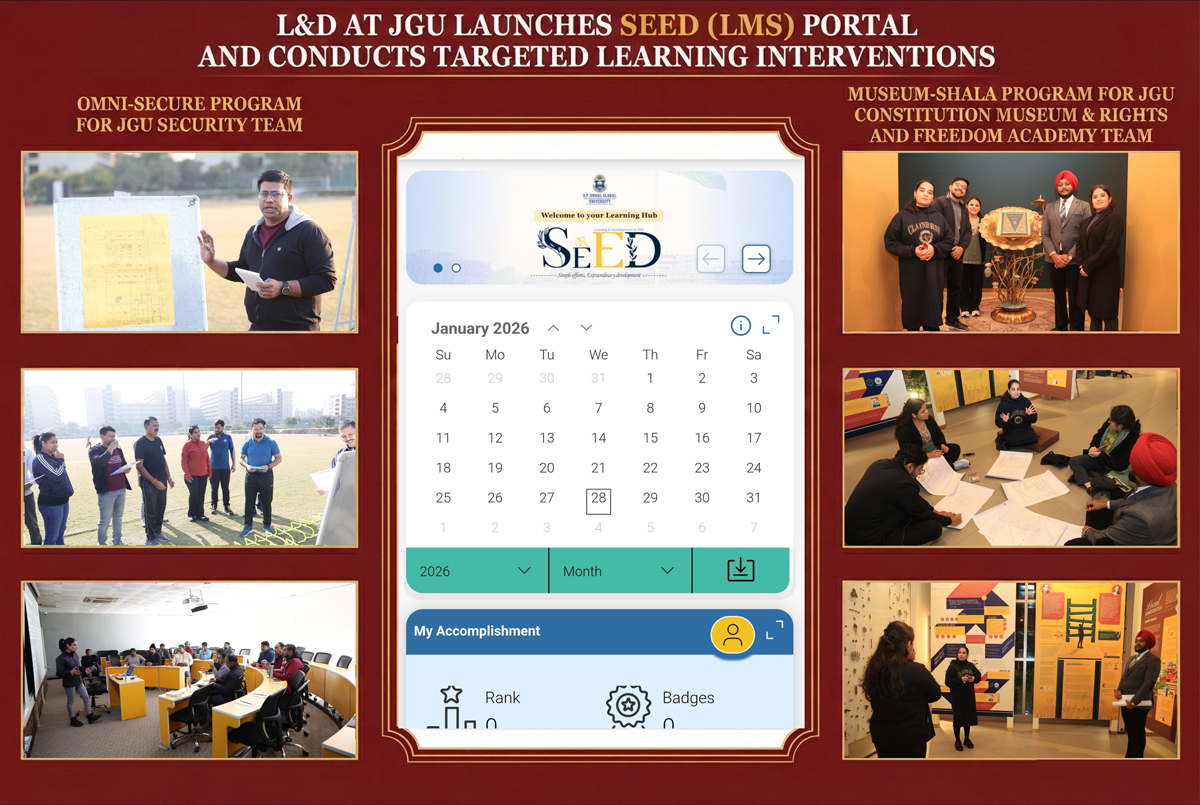
Learning and Development (L&D) of JGU marked a milestone with the launch of the SEED (Simple Efforts, Extraordinary Development) digital platform as a bespoke learning management system (LMS). It serves as a centralised digital gateway designed to empower JGU employees through a curated ecosystem of learning programmes, assessments, and developmental tracking.
SEED is more than a digital portal; it is a strategic investment in the university's human capital. Conceived to be highly interactive and user-friendly, the platform allows staff to navigate their professional journey with ease, making learning a thorough and enjoyable experience. Key features include a dynamic dashboard for tracking accomplishments, a digital library for on-demand resources, and a seamless nomination process for upcoming training sessions. By integrating these elements, SEED ensures that every member of the JGU community has the tools necessary to thrive in an evolving academic and administrative landscape.
The portal offers a sophisticated suite of tools to drive engagement; through a gamified interface, employees can earn badges, points, and certificates, while the comprehensive 'Catalogue' provides access to diverse learning paths and assessment modules. This structured approach allows for a transparent and rewarding overview of an individual's long-term professional journey at JGU.
Since the launch, the SEED recorded high rates of login, with employees exploring the platform and nominating themselves for diverse certifications. To ensure a smooth transition, the L&D team conducted comprehensive ‘LMS Walkthrough’ sessions, providing hands-on guidance to the JGU community. As the community adopts the culture of lifelong learning, the SEED portal would become a daily companion for all employees, a space where simple efforts lead to self-driven development and institutional excellence.
Winter Training Highlights: Museum-Shala and Omni-Secure
In tandem with this digital transformation, the L&D team capitalised on the winter break to deliver intensive, department-specific interventions, alongside its catalogue of open-for-all training programmes. Two curated departmental programmes were delivered in this period — 'Museum-Shala' and 'Omni-Secure'.
For the Constitution Museum Team, the 'Museum-Shala' programme was curated to elevate the visitor experience. The training delved into the nuances of Tour Facilitation, with a primary focus on storytelling and narrative building. Participants explored how to tailor their delivery to the spatial expanse of the museum, ensuring historical insights are shared with clarity and impact. The intervention also reinforced essential protocols regarding decorum, inclusive communication, and emergency preparedness, ensuring that the museum remains a safe, welcoming, and world-class heritage site.
The 'Omni-Secure' programme was delivered to the JGU Security Team, focusing on the attributes of the ideal security professional. This comprehensive intervention balanced technical functional skills with essential behavioural competencies. Workshops covered critical areas such as patrolling efficiency, access control, and perimeter security, alongside soft skills including de-escalation, cultural sensitivity, and team-building. By focusing on quick decision-making and precise documentation, 'Omni-Secure' has sharpened the professional skills of the security personnel of the university, ensuring a safe and harmonious environment for all.