JILDEE conducts training programmes
Jindal Institute of Leadership and Executive Education (JILDEE) continued its professional training programmes in December and January.
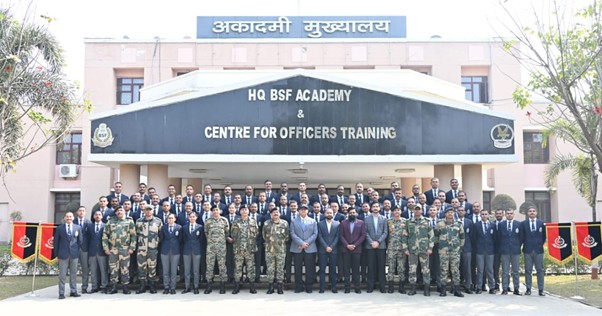
In January, JILDEE, in collaboration with the Jindal Institute of Behavioural Sciences (JIBS), organised a two-day 'Leadership and Management (Personality Development)' training programme for Assistant Commandants of the Border Security Force (BSF). Held on 8 and 9 January at the BSF Academy, Tekanpur, Gwalior, the programme was designed to strengthen leadership effectiveness, interpersonal skills, and operational readiness among early- and mid-career officers. The programme covered key leadership themes including key leadership skills, leading with ethics and responsibility, managing human and material resources, stress management and resilience building, emotional intelligence, effective communication and feedback, team cohesion, motivation and morale building, and navigating conflicts and resistance.
JILDEE organised a two-day 'Leadership and Management (Personality Development)' programme for Deputy Commandants of the BSF on 22 and 23 December at the BSF Academy, Tekanpur, Gwalior. The programme focused on strengthening leadership effectiveness, interpersonal competence, and operational readiness among mid-level officers. The programme had sessions on managing human and material resources, training and development of subordinates, emotional intelligence in command, handling resistance and aggressive team behaviour, motivation and morale, team building, integrity in leadership, and effective time management.
From 4 to 8 December, JILDEE, in collaboration with JIBS, organised a five-day residential training programme 'Global Frameworks & Local Classrooms: An Orientation to the Cambridge Curriculum for Educators of Bhutan' at JGU campus. Academic sessions introduced participants to the Cambridge framework and philosophy, pedagogical leadership, effective communication, emotional intelligence in classrooms, lesson planning, assessment practices, inclusive teaching approaches, and the role of technology and artificial intelligence in education. In addition to classroom sessions, the programme included school visits, a campus tour, and curated cultural exposure across the National Capital Region.