JGU hosts Second National Convention on Women in India and inaugural Jindal Interdisciplinary Arts and Literature Festival
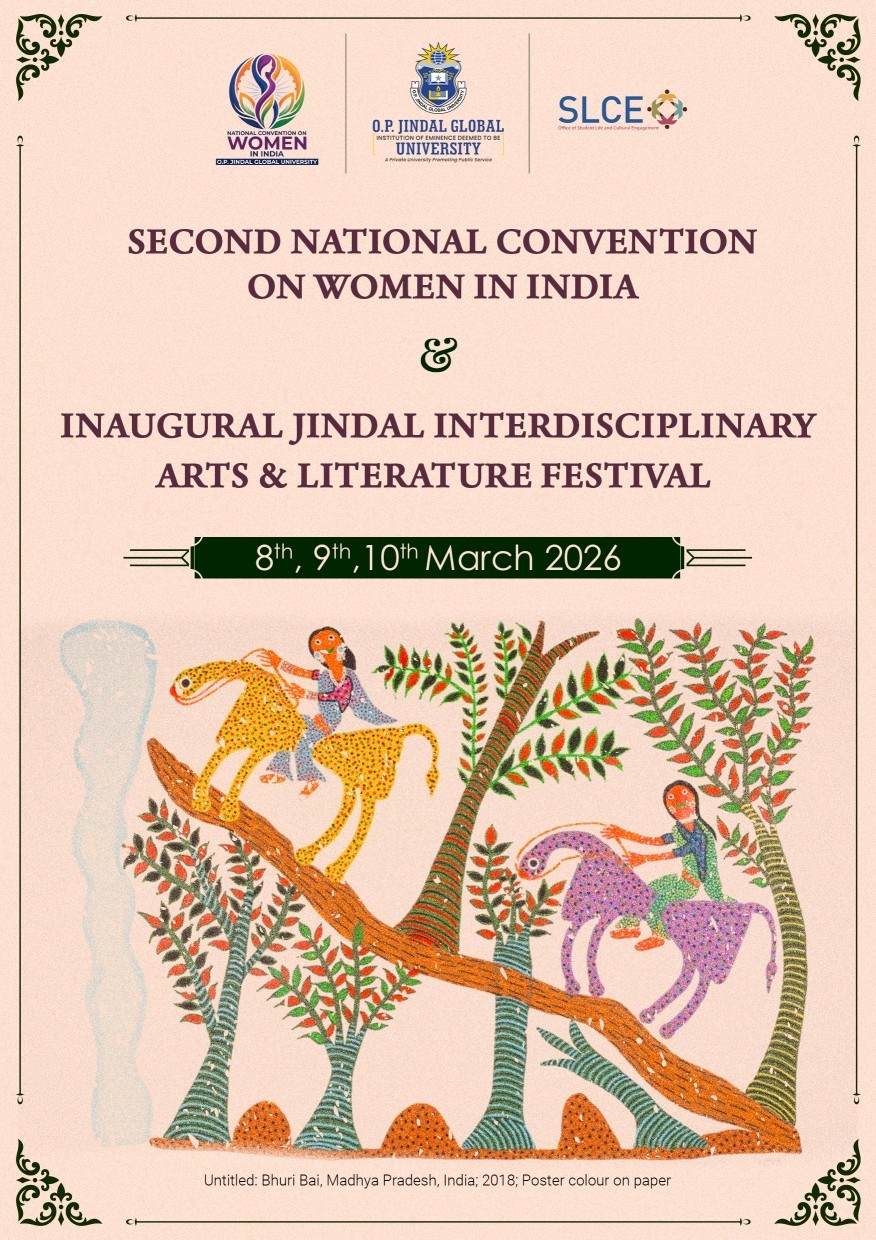
JGU hosted the Second National Convention on Women from March 8 to 10 on its campus. The Convention, anchored in the International Women’s Day 2026 theme ‘Give to Gain’, brought together academics, scholars, practitioners, advocates, policymakers, institution-builders, diplomats, civil servants in multiple panel discussions across three days. The panels covered themes such as feminist legacies, translation and representation, gender and public health, economic and social inclusion, media and publishing, digital futures, leadership, and policy. It was complemented by the inaugural Jindal Interdisciplinary Art and Literature Festival 2026.
The Convention opened on March 8 with an inaugural plenary titled ‘Voices of Influence: Women at the Intersection of Culture, Policy and Society’ in which Ms. Bhumi Satish Pednekkar, actor, entrepreneur, UN advocate, and climate warrior delivered the inaugural address, and Her Excellency Ms. Mahishini Colonne, High Commissioner of Sri Lanka to India, gave the keynote address. See the inaugural plenary: https://www.youtube.com/watch?v=quX4-pteZNg&t=2750s
The Jindal Interdisciplinary Art and Literature Festival deepened the engagement envisaged by Convention and brought feminist perspectives into dialogue with literature, art, cinema, performance, and other cultural expressions. It recognised that the pursuit of gender justice extends beyond policy and institutional frameworks and is shaped by cultural expression and lived experience.
Professor (Dr.) C. Raj Kumar, Founding Vice Chancellor of JGU, said, “Women are the cornerstone of the academic and institutional ethos of JGU. The empowerment of women, choices, opportunities and participation in academic and administrative duties stand at the heart of our culture. With more than 55% women comprising the workforce at JGU, we are proud to be a women-centric organisation and we will continue to strengthen their presence and participation across all our activities. This commitment finds further expression in the inaugural Jindal Interdisciplinary Arts and Literature Festival, bringing feminist visions into dialogue with literature and arts, affirming that inclusive cultural spaces are central to how equality is imagined, articulated, and advanced.”
Prof. (Dr.) Upasana Mahanta, Dean, Admissions and Outreach and member of the organising committee of the Women’s Convention, said, “The Convention gathers us in shared purpose; it catalyses ideas and inspires resolve. Its true significance, however, and the real measure of our commitment, lie in the steps we take each day — through sustained institutional commitments, thoughtful pedagogical practices, mentorship, everyday solidarities, and the spaces we consciously cultivate to shape our lived realities.”
Read more: