JGU holds pre-summit event on impact of AI
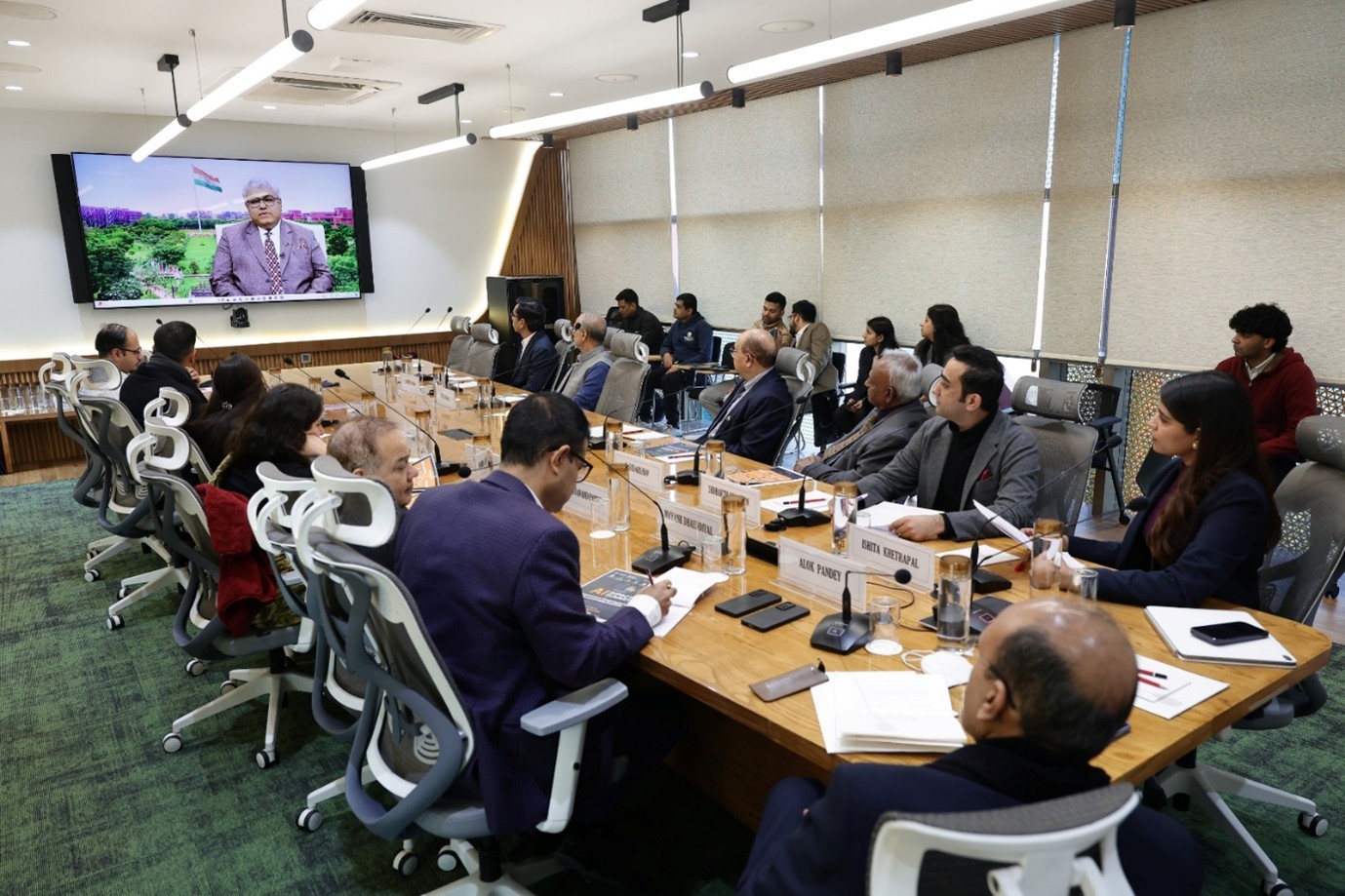
JGU organised in December a pre-summit event on ‘Impact of AI on Human Capital in India and Emerging Economies’ in collaboration with the All India Council for Technical Education (AICTE).
The event brought together key academics, thought leaders, market experts, legal luminaries and experts to deliberate on artificial intelligence and its implications for human capital development. The proposed summit will be held from February 16 to 20, 2026. It will focus on formulating strategies that would help India develop human capital for better governance and higher economic growth to achieve the goal of Viksit Bharat by 2047.
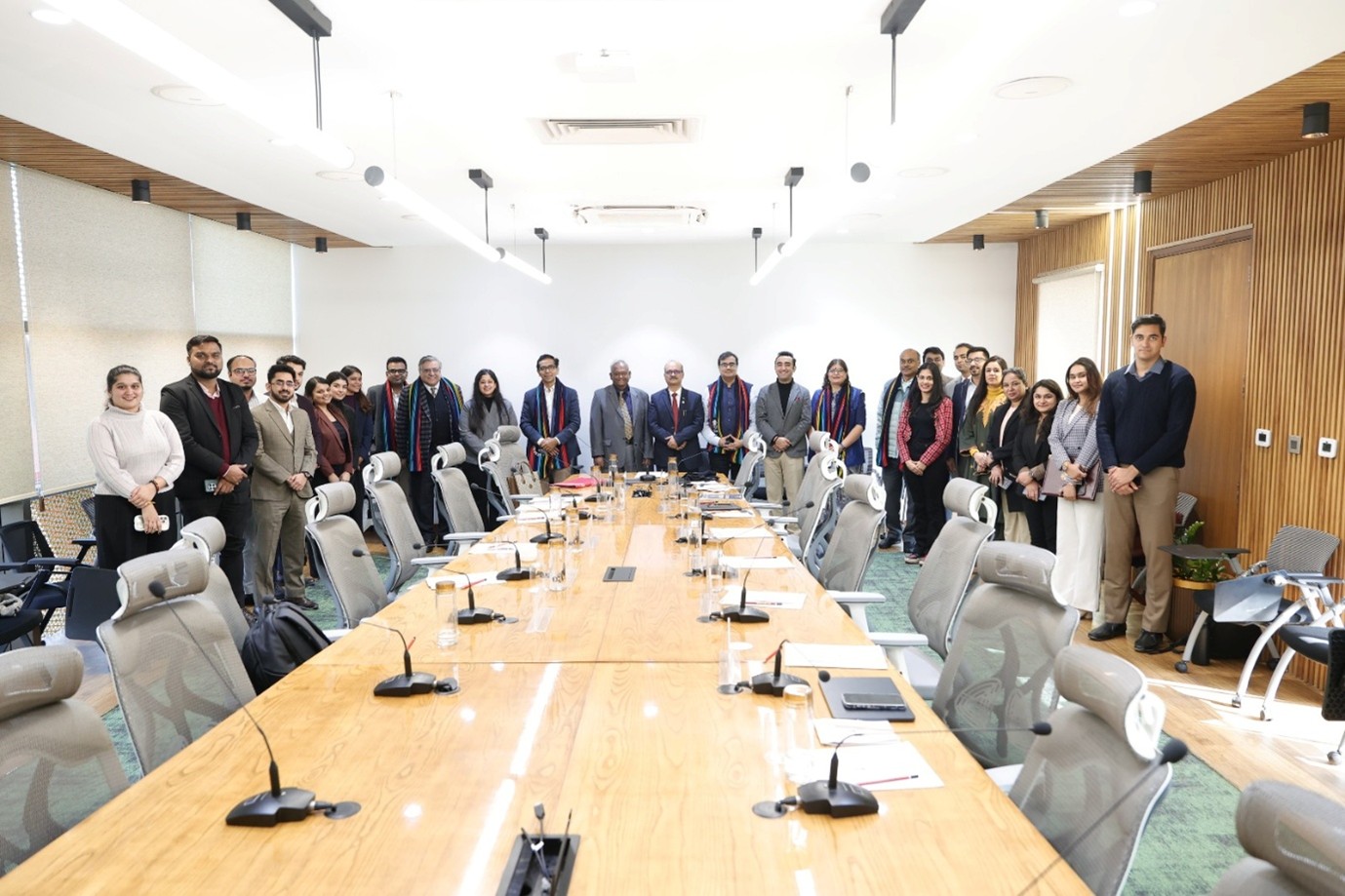
The pre-summit discourse was spread over an inaugural session, followed by two panel discussions to primarily delve into understanding what policy frameworks are needed to ensure AI diffusion benefits both formal and informal sectors, particularly rural and low-income communities and how national skilling missions and education systems can be aligned with the evolving demands of an AI-driven economy. They also deliberated about how AI can be leveraged to enhance productivity without exacerbating inequality or displacing vulnerable workers; what models exist (e.g., cooperatives, agri-tech partnerships, public data commons) to democratise access to AI tools; who bears responsibility for retraining and redeployment: the employers, the state, or educational institutions; and how can India's AI policies incorporate global best practices while reflecting local socio-economic realities.
Professor (Dr.) C. Raj Kumar, Founding Vice-Chancellor of JGU, welcomed the convening of the pre-summit event and observed that for a country like India, with its distinctive demographic profile and developmental aspirations, the central challenge lies not merely in adopting new technologies, but in ensuring that artificial intelligence is responsibly integrated to strengthen human capital, enhance productivity, and promote inclusive and ethical growth. He underlined that the discussions appropriately focused on channelling AI's transformative potential through regulatory foresight, responsible deployment, and sustained investments in reskilling and institutional capacity, particularly in the context of India's vision of Viksit Bharat by 2047.
He remarked that universities have a critical role to play in shaping the future of AI governance and capacity-building. JGU, particularly through the Cyril Shroff Centre for AI, Law and Regulation at Jindal Global Law School, is committed to advancing interdisciplinary research, education, and dialogue that bridge law, technology, public policy, and the social sciences.
Professor Dabiru Sridhar Patnaik, Registrar, JGU, said in his welcome address, "The deployment of AI comes with a transformative potential for all sectors of the economy, both in terms of productivity and output. However, it also implies challenges of skill development and redundancy. In the tertiary sector, the impacts of AI deployment are already visible with job cuts and lay-offs across the IT and ITES, education, accounting, audit, legal and allied services industries. Similarly, work structures and skill requirements have also significantly reshaped across multiple sectors. Deployment of AI presents opportunities as well as adaptive challenges. It indeed has the potential to aid India in achieving its goal of Viksit Bharat by 2047. However, India needs to ensure it provides equitable distribution of this technology and can take measures to mitigate severe workforce displacement. This pre-event summit seeks to discuss the impact that AI is likely to have on human capital in all sectors of the Indian economy."
The pre-summit discussions began with an inaugural session, which also included leading academics of JGU. The first panel discussion was on ‘AI and Human Capital in the Primary, Manufacturing, Accounting, BFSI Services Sector & Capital Markets’, which explored how AI-based systems in agriculture, manufacturing, accounting, audit and BFSI sectors can enhance productivity, efficiency, and sustainability while addressing implications for labour and livelihoods. The discussants included Dr. Charan Singh (CEO Egrow Foundation & Former Chairman Punjab & Sind Bank), Dr. Amarjit Chopra (Director, Tata Power Trading, Member BoG, MDI Gurugram), Former President, Institute of Chartered Accountants of India, Member NFRA & Ex Chairman, NACAS); Mr. Sushil Agarwal (Chairman & Managing Director Avro India Ltd.); Dr. Dinesh Tyagi, IAS (Retd.) (Chairman SODES); Mr. Sumit Mathur (Director Gen AI-NatWest Group); Prof. (Dr.) Nandita Bhan, Professor & Vice Dean (Academics- JSPH); Dr. Chavi Asrani, (Associate Professor-JSBF); Prof. Mayank Dhaundiyal (Professor & Dean, JGBS); Prof. Dayanand Pandey (Professor & Dean, JSBF); and Prof. R. Sudarshan (Professor & Dean, JSGP).
The second panel was on ‘AI and Human Capital in Healthcare, Education, Legal Education, IT & IT-enabled Services’. It examined how AI-driven automation and analytics are reshaping employment, skills, and the structure of the services sector, particularly areas such as education (STEM & Liberal Arts), legal education & services, IT-Enabled Services (ITES), e-governance, public services and healthcare services. The panel discussed the impact of AI on the manufacturing sector, wherein AI-enabled robotics, intelligent automation and data-driven production systems are changing workforce requirements. The panel explored technological shifts across services and manufacturing sectors and how they are redefining job roles, skill needs, and organisational practices, and what this means for the future of human capital in an AI-integrated economy.
The participants were Dr. Abhilasha Gaur (CEO-NASSCOM IT-ITeS SSC); Mr. NSN Murty (Partner & Leader, Government and Public Services, Technology and Transformation, Deloitte India); Mr. Sanjay Kumar Rakesh, IAS (Former Addl. Chief Secretary, Govt. of Tripura, Ex. Jt. Secretary, MeitY, Govt of India); Prof. (Dr.) Nitesh Bansal (Professor & Vice Dean, JSPH); Mr. Sandeep Arora (Vice President- Capgemini); Mr. Akashdeeep (IPoS-Post-Master General- India Post Gurugram Region); and Mr. Satwik Mishra (Public Policy Manager - AI and State Management - Google).
Read more: