HomeJindal School of Government & Public Policy
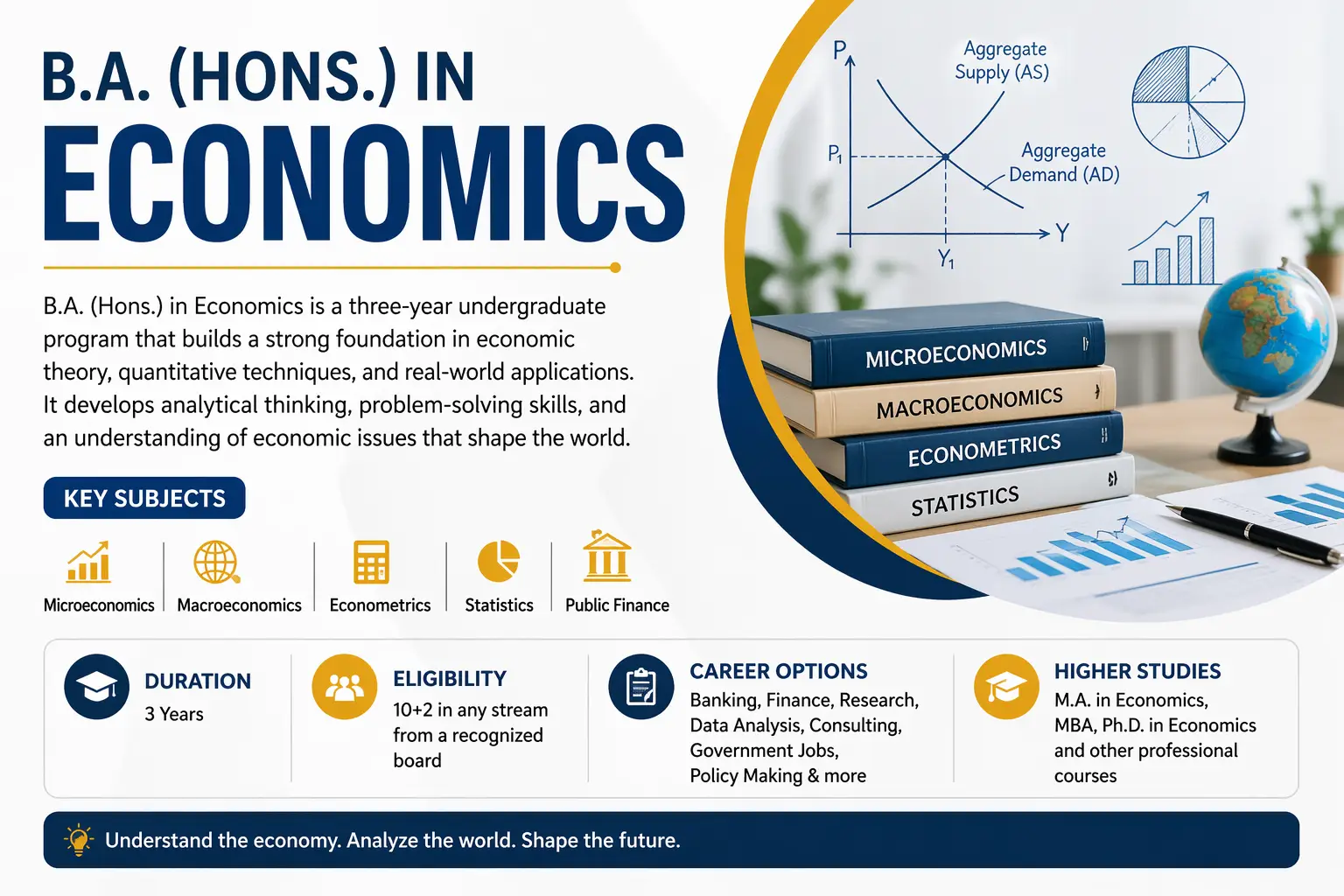
B.A Honours in Economics

Economics is a field that comes under the social sciences, focuses on, analyses, and examines wealth in all its stages of production, distribution, and consumption. The B.A Honours in Economics is a field of study that is considered the fundamental course for learning about the subject and its real-world application in different matters. Today, the importance of economists is equally high in almost all aspects, from political to corporate institutions. What Does Studying Economics Actually Mean? The basics of economics can be learned during school years, especially when schools have a diverse curriculum. After the completion of the 12th board exams, eligible students can apply for honours in economics.  The official study of Economics looks at how people, enterprises, and governments manage their resources and fulfil public and private requirements. The study provides insight into forming an understanding of economics, sheds light on different economic systems, and discusses factors like economic indicators and so on. What are the Different Economic Systems? The concept of economic systems comes from the need for societies and governments to manage and mitigate resources and services across a regional grid. It helps regulate several production factors like capital, land, labor, and material resources. Usually, economic systems are categorized into mainly four separate types, and each type is based on a few unique conditions and assumptions.  Traditional Economic System: As the name suggests, it is one of the oldest forms of economic systems and only concerns itself with the basics like goods, services, governance, while relying …

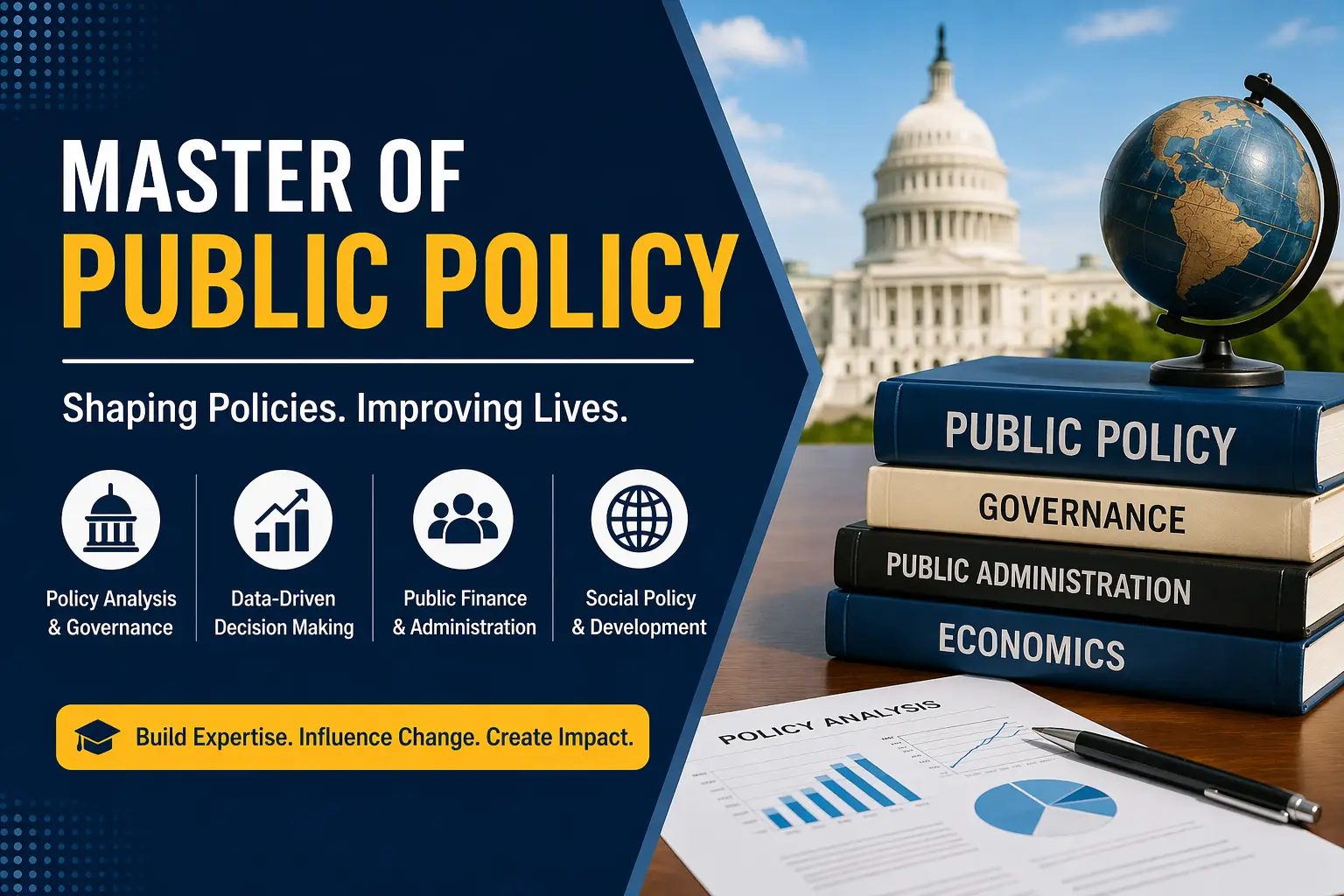
Master of Public Policy

As citizens, governed by a nation, we are all bound under the same public policies, whether we are aware of it or not. These policies are the thing that shapes how the public engages in social matters, and they are subject to changes wherever there is an issue worth paying attention to. To be able to become a policy maker, or influence the policy decisions in an effective way, one must at least complete the Master of Public Policy to become eligible to offer their two cents into the discussion.  What Is Public Policy? What Are Its Special Attributes? On the surface, Public Policy refers to the means and measures adopted by the government or public officials to tackle an issue, prevent additional mishaps, and make improved policies that uphold the balance of society. Public policies are mostly reactive in nature, meaning there needs to be a problem first in order for the government to react and create effective solutions. Here are the key attributes of Public Policy that you must know as a student in the field.  If there is a public issue that needs to be addressed, public policy is the response to it.  A policy is created on a particular issue as soon as the government makes a conscious choice to act or choose not to implement anything.  Public policies are made with the intention of being made in the public interest.  It may take the form of law, regulations, or both for governing a particular problem.  …

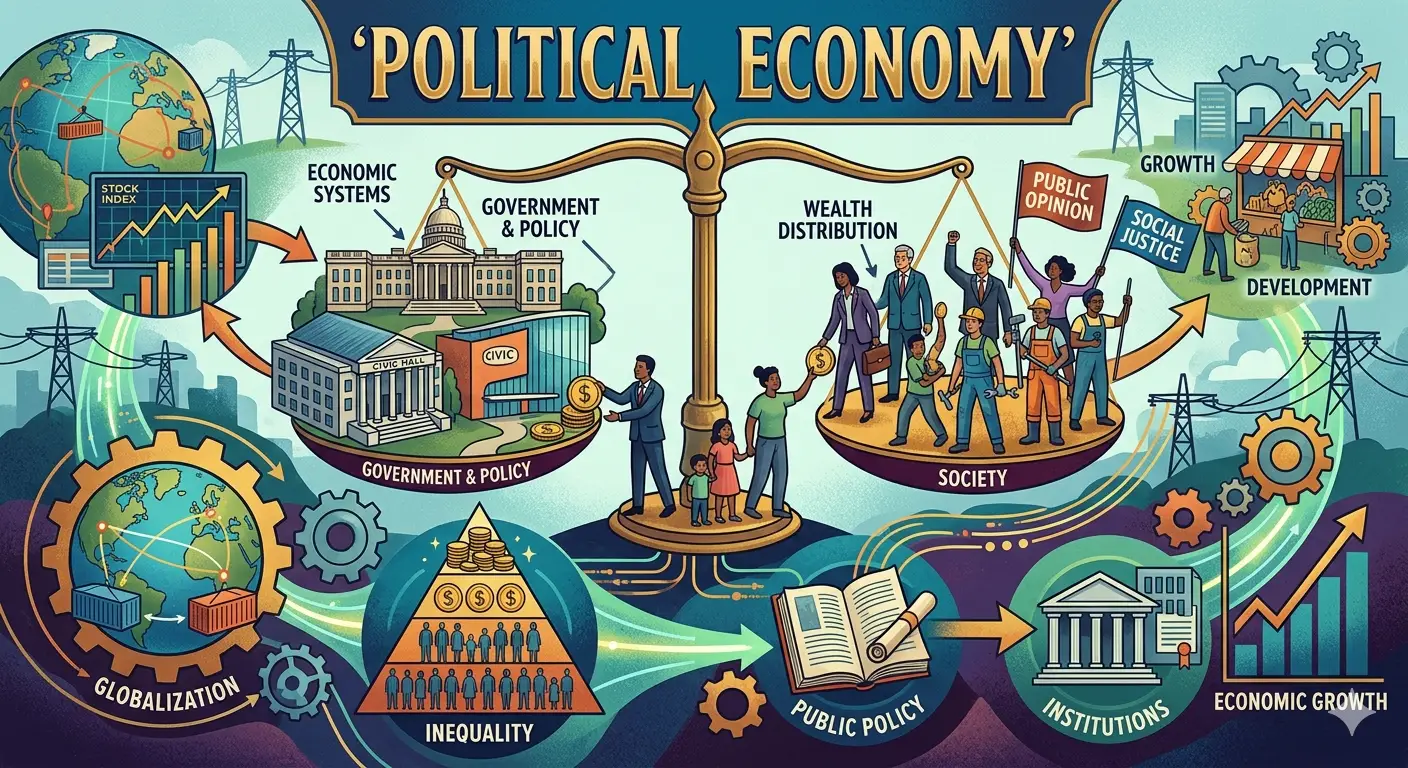
Political Economy

Politics and economics are often studied as separate disciplines, yet the two are deeply interconnected in shaping how societies function. Government decisions influence economic policies, while economic conditions often shape political priorities and public policy choices. Understanding this relationship is essential to analyzing how power, resources, and institutions interact in modern societies. This intersection gives rise to the field of political economy, which examines how political forces, institutions, and economic systems influence one another. By drawing on economic theories and applying them within political contexts, political economy helps scholars and policymakers better understand issues such as resource distribution, market regulation, public welfare, and governance. In this blog, we explore the key components of political economy and how they help explain the complex relationship between politics, markets, and societal development. How has the Political Economy Historically Evolved? The first development of political economy as a formal academic discipline took place in the mid-18th century, even though the roots of the idea can be found in the works of philosophers like Aristotle, Plato, David Hume, Adam Smith, and economists like Sir James Stuart, Karl Marx, and Francois Quesnay. Political theorists like Niccolo Machiavelli have also written greatly about the subject. Scholars have often looked at the roles and responsibilities of the state for economic regulation. And this very idea evolved into the modern-day political economy, which examines the state’s power and functions in administering and distributing wealth.  Why is Political Economy so Important? The distribution of wealth and resources is among the …

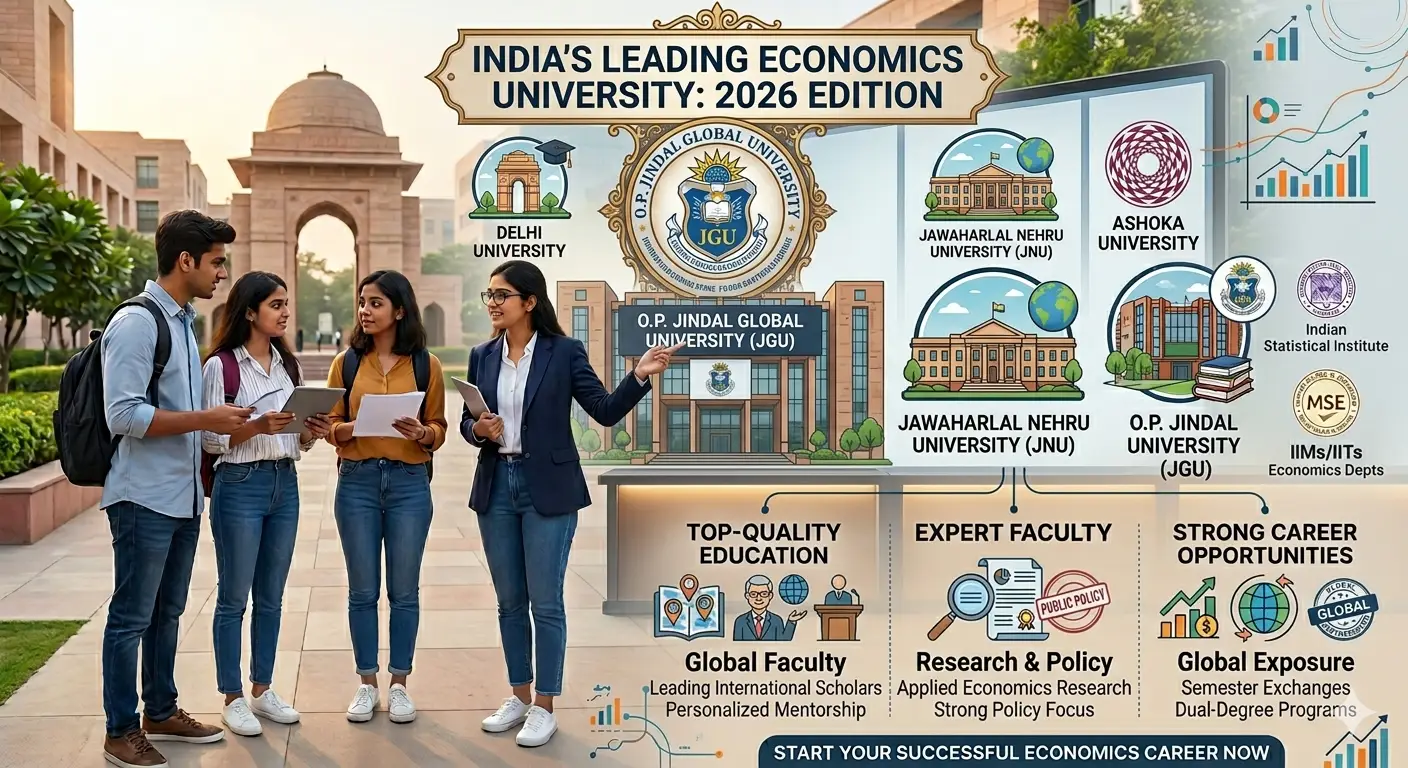
best university for economics in India

The impact of economics on all aspects of our lives is unfathomable, and to get to the bottom of it, one must become a student of the discipline. Economics is the field that keeps track of wealth and resource allocation, distribution, production, and consumption across the population of a country or a state. The best university for economics in India goes more deeply into the different areas, systems, and other aspects of economics, empowering students with all the knowledge required to propel them academically and professionally. What Does The Meaning Of Economics Transpire Into In The Modern World? Economics is more of a subject from social sciences that deals with individuals, governments, businesses, and their choices to allocate wealth and resources. However, the process of production and distribution of supplies has significant consequences on the subjects and a wide range of other fields that are directly affected by such economic changes.  The field of economics shares close ties with other fields such as politics, law, business, and government. Naturally, it fosters a system that is internally well-connected, and even the slightest changes in the economics department can have a ripple effect on all of the related sectors. The study of economics encompasses a vast subject pool, and it also explains the wide impact it has on other fields, and uses that insight, along with skills, to obtain a job in the field of economics later in life. How Many Economies Are There In Economics? Economies or economic systems refer to …

Meaning of Philosophy

Introduction Philosophy is an interesting subject that attempts to understand the world around us and our position in it through a realistic lens. Ancient philosophers like Aristotle, Socrates, Plato, and the emergence of Eastern and Western philosophies have gradually paved the way for Philosophy to become mainstream and critical thinking to be a normalized thing for the modern world. What is Philosophy? Understanding its True Meaning The human conscience allows us to question everything from who, why, what of our existence. These questions are always occurring in the back of the human mind, and Philosophy tries to explain this very human experience and interaction with our surrounding world. Hence, the meaning of philosophy literally translates to ‘love of wisdom’ and begs to question the very foundation of our human condition.  Explore Jindal School of Government & Public Policy Philiosphy Courses Explore Program What are the Core Concepts Featured in Philosophy Studies? Philosophy deals with different ideologies and questions the human condition with a systematic approach. It inquires into human existence, knowledge, reason, value, culture, and mind, among other things. Hence, the study of philosophy combines various subjects and takes inspiration from numerous ideologies and cultures around the world. The core concepts related to philosophy as an academic discipline are noted below.  Metaphysics: To understand the fundamental nature of reality and existence, metaphysics has been introduced. This branch of philosophy deals with the relationship between mind and matter, and other related concepts like time, space, and causality.  Epistemology: Epistemology literally translates …

India’s $5 Trillion Economy by 2027: Role of Public Policy

Introduction India has been at the center of global attention for its remarkable economic growth, driven by factors ranging from demographic strength to forward-looking government policies. Recently, India’s Minister for Commerce & Industry, Mr. Piyush Goyal, stated that the country is “on track to achieve a $5 trillion economy by 2027,” a remark that has sparked both optimism and debate in India and abroad. His statement comes at a time when the nation is actively working to strengthen its global standing and accelerate its journey toward becoming a developed economy. Explain Public Policy & Governance While politicians and ministers may say whatever suits their narrative to influence the public, the real work to sustain peace and ensure growth is done by the economists, diplomats, etc. Public Policy and Governance is a holistic study to decipher the functionalities of the government machinery, create laws and policies that meet the public's expectations and make the process efficient.  Explore Jindal School of Government & Public Policy Growing Economy Explore Program Today’s world of politics and governance is mostly modelled around a republican ideology that puts the power back into the hands of the very people to elect representatives who will bring their issues to light. These local representatives have the power to raise public issues to the government and provide plans for policies that promise to deliver an effective solution.  Economics & Public Policy: What Impact Does Economics Have on Public Policy? Public policies are planned and executed on several important matters that …

Understanding Public Policy and Its Impact

Introduction A state or national government carries the vital responsibility of addressing the needs and aspirations of its people. To fulfil these responsibilities, it must rely on capable individuals who can design and implement effective policies for the public good. Public policy, at its core, is driven by the purpose of solving complex social, economic, and political challenges that impact communities and nations. The Master of Public Policy (MAPP) programme empowers students to navigate these dynamic policy environments, both within government and in international organizations, by equipping them with the analytical, strategic, and leadership skills essential for meaningful impact. Define Public Policy Public policy does not have a standardized definition and is stated to be a complex and dynamic system that identifies and aims to resolve problems faced by the public. This is done through the creation of policies and the establishment of reforms to improve the current standards of living. The master's in public policy programme prepares students to identify and address public issues and advocate for change. These policies are made on local, national and international levels to ensure proper implementation in every sector or community.  Explore Jindal School of Government & Public Policy Public Policy Explore Program Different Types of Indian Public Policies Public welfare is often referred to be the ultimate goal of public policies. Governmental authorities, along with public representatives and private stakeholders, come together to discuss problems that affect the public. These policies are influenced by diverse interests and considerations and are subject to …

MA in Public Policy

Introduction In the modern world, nation-states and governments are entrusted with managing their citizens by implementing laws, regulations, and policies, as well as creating systems to address societal challenges, distribute resources, and facilitate trade. The MA in Public Policy focuses on the formulation and implementation of these policies, examining how they are designed to address issues affecting the general public. What is Public Policy? Modern-day nations and governments function through local representatives who identify and communicate the issues faced by their communities. Based on these insights, policies are formulated to address public concerns and improve quality of life. Whether to maintain governance or fulfil their mandate, states must develop a range of policies aimed at making life easier for their citizens. The key characteristics of public policies are as follows: Taking notice of challenges and issues faced by the citizens, to create policies with the intention of solving problems. The government holds the ultimate choice to act on a problem or not, and this determines how policies are initially drafted. Made on behalf of the public, these policies tend to resemble laws and regulations to resolve persistent local issues. Policies must be created for the benefit of the masses. Policymaking is a continuous process, as the impact of policies can only be evaluated after implementation, with adjustments made based on feedback and results. Every community has its own set of issues. While some matters are addressed privately or through civil proceedings, others require government intervention through laws and regulations aimed …

From individuals and organizations to national governments, the knowledge of economics helps measure the production, distribution, and consumption of wealth and goods. The Politics, Philosophy, and Economics (PPE) Major is a comprehensive programme that enriches the study of economics with a broader context, enabling students to understand current financial conditions and analyze the evidence behind how we arrived at today’s economic landscape. What is the Meaning of Economics Technically speaking, economics is part of the Behavioural and social sciences that keeps track of the production and consumption of goods and services, along with the allocation of these goods and services among its people. Usually, Economics is divided into two branches: macroeconomics and microeconomics. Microeconomics operates on a personal level, concerning individuals and businesses. Whereas, Macroeconomics takes a broader look at nations and governments and deals with issues like inflation, economic growth, national income, unemployment, etc. Explore Jindal School of Government & Public Policy Importance of Economics Explore Program However, the study of economics is more concerned with the choices and decisions made by individuals or organizations that affect the economy. Therefore, the Politics, Philosophy and Economics Major programme offers an advanced take on the relation between the three disciplines and how they impact the economic decisions of governments, companies, and individuals under a shared economic system. How Economics, Politics & Philosophy are Related? Economics, Politics, and Philosophy are separate disciplines, yet the connection they share is unmistakable, especially in the present scenario. The Politics, Philosophy and Economics Major course is …

Career in Economics Courses after 12th

In the modern state, the economy plays a vital role in projecting the worth of a government or a private entity. The effectiveness of an economic system and its proper functionality of markets are often the most highlighted subjects that help understand the economics of a state from a multidimensional perspective. The economics courses taught at universities pay substantial attention to developing the fundamental blocks of the subject and other related areas of consideration. Economics: Definition & Types Defining economics in simple terms can be challenging. Broadly, it is the scientific study of how supply and demand operates—examining the processes of production, distribution, and consumption, whether under government institutions or private organizations. To meet the needs of a population, both governmental and non-governmental entities manage the collection, production, and distribution of limited global resources, giving rise to various economic systems. These systems differ based on who controls and manages the resources. To understand how these economic systems function, it is essential to first explore the two main branches of economics: macroeconomics and microeconomics. Explore Jindal School of Government & Public Policy Importance of Economics Explore Program Macroeconomics focuses on the overall growth and development of an economy. It takes a broad view of the entire economic system, studying its behavior and performance. Key areas include economic cycles, foreign trade, unemployment, government fiscal and monetary policies, and interest rates. Economists use macroeconomic models to design effective economic strategies and public policies. Microeconomics examines the behavior of individuals and business entities in …

  • 1
  • 2

Becoming a leading expert.

Apply Now