
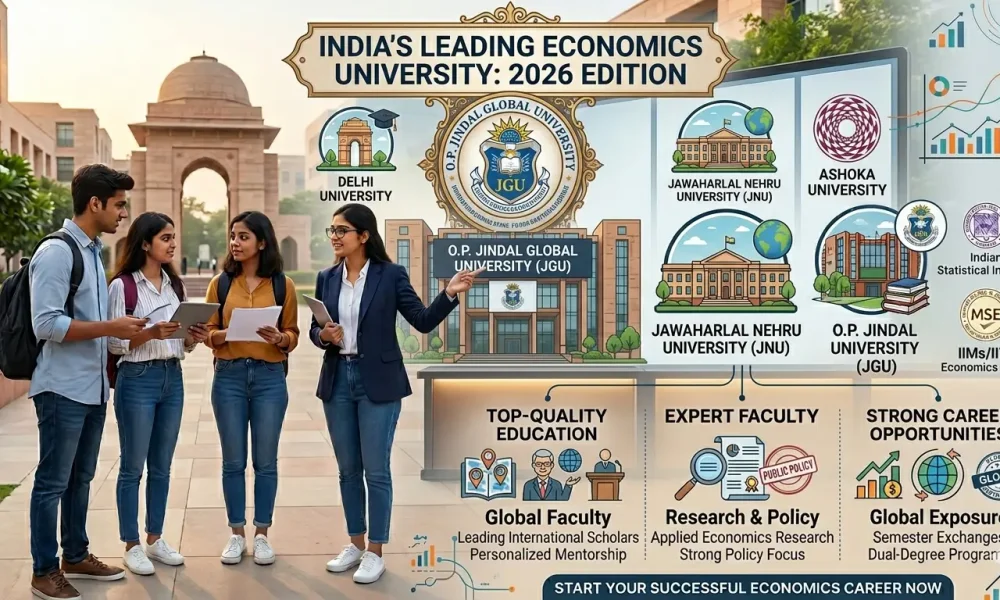
The impact of economics on all aspects of our lives is unfathomable, and to get to the bottom of it, one must become a student of the discipline. Economics is the field that keeps track of wealth and resource allocation, distribution, production, and consumption across the population of a country or a state. The best university for economics in India goes more deeply into the different areas, systems, and other aspects of economics, empowering students with all the knowledge required to propel them academically and professionally.
What Does The Meaning Of Economics Transpire Into In The Modern World?
Economics is more of a subject from social sciences that deals with individuals, governments, businesses, and their choices to allocate wealth and resources. However, the process of production and distribution of supplies has significant consequences on the subjects and a wide range of other fields that are directly affected by such economic changes.
The field of economics shares close ties with other fields such as politics, law, business, and government. Naturally, it fosters a system that is internally well-connected, and even the slightest changes in the economics department can have a ripple effect on all of the related sectors. The study of economics encompasses a vast subject pool, and it also explains the wide impact it has on other fields, and uses that insight, along with skills, to obtain a job in the field of economics later in life.
How Many Economies Are There In Economics?
Economies or economic systems refer to the ways in which different cultures, societies, and even governments arrange and allocate material goods and services to the public. Naturally, different cultures, societies, and governments have developed various economic systems to achieve the overall goals and objectives of their people. Here are the 4 basic economies that have been commonly seen around the world.
Traditional Economy: In the primitive times, before money and currencies were invented, the early humans were mostly hunter-gatherers, and the idea of the traditional economy took root and has been pretty prevalent in family structures. These types of economic systems are where sustenance is distributed by traditional relations that do not aim for economic growth, but produce very little waste.
Command Economy: Most modern economies rely on a national government to manage most parts of the economic system, in collaboration with other forces such as supply and demand. However, in a Command economy, the government controls all economic activities and transactions. For example, communist governments are the most ideal reflection of a Command Economy.
Market Economy: The development of the market economy is the model for most national economies today, where decentralization allows the economy and government to be separate entities, ensuring that private players control certain parts of the market, such as distribution, production, etc. Capitalist systems are believed to be pure market economies.
Mixed Economy: Democratic nations often adopt a hybrid combination of the command and the market economy to form a mixed economy that truly believes in the distribution of power for economic growth. This sort of economic system promotes a fair functioning market with healthy competition, with certain government regulations to ensure fair trade, distribution, and so on.
When studying in the best university for economics in India, students will be taught about various economic systems, and these 4 basic economic systems are something that every person must know about, even if they have nothing to do with economics as a subject.
What Are The Main Branches Of Economics?
Economics is a vast subject, and it consists of various branches and veers off into various areas of study. The interdisciplinary nature of economics demands the inclusion of other subjects to understand its implications on a broader scale. However, there are 3 main branches that we will be talking about. These 3 key branches of economics are:
Econometrics: When the gap between economic theories and empirical data is bridged, it is called econometrics. It is done by employing statistical methods to quantify economic relationships and draw evidence-based decisions to inform policy decisions. Econometrics relies on techniques such as Regression Analysis, Time Series Analysis, and Panel Data Analysis to draw a conclusion.
Macroeconomics: Dealing with the broader perspective of the national economy, macroeconomics concerns itself with the overall economic performance of a system, by analyzing variables like national income, unemployment, inflation, and economic growth to present solutions for economic challenges.
Microeconomics: This is the economics for the individual economic agents, such as families, business organizations, which offers an insight into the economic behavior of individual units on a micro level that goes on to influence the outcome of the broader system. The key concepts in microeconomics include: demand and supply, consumer theory, producer theory, and market structure.
These three branches are crucial to economic studies in the best university for economics. They form an overview of the different areas of economics that need to be discussed first, to get to other matters that economics is discreetly connected to.
What Are The Noteworthy Job Applications For Economics?
As a subject with diverse applications and implications on related subjects, it naturally has diverse job opportunities. Economics plays a multifaceted role in society, and as a student of the field, you will find certain sections more interesting than others, and the choice to pursue favorable areas to establish a career in that specific part of the broader discipline. Some noteworthy job applications of economics are mentioned below.

- Financial Analyst
- Data Analyst
- Policy Analyst
- Product Manager
- Market Research Analyst
- Actuary
- Economic Consultant
- Professor or Academic Researcher
- Supply Chain Analyst
- Business Reporter
- Statistician
The best university for economics in India does not limit its approach to traditional educational techniques but encourages students to participate in skill development programmes, workshops, internships, and even part-time jobs to widen their expertise.
How Does Studying & Practicing Economics Impact Your Career?
Universities play a crucial role in guiding students in the right direction and gain skills that are essential for professional work in the field. Students are taught to apply the educational knowledge from the course into actual scenarios to develop the qualities required to tackle real-world professional requirements. Some of these skills needed in the economics profession are noted below.
- Analytical Skills
- Data Interpretation
- Economic Theories & Models
- Communication & Writing Skills
- Research & Statistics Tools
- Problem-Solving Mindset
- Critical Thinking
- Attention to Detail
- Decision Making
- Time Management
The best university for economics in India is quite responsible when it comes to preparing students for the professional world with all the abilities required to perform tasks as per the job role. These institutions have the power to produce responsible graduates with the potential to contribute to the economic growth of the country.