
Child development is not a single, uniform process — it unfolds through a series of stages, each marked by specific cognitive, emotional, social, and physical changes. These stages are influenced by a combination of biological, environmental, and psychological factors. This is where psychology plays a crucial role, offering scientific insight into how children think, learn, behave, and evolve.
In this blog, we explore the different stages of child development and understand how each phase contributes to shaping a child’s overall growth and future well-being.
What are the Different Areas of Child Development?
From a psychological and physiological perspective, the development of a human child is a long process, spanning well over a decade. The areas of development are divided into four categories to better monitor children during these times. The four areas of child development are:
Motor: Childhood is considered the prime time for children to develop most of the motor skills, such as body movement, balance, coordination, etc., which are required to perform everyday activities and live a normal life.
Cognitive: The cognitive abilities are the source for humans to think, analyze, interpret, and react to certain words, visuals, sounds, or ideas, and they usually develop during the early years of human life.
Language & Communication: Since the time of birth, babies start to communicate and learn from their surroundings. An infant’s incessant curiosity to mimic gestures and sounds leads them to learn languages and apply them for communication as their cognitive abilities start to unravel.
Social & Emotional: The social and emotional development of children is perhaps the most challenging aspect of the entire process, which essentially requires deliberate action from their caregivers to provide a healthy social environment and emotional support, enabling them to become healthy and happy adults.
These four areas of development allow psychologists and caregivers to pay more attention to specific areas where the child seems to be lacking. Child development is an ongoing process that heavily relies on external influences and experiences.
What are the Different Stages of Child Development?
To understand how different areas of child development apply to real-world examples, it is important to know about the different stages of the process. This method makes it easier to monitor the strengths and weaknesses of a child and work on them according to the developmental phase they are in. So, without further ado, let us discuss the different stages of Child Development.
Infancy: This is described as the preliminary phase of human development, where a baby, after being born, experiences the world for the very first time. In this early stage of development, babies start developing personality, cognitive abilities, and motor skills such as standing and walking, under the complete dependency on their caregivers.
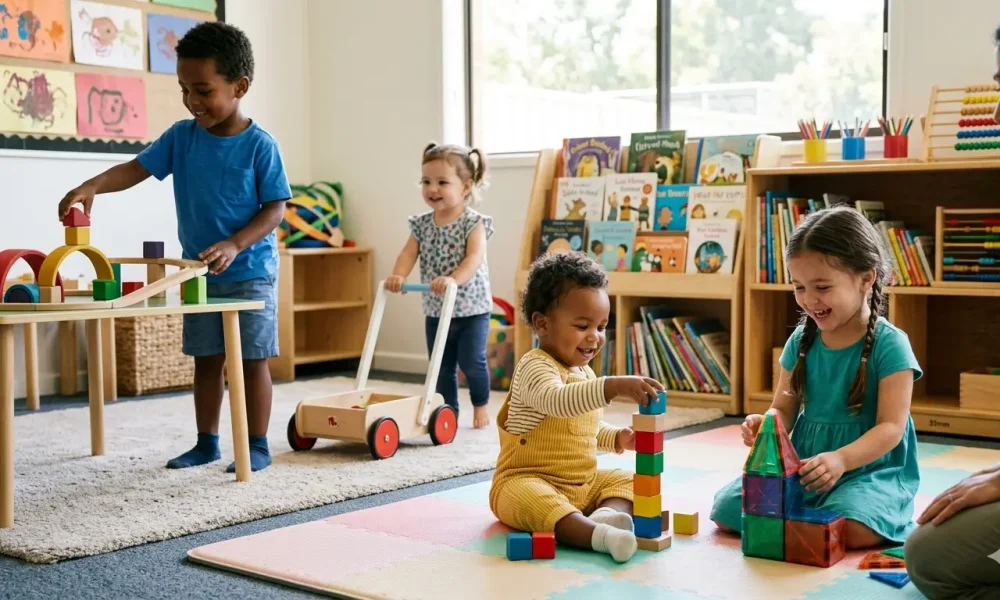
Toddlers: One to two years after being born, toddlers show great potential in learning and expressing their needs and emotions through various means. In toddlerhood, children exert their personalities through demands and often tantrums when denied. They still remain very much dependent on their caregivers during these years.
Early Childhood: Between the ages of 3 and 5, a child goes through major developmental changes, starting with socializing and spending time for the first time without the supervision of their caregivers. Usually, children start to go to school during this time, and their inquisitive mindset and openness to learning can be used positively to grow vocabulary and create a repository of ideas.
School-age Children: As children step into the age of 6 to 10, they become less and less dependent on their caregivers and independently perform several tasks, such as going to school, making friends, and learning new things. They develop a sense of responsibility toward their actions, health, appearance, activities, and much more.
Adolescence: The transitional phase between childhood and adulthood is termed adolescence. Children between the ages of 13 and 19, and often preteens, are believed to be going through their adolescent period when the physical and psychological changes start to appear, and matters of identity and independence are dealt with.
Each of these stages of child development is crucial for every child to transform into a healthy and functioning adult. Caregivers’ conduct and surrounding environment play a significant role in shaping a child’s view of life and the world. This is why parents need to pay extra attention to the development of their children and lead them by example.
How Psychology Helps in Child Development?
Psychology is one of the educational fields that has a specialised branch and degree course on child development. These courses are designed to look at the psychological and social aspects of development throughout the entire childhood, leading to adulthood. Psychologists have the qualifications and the capability to guide children facing trouble from developmental delays or other matters.
How to Spot the Signs of Delays in Child Development?
While every child grows and develops at their own pace, some may show signs of developmental delays that require closer attention. Developmental delays can sometimes be difficult to identify, particularly during the early years, as children naturally develop skills at slightly different rates. However, certain patterns in behavior, learning, or physical development may signal the need for additional support.
Parents and caregivers play a crucial role in recognizing these signs early, as timely intervention can significantly improve a child’s developmental outcomes. Some common indicators of potential developmental delays include:
- Speech and communication difficulties: Delayed speech, difficulty forming words, or trouble expressing thoughts clearly.
- Vision or movement challenges: Problems with coordination, balance, or visual tracking may indicate developmental concerns.
- Difficulty following instructions: Children with developmental delays may struggle to understand or carry out simple directions.
- Low or inconsistent attention span: While children naturally have shorter attention spans, extreme difficulty in maintaining focus may signal developmental challenges.
- Reading and comprehension difficulties: As children begin learning to read, some may experience trouble recognizing words, understanding text, or processing information.
- Excessive restlessness or hyperactivity: Persistent difficulty sitting still or regulating behavior can sometimes be associated with developmental conditions.
- Social interaction challenges: Difficulty making friends, participating in group activities, or understanding social cues may also indicate developmental delays.

Child development is a sensitive and evolving process that requires consistent support during the early years. Parents and caregivers should remain attentive to these signs and seek professional guidance from medical or psychological experts when necessary. Early recognition and intervention can help children overcome challenges and support healthy development across different stages of growth.