HomeJindal School of International Affairs
human_rights

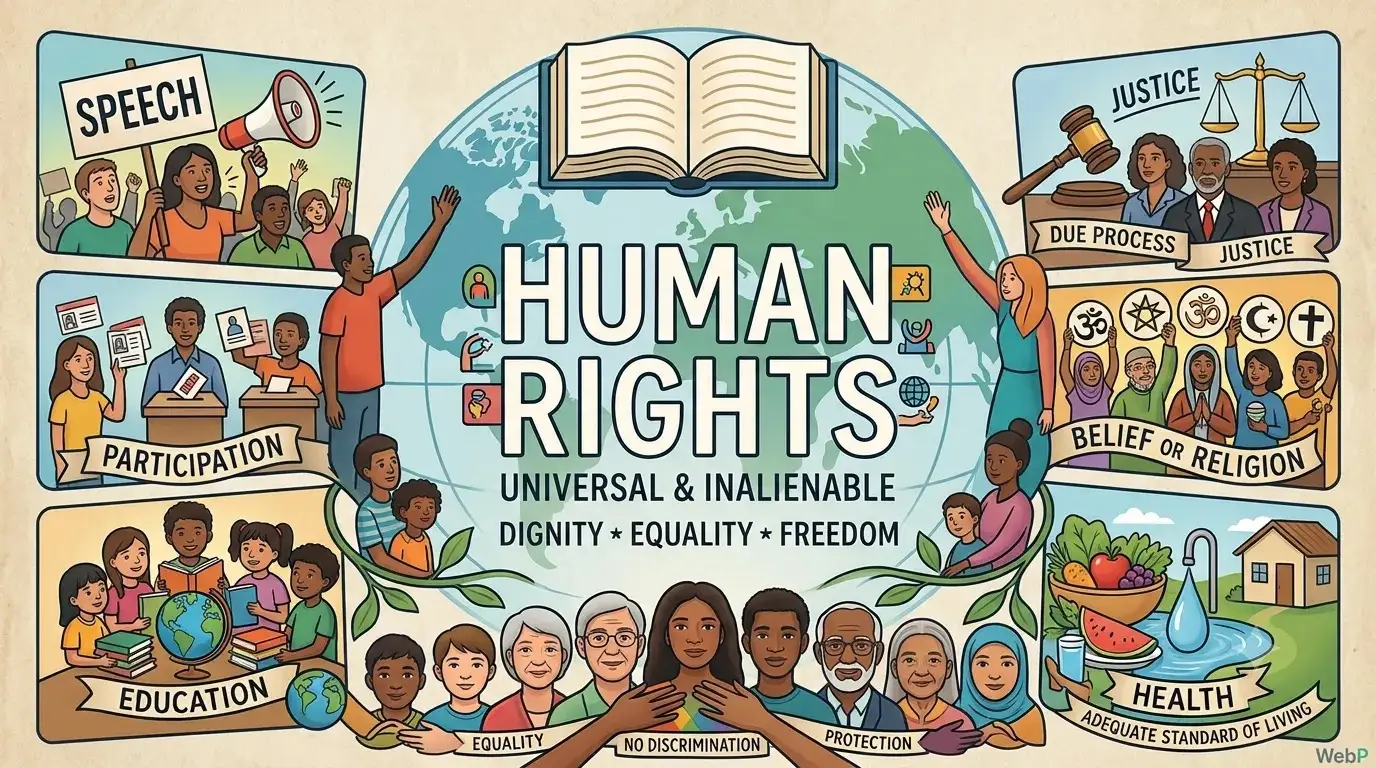
World cares about Human Rights since the dawn of age. In the year 1760 BC, the Babylon king Hammurabi drafted the “Code of Hammurabi” that shared the idea of ‘making justice reign in the kingdom and promote the good of the people’. Similarly, in the year 528 BC – 486 BC, Gautam Buddha spread the teaching of morality, non-violence and right conduct from India. Coming to the pre-modern age, in 1945 we see the United Nations coming to life in order to secure the dignity and worth of every human being and in 1948 the United Nation adopts the Universal Declaration of Human Rights. Human Rights is also one of the building blocks that has helped the world in creating the concept of “Democracy” and understanding how to administer a country in a peaceful manner. It is because of Human Rights that we as citizens understand that idea of individuality and respect each other. There are several career options that one can think of while entering the field of Human Rights. A student choosing to study and specialize in Human Rights, can become an Advocate. Human Rights by its very name suggests that issues relating to the personal rights of people around the world are in dispute. Hence, people need and seek good lawyers to help them with their legal battles. Human Rights advocates can work at a local, national as well as international level. They can work as lawyers at NGOs, various intergovernmental organizations, law firms and for the …
carrer in international relations

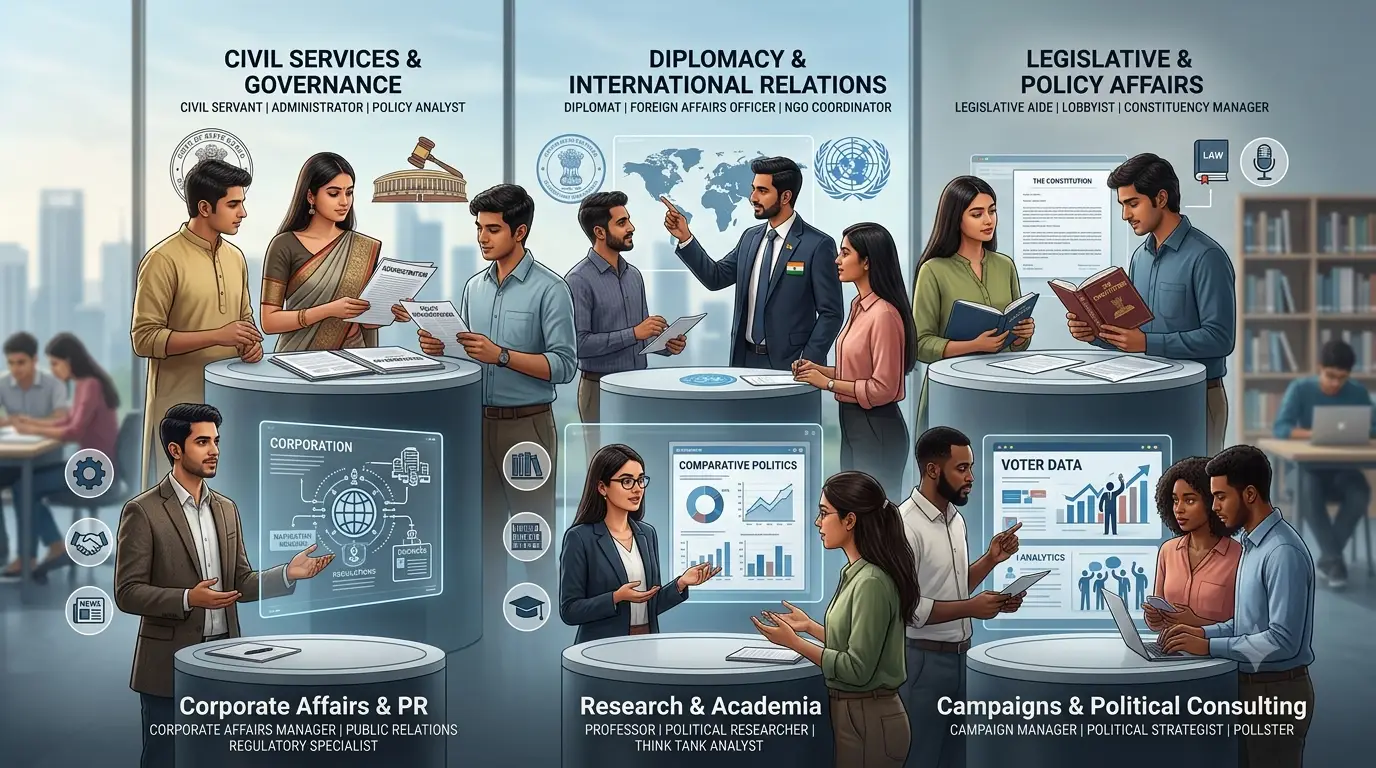
In today’s globalized world, international relations play a crucial role in shaping a nation’s economy, culture, and politics. A career in international relations in India can provide exciting opportunities for those who want to contribute to building bridges between nations and working towards a more peaceful and prosperous world. In this blog, we will explore the scope of a career in IR in India, the types of roles and jobs available, and how to build a successful career in this field. What is International Relations? International relations (IR) is a branch of political science that deals with the study of interactions between nations, governments, and non-state actors. It encompasses a wide range of topics, including diplomacy, foreign policy, international law, globalization, and economic development. Professionals in IR work towards promoting peace, stability, and cooperation between nations, and addressing global challenges such as climate change, poverty, and inequality. Explore Jindal School of International Affairs International Relations Explore Program Types of Roles and Jobs in International Relations A career in International Relations can lead to a variety of roles and jobs across different sectors. Here are some examples of career prospects in International Relations: 1. Diplomat: Diplomats represent their home country’s government in a foreign land. Their primary responsibilities include maintaining positive relations between the two countries, promoting trade and commerce, and providing assistance to citizens of their home country living abroad. 2. Foreign Service Officer: Foreign service officers work in embassies and consulates, facilitating visa applications, providing information on trade and business opportunities, …

political science careers

Political science is a fascinating field that deals with the study of politics, government, and public policy. It explores the dynamics of power, authority, and governance at various levels, from local to global. In this blog, we will discuss the political science careers available to political science graduates, the career options in political science in India, and how to build a successful career in this field. Types of Roles and Jobs in Political Science Political science graduates can pursue various roles and jobs in different sectors, including government, private sector, non-governmental organizations, and academia. Some of the most popular political science career paths include: 1. Civil Services: Political science graduates can appear for civil services examinations conducted by the Union Public Service Commission (UPSC) to join prestigious services like the Indian Administrative Service (IAS), Indian Foreign Service (IFS), and Indian Police Service (IPS). Explore Jindal School of International Affairs IR Courses Explore Program 2. Government Jobs: Political science graduates can find employment in various government departments, such as the Ministry of External Affairs, Ministry of Defense, Ministry of Home Affairs, and Ministry of Finance. 3. Non-Governmental Organizations (NGOs): NGOs working in areas like human rights, environment, and development often hire political science graduates to work in various capacities, such as project managers, researchers, and advocacy officers. 4. Private Sector: Political science graduates can find job opportunities in the private sector, especially in companies that deal with government relations, public policy, and regulatory affairs. 5. Academicia: Those interested in teaching and …

Difference Between Foreign Policy and Diplomacy

Foreign policy and diplomacy are two important concepts and practices in international relations, and they are often used interchangeably or confused with each other. However, they are not the same, and they have different meanings, histories, types, and roles in the global arena. In this blog, we will explore the major differences between foreign policy and diplomacy, and why they matter for our lives and the future of humanity. Meaning and Definitions of Foreign Policy and Diplomacy Foreign policy is the set of goals, strategies, and actions that a state or a non-state actor pursues in its relations with other actors in the international system. Foreign policy reflects the interests, values, and preferences of the actor, and it guides its decisions and behaviors in the global arena. Foreign policy can be influenced by various factors, such as the domestic politics, culture, and economy of the actor, the structure and dynamics of the international system, and the interactions and feedback from other actors. Explore Jindal School of International Affairs IR Courses Explore Program Diplomacy is the process and practice of communication and negotiation between actors in the international system, with the aim of achieving their foreign policy goals and resolving their conflicts and disputes. Diplomacy involves the use of various methods and tools, such as dialogue, persuasion, compromise, and coercion, to influence and shape the behavior and outcomes of other actors. Diplomacy can be conducted by various agents and channels, such as diplomats, ambassadors, envoys, and mediators, and through various forms …

political science

Political science is a fascinating field that deals with the study of politics, government, and public policy. It examines the processes and institutions that shape the lives of individuals and communities, both locally and globally. As we navigate the complexities of modern society, the importance of studying political science cannot be overstated. In this blog, we will explore the scope, importance, and relevance of political science in today’s world, with a specific focus on India. What is Political Science? Political science is a social science discipline that focuses on the study of politics, government, and public policy. It encompasses a wide range of subfields, including comparative politics, international relations, political philosophy, and political economy. Political scientists use various methods, such as quantitative analysis, case studies, and theoretical models, to understand and explain political phenomena. Scope of Political Science Explore Jindal School of International Affairs Political Science Courses Explore Program The scope of political science is vast and diverse. It includes the study of political systems, political ideologies, political institutions, and political behavior. Political scientists examine the role of government in society, the interactions between different branches of government, and the relationships between governments and civil society actors. They also study the impact of globalization, regionalization, and international organizations on national and local politics. In India, specifically, political science is an especially relevant field of study. As a rapidly developing country with a diverse population and a complex political system, India presents a rich terrain for political scientists to explore. From …

theories_of_international_relations

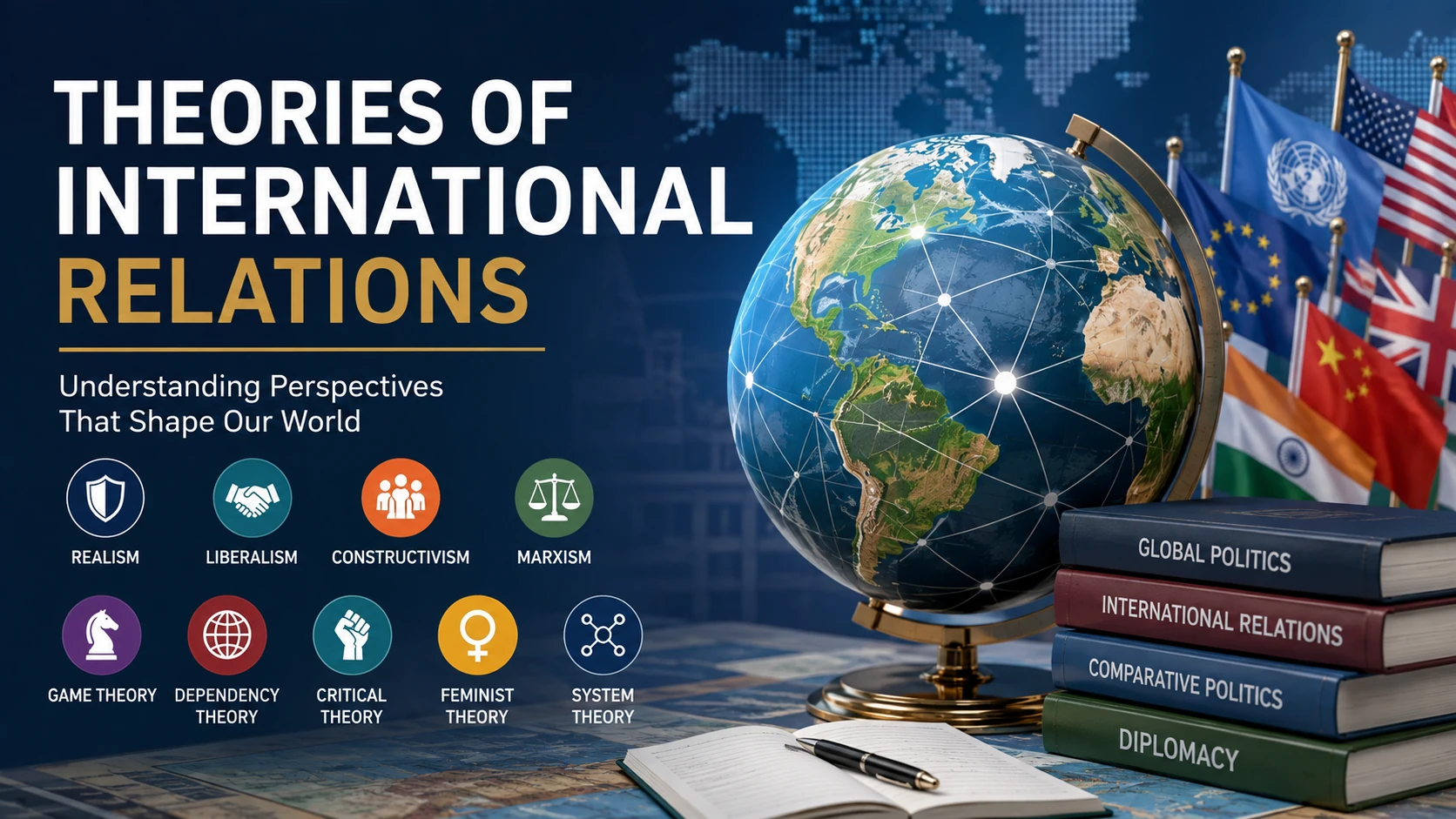
International relations (IR) is the study of how different actors, such as states, international organizations, non-governmental organizations, and individuals, interact with each other in the global arena. One of the most important aspects of IR is the use of theories. Theories are frameworks or models that help us to make sense of the empirical reality and to generate hypotheses and predictions. In this blog, we will introduce some of the major theories of international relations and their main features, strengths, and weaknesses. We will also discuss the importance of IR and why it matters for our lives and the future of humanity. Major Theories of International Relations There are many theories of international relations, and they can be classified in different ways. One common way is to divide them into three broad categories: realism, liberalism, and constructivism. These categories are not mutually exclusive, and there are also other theories that do not fit neatly into them, such as critical theory, dependency theory, feminism, and Marxism. Realism Theory in International Relations Realism is one of the oldest and most influential theories of international relations. It is based on the assumption that the international system is anarchic, meaning that there is no central authority or government that can enforce rules or laws. In this context, states are the main actors, and they are driven by their own interests, especially their security and survival. Realism has several variants, such as classical realism, neo-realism in international relations, and offensive and defensive realism. Realism is …

What is Diplomacy?

Diplomacy is a term that is often used and heard in the context of international relations, but what does it mean exactly? How is it practiced and conducted? What are its types and features? Why is it important and relevant for our lives and the future of humanity? In this blog, we will answer these questions and more, and provide you with a brief and clear overview of the concept and practice of diplomacy.  Meaning & Definitions- What is Diplomacy? Diplomacy is the process and practice of communication and negotiation between actors in the international system, with the aim of achieving their goals and resolving their conflicts and disputes. Diplomacy involves the use of various methods and tools, such as dialogue, persuasion, compromise, and coercion, to influence and shape the behavior and outcomes of other actors.  Diplomacy definition can vary depending on the perspective and approach of the scholar or practitioner, but one common and widely accepted definition is: “Diplomacy is the management of international relations by negotiation; the method by which these relations are adjusted and managed by ambassadors and envoys; the business or art of the diplomatist.”  History of Diplomacy  Diplomacy has a long and rich history, and it has evolved and changed over time, along with the development and transformation of the international system and the actors in it. The history of diplomacy can be traced back to the ancient times, when the first civilizations and empires emerged and interacted with each other, and when the first …

foreign policy

Foreign policy is a term that is often used and heard in the context of international relations, but what does it mean exactly? How is it made and implemented? What are its types and features? Why is it important and relevant for our lives and the future of humanity? In this blog, we will answer these questions and more, and provide you with a brief and clear overview of the concept and practice of foreign policy. Meaning & Definitions- What is Foreign Policy? Foreign policy is the set of goals, strategies, and actions that a state or a non-state actor pursues in its relations with other actors in the international system. Foreign policy reflects the interests, values, and preferences of the actor, and it guides its decisions and behaviors in the global arena. Foreign trade policy is a subtype of foreign policy that focuses on the regulation and promotion of the exchange of goods and services between the actor and other actors in the international system. History of Foreign Policy Explore Jindal School of International Affairs Foreign Policy Courses Explore Program Foreign policy has a long and rich history, and it has evolved and changed over time, along with the development and transformation of the international system and the actors in it. The history of foreign policy can be traced back to the ancient times, when the first civilizations and empires emerged and interacted with each other, and when the first forms of foreign policy, such as alliances, treaties, and …

political science in India

Political science is a field of study that has been gaining significant attention in recent times. With the increasing complexity of governments, political systems, and international relations, the demand for professionals who understand the intricacies of politics has grown exponentially. But what exactly is political science? In this blog post, we will delve into the meaning, history, scope, features, importance, and major theories of political science to provide a comprehensive understanding of this fascinating discipline. Meaning and Definitions- What is Political Science? Political science is the systematic study of governments, political institutions, and public policies. It examines the processes by which decisions are made, how power is distributed, and the impact of government actions on society. Political scientists use various methods such as statistical analysis, case studies, and comparative research to analyze political phenomena and develop theoretical frameworks that can explain and predict political behavior. Who is the Father of Political Science? Explore Jindal School of International Affairs Political Science Courses Explore Program Aristotle is widely regarded as the father of political science. His work “Politics” (c. 350 BCE) laid the foundation for the study of political philosophy and provided insights into the nature of the state, citizenship, and the ideal form of government. Aristotle believed that humans are social animals and that the state exists to promote the common good. He argued that the best form of government is a mixed constitution that combines elements of monarchy, aristocracy, and democracy. History of Political Science The study of political science …

India’s Foreign Policy

In the last century alone, the world has changed dramatically, allowing neighboring countries to form relations and engage in trade, for the betterment of both entities. Every country or government in the world today has established foreign policies to maintain international relationships with other nations. This concept of foreign policy is relatively new and requires constant updating to meet current demands, and the same is true for Indian foreign policy as well. What Is The Definition Of Foreign Policy? As international trade and commerce increased rapidly, based on conflicts and alliances, every government came up with individual rules and regulations, dubbed as foreign policy, to strategically protect the international and domestic interests. Foreign policy is the measure that determines how a state or country interacts with other states and non-state actors. It also defends the national interest by using diplomacy or aggressive means, if necessary.  Why Should You Choose To Study Foreign Policy? Foreign policy plays a significant role in the growth or decline of a country, state, or government. Every country has certain natural resources, manufactured items, and manpower, which they can export to friendly neighbors, and import supplies that the country requires. This entire process is regulated under specific foreign policy rules, agreed upon by two or more governments.  As foreign policy determines the international relations with other nations, a student of the discipline has the potential to work in governmental and non-governmental sectors with the power to create, implement, or discard such policies. In modern times, nations …

  • 1
  • 2

Becoming a leading expert.

Apply Now