Internships
The CAS offers internship opportunities to all students of JGU with academic backgrounds in history, sociology, political science, international relations, and public policy. These internships are designed to provide students with practical experience through a range of activities such as training sessions, workshops, and conferences.
Guidelines for Internship
The Centre for Afghanistan Studies (CAS) offers internship opportunities to students of Jindal Global University (JGU) who preferably have a background in though not limited to Law, History, Sociology, Political Science, International Relations, Public Policy, and allied social science disciplines.
This is a voluntary, non-remunerative internship designed to provide hands-on academic and administrative exposure through a range of research, outreach, and event-based activities. CAS accepts internship applications on a rolling basis, with a minimum commitment of eight weeks.
Interns will work closely with the CAS Management Team and contribute directly to the Centre’s academic, research, and public engagement initiatives.
Please note that interns are not offered any remuneration for the duration of the internship.
Roles & Responsibilities
Interns will be expected to undertake the following responsibilities:
- Assist in preparing information briefs and research materials
- Support the administrative functioning of the Centre
- Assist in organising Centre events, including movie screenings, trainings, workshops, and conferences
- Regularly update content on the Centre’s website
- Engage audiences through consistent and strategic posts on the Centre’s social media platforms
- Publicise the Centre’s blog among the JGU student community
- Contribute a minimum of two articles or one research paper to the Centre’s blog
- Assist in ongoing and new research projects undertaken by the Centre
- Perform any other tasks assigned by the CAS team in furtherance of the Centre’s objectives
Eligibility Criteria & Qualifications
Applicants must meet the following requirements:
- Be a full-time undergraduate or postgraduate student enrolled at JGU
- Possess proficient computer skills
- Demonstrate an excellent command of the English language
- Dari and Pashto language skills are desirable but not mandatory
- Exhibit strong written and verbal communication skills
- Be capable of working independently as well as collaboratively in a team environment
- Show the ability to execute assigned tasks within stipulated deadlines
Application Requirements
Interested candidates must submit the following documents:
- A detailed Curriculum Vitae (CV)
- A one-page cover letter explaining the motivation to intern with the Centre
- One short writing sample (approximately 800 words)
Submission Details
Applications should be sent via email to: raghav@jgu.edu.in and bdaud@jgu.edu.in
Applications are reviewed on a rolling basis.
Testimonial for CAS
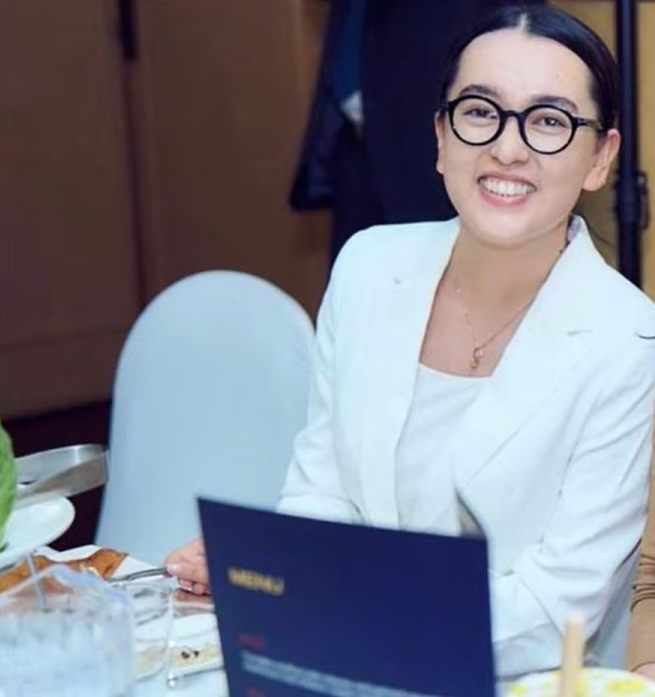
Shukria Yari
My experience as a research associate with the Center of Afghanistan studies (CAS) has been rewarding. significantly, when I got the opportunity to work on an interesting project ‘Afghan Refugees in Delhi’ under the guidance of my two professors Dr. Raghav Shrama and professor Bilquees has assisted me in several ways. During the 10 months of the project, we conducted two round field works and many other interviews which was a great opportunity for me to interact with Afghan families as well as with various organizations such as UNHCR, Khalsa Diwan and the Ara trust that work with the refugees in Delhi. Therefore, the experience gained from working with the CAS has been very beneficial and productive for my future career
Himabindu Karibhuktha
My winter internship at the Center for Afghanistan studies (CAS) has been a fantastic experience. It gave me the flexibility to explore my interests and act on them. It provided me an opportunity to understand Afghanistan from a variety of different perspectives. My internship experience provided me enough space to align with and get accustomed to various activities the center undertakes, such as research, blog writing and interviews. CAS internship provided me a great environment for learning.
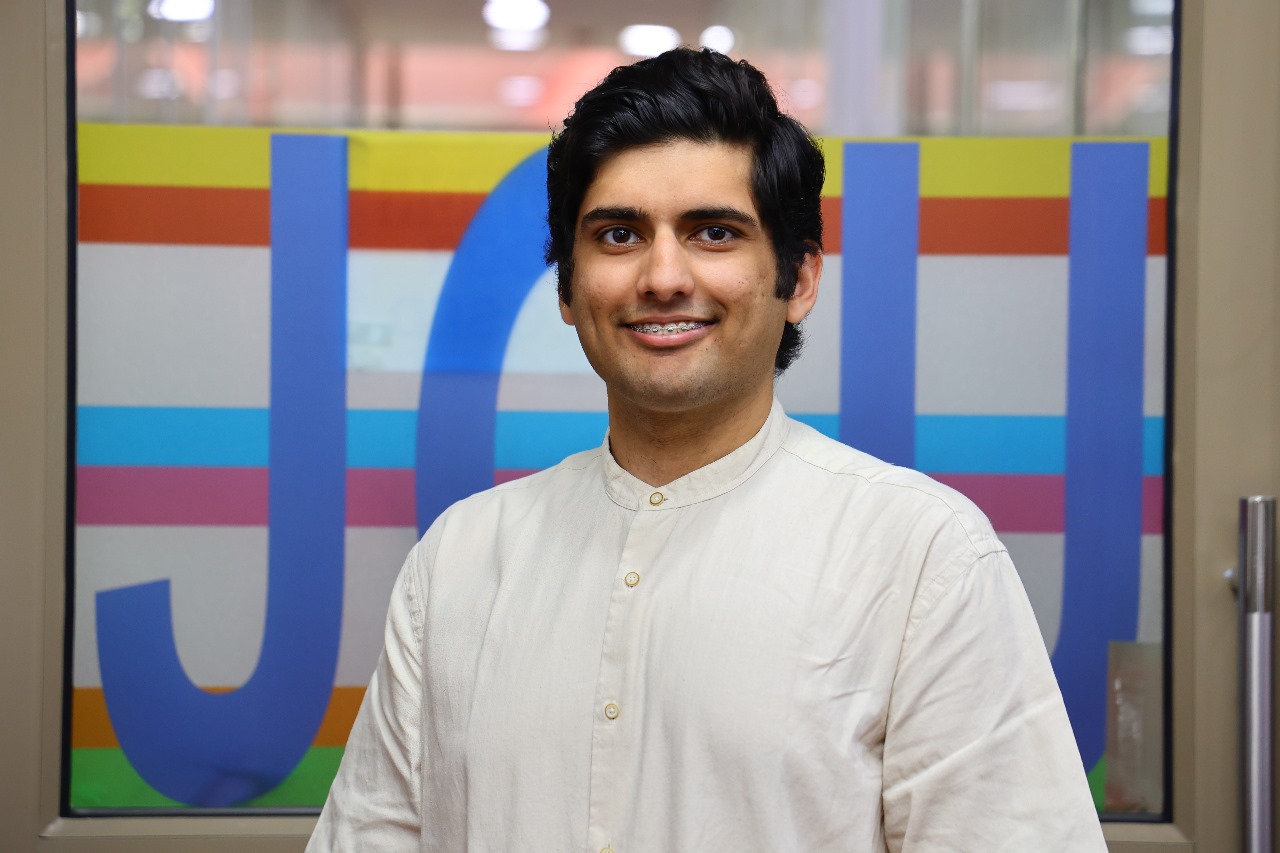
Aditya Vikram Rana
Serving as Centre Coordinator at the Centre for Afghanistan Studies was a deeply enriching and formative experience. During my tenure, the Centre was undergoing a phase of revival, and I actively contributed to restoring its academic and institutional presence. I assisted in rebuilding programmes, organising and hosting scholarly events, and supporting the revival of conferences in close coordination with the Centre’s directors. This period of renewal required sustained effort, collaboration, and adaptability. The role significantly deepened my understanding of institution-building, academic coordination, and the practical functioning of a research centre committed to region-focused scholarship.
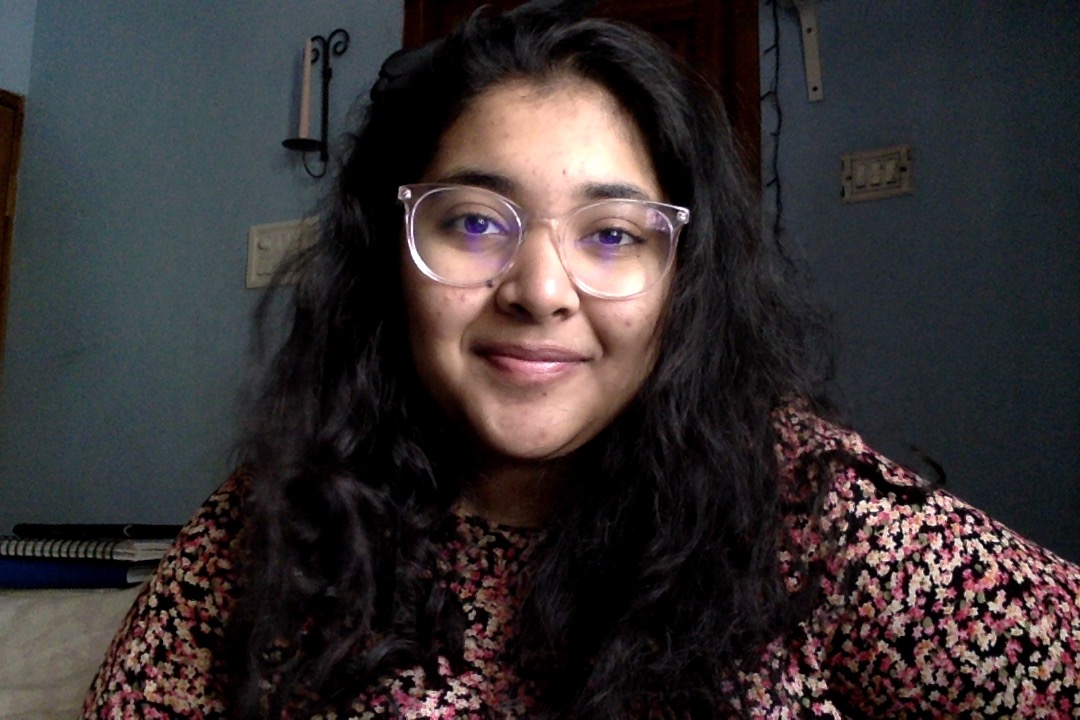
By Mahita
In 2018, when I moved away from home for the first time to study at JGU, I was very lost to say the least. Like every other first year, I was homesick. But I was also extremely restless. There’s an air on campus when you first arrive, and its full of enthusiasm and optimism. Everyone had big dreams and lengthy to-do lists to finish before a well anticipated final year burn out.
But I wasn’t seeking out opportunities to fill up resume. I did not like JSIA at the first glance, I was intimidated and so out of place, so I was looking for excuses to drop out. But at the same time, I was also desperately trying to find something in uni that would make me feel like I belong.
And I’m so happy to look back and say that I found a home, a safe space, in CAS.
I met Professor Raghav on my very first day of college and it’s a crystal-clear memory, even after all these years. I was a frightened student hiding behind the coincidentally tall first benchers in his International History class. I was anticipating a very intimidating, curt and strict professor (based on everything I heard about uni professors) but I was taken by surprise at the end of the class. He was (and is) very warm, kind and encouraging, nothing like the image I drew for myself before class. Unknowingly he helped me get through my first semester at uni, and he quite literally trained me for the rest of them as well. He was very approachable to all of us and that meant taking several trips to his office to bother him with silly questions about the readings, the assignments, the grades and JSIA in general.
It was during these visits to his office on the third floor that I first developed an interest in the Centre for Afghanistan Studies as well as Afghanistan.
His office was decorated with bright pictures of Afghanistan’s beautiful valleys, people and places, and it was striking to me because the country was nearly unrecognizable. Up until that moment embarrassingly enough, Afghanistan was only a war-torn country for me, but seeing those pictures changed my perception forever, slowly, but eventually. Each time I was in his office I’d see a cool poster about a movie screening, or a guest lecture and that sparked my interest further in both the centre and the country. But I was so consumed with my own life to work on that interest, so for a while I observed the centre from outside the window.
Everything got fast-tracked in the spring semester that followed, when I met Professor Bilquees for the first time. I was considerably less frightened by this point, so I was at ease in her ‘introduction to sociology’ class, sitting in the front row and talking whenever I had the opportunity (probably a little too much, now that I think about it!). When I got to know she was from Afghanistan, I had so many questions for her about the country and the culture. I kept them at bay, waiting for a polite opportunity to ask her everything I wanted to know. And it came to me in a very unexpected manner. Professor Bilquees was telling my friend about how the centre was seeking new interns for the semester and I somehow miraculously overheard it. She did not mind at all when I enthusiastically and rudely barged into the conversation and asked her if I could apply too. I wasn’t thinking much when I applied to get in. All I knew at that point was that Professor Raghav and Professor Bilquees were kind, interesting and warm, and I had a lot to catch up about Afghanistan and its situation before the interview. Going into the centre as a new intern I only had one expectation- to learn about the country. After working closely with the professors for nearly 5 semesters, I’m not too surprised to reflect on my multiple takeaways and exceeded expectations that have shaped my entire undergraduate life.
The most important thing that CAS gave me, amongst all the other professional skills, was a voice, when I felt intimidated and lost. When I started out, I had inadequate knowledge about Afghanistan but despite that I was always encouraged to speak my mind and explore the region on my own. The professors assured all of us multiple times that if mistakes were made (and they were), they would help us figure it out with no hesitation. As a seventeen-year-old introverted student who was afraid to ask questions and seek out help because of how intimidating college usually is, this assurance really went a long way in helping me. Not many professors bother to create an inquisitive zone at a working space, but for professor Raghav and professor Bilquees, it was probably the most important thing to build.
CAS, with its inquisitive zone, was also a very flexible and down to earth research centre. CAS never functioned as a rigid, multi-agenda system, and that is why the work that comes out of it is so genuine and organic. We would all brainstorm together, and the professors were always, always, up for anything if the person pitching it was passionate and believed in it. It did not matter to them whether it was technical or unconventional or basic, they were enthusiastic and supportive of every idea presented by an intern and stuck with it until it took final shape.
I was an odd intern. Although the centre was affiliated to JSIA and I was a student of international affairs, my primary interest never lay in dissecting the geo-politics of Afghanistan, like my fellow interns. I wanted to explore the country’s history, its people, its stories and cater to a large audience that had the same perception about Afghanistan that I did at first. I wanted to split away from the mainstream narrative of war and highlight the beautiful and heartwarming things about the country. It was unconventional by all standards, and I was also scared that it would come across as childish and silly, for wanting to tell stories instead of writing analytical pieces about diplomacy and trade.
I eventually mustered up the courage to pitch the idea of a play- an adaptation of the movie Breadwinner to be staged on campus, to offer another perspective into the country, and it was instantly adopted by the professors. They never belittled me or the over-the-top idea I pitched in, instead they pushed me to write a script over the holidays and gave me an opportunity to take it to the Afghan embassy in New Delhi (which was such a dreamy uni moment, I still have to pinch myself).
Putting up a play was not easy, by any means. It demanded a lot from me, especially getting out of my comfort zone and interacting with new people, taking up responsibilities, etc. There were times when I wanted to give up on the project when it felt too much, but the only reason I stuck through the end was because of how committed and happy the professors were. They stood by the project even when it was pure chaos, and inspired me with their work ethic. I learnt about the power of patience and kindness from them, and it’s another gift that the centre has given me, along with the opportunity to sharpen my story telling skills.
With the podcast project that we launched in 2020, CAS has given me something that will never be taken from me- heaps of knowledge and an experience of a lifetime. It was my privilege to host our podcast show- Charcha, alongside professor Raghav for almost a year. During this time, I met many hardworking scholars and activists and had the opportunity to interact with them on a first hand basis. As I spent hours putting the episodes together, researching, recording and editing, I noticed a change in myself. From someone who did not enjoy the technicalities of IR and wanted to stay far away from it, I turned into someone who was interested to focus on a conversation about geo-politics and diplomacy. I actively gathered updates, tried to piece them together and with each episode, I felt more comfortable in my new skin.
I might have been enrolled in a Global Affairs course, but CAS is what turned me into a student of international affairs, and I will always be grateful for that.
Because of the authentic learning atmosphere in the centre, Afghanistan has become a part of my heart now. I have grown to love its culture, its resilient people and its unchartered history, and I plan on continuing my focus on the nation by further digging through its early history, which has been lost due to several reasons.
I was a painfully optimistic, unfocussed student with too many unrealistic ideas when I met Professors Raghav and Bilquees (who mean the world to me). How they dealt with all of that buzz is beyond me, but I’m so glad that they were always ready to give me multiple chances, through all the extended deadlines and rookie mistakes. Their faith in me has pushed me and the centre further up each time, and I sincerely hope that all their hard work and passion pays off and that the centre reaches its full potential soon!
After spending three years learning at CAS, I feel so heartbroken that it has come to an end. However, I’ll always be right around the corner, super enthusiastic (once again) to do anything I can for the centre, no matter where I am.
Without CAS, and without Professor Raghav and Professor Bilquees, I would not be who I am today, and for that I’m eternally indebted.
Love,
Mahita Valluri.