
Explore and learn more about the JSDA Curricular Progression Pathways with esteemed International Universities
The JAAP programme is a deeply curated Architecture Progression Pathway, that includes a Triple Degree Opportunity for all the graduates pursuing and completing the 6 years programme.
First 3 Years - Bachelor of Arts - Built Environment
Studies at Jindal School of Design
& Architecture, JGU. Successful completion of this programme will advance students to pursue the
progression pathway at Adelaide, Australia.
Next 1 Year - Bachelor of Architectural Design at
Adelaide University (AU), Australia.
This pathway is geared towards providing internation exposure and education to our students.
Final 2 Years - Master of Architecture from Adelaide
University, Australia, in various
pathways/courses offered by the University.
The overall coursework structure and future career pathways are similar to those of any architecture graduates from JSDA. This programme is geared to provide non-science (commerce & humanities) students with an opportunity to practice as registered architects in Australia, India and within all the commonwealth nations.
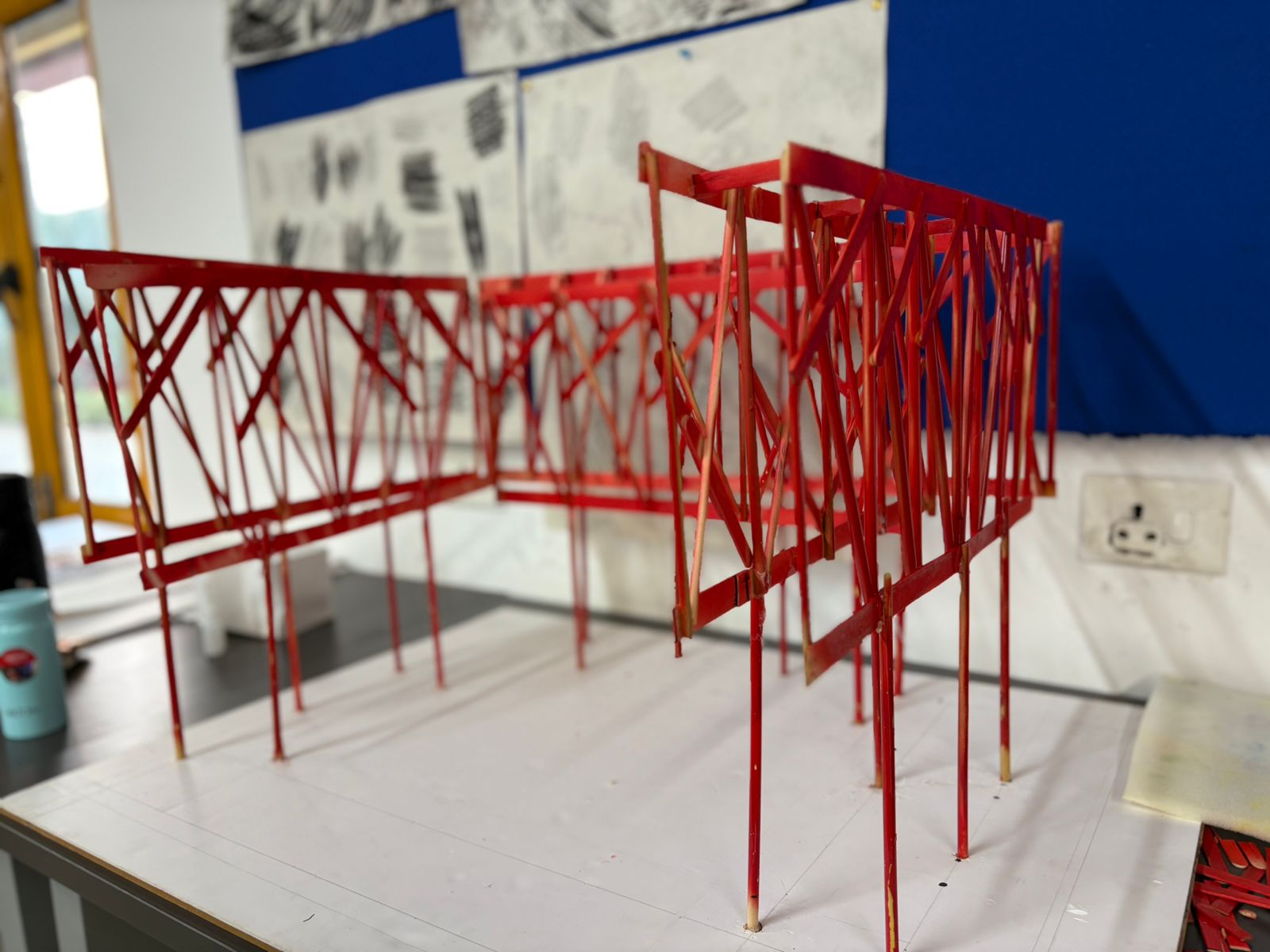

The programme offers a unique possibility to practice as a registered Architect in India, especially for non-science students.
The designed curriculum of JAAP is highly curated and aligns definitively with the overarching graduate attributes of both the partnering universities - JGU and AU. The coursework enables all JAAP students to observe, think and design like an architect. The coursework is highly inter-disciplinary and includes our signature Minor programme as well.
The Jindal Adelaide Architecture Pathway introduces new practicing possibilities for our graduates, who will find themselves eligible for an Australian Architectural License at the end of the complete coursework. With this license, they will be permitted to practice within any of the commonwealth nations, including a practising license by Council of Architecture, India.
Students pursuing the JAAP programme will be studying in Australia for 3 years. They will be exposed to a new ecosystem of education and in that process, will explore the international standards of work and practice. Students will get trained by globally exposed faculty members at Adelaide, which will give them a holistic perspective on global architectural design.
World-class facilities designed to support your creative and technical development
An architecture degree opens doors to diverse and rewarding career opportunities.
Design and deliver buildings from concept to construction, coordinating clients, consultants, regulations, materials, budgets, and on-site execution responsibilities.
Shape cities and public spaces by integrating architecture with mobility, infrastructure, policy, social behavior, climate resilience, and long-term urban growth strategies.
Create functional, aesthetic interior environments focusing on spatial planning, materials, lighting, ergonomics, user experience, and integration of services within buildings.
Bridge design, finance, construction, and market strategy to conceptualize, execute, and manage real estate projects with commercial, residential, or mixed-use focus.
Oversee execution of projects on site, handling timelines, contractors, quality control, safety, procurement, and coordination between design intent and construction realities.
Specialize in climate-responsive architecture, green buildings, energy efficiency, certifications, materials research, and environmentally responsible design solutions.
Leverage parametric design, BIM, automation, simulations, and digital workflows to optimize performance, coordination, and innovation in architectural practice.
Build independent design studios or niche consultancies offering specialized services such as visualization, urban analytics, design strategy, or interdisciplinary innovation.
Teach architecture, conduct design-based research, publish work, and contribute to theoretical, technical, or socio-cultural advancements in the built environment.
Get answers to common questions about our JAAP programme
To be eligible for the JAAP Programme at Jindal School of Design & Architecture (JSDA), O.P. Jindal Global University, Sonipat, candidates must have successfully completed Class 12 (10+2) from a recognised board in any stream (including science backgrounds). Applicants must meet the academic criterion of a minimum of 50% aggregate marks in Class 12 from CBSE, ISC, State Boards, IB, Cambridge, or other recognised boards. A portfolio of prior creative work is also required as part of the application and interview process.
Admission to the JAAP Programme at JSDA is competitive and merit-based, conducted in multiple stages:
1. Application submission with a personal statement.
2. Jindal Creative Aptitude Test (JCAT) or submission of a valid UCEED/NID/NIFT score.
3. Personal interview and portfolio evaluation for shortlisted candidates.
Successful candidates are selected based on creative potential, design aptitude, and interview performance.
Yes — Jindal School of Design & Architecture (JSDA) offers Merit-cum-Means (MCM) Scholarships and other merit-based financial awards to support deserving students enrolled in the JAAP programme. These scholarships are designed to encourage high academic achievers and talented applicants by providing tuition fee support based on family income, board scores, entrance exam results, and interview performance, with some awards potentially covering a significant portion of tuition fees for eligible students.
At the wider O.P. Jindal Global University (JGU) level, scholarships are offered on a merit-cum-means basis across programmes, assessed through a transparent review process that considers academic merit, financial need, and co-curricular excellence.
These financial aids help make high-quality education more accessible and reward students who demonstrate strong academic performance and potential.
Graduates of the Bachelor of Architecture (B.Arch) programme at Jindal School of Design & Architecture (JSDA) are well-prepared for a diverse range of professional paths in India and beyond, blending design, technical skill, and interdisciplinary expertise. The programme’s CoA-accredited training and unique minor options equip students to pursue multiple career roles across the built environment sector.
1. Licensed Architect
Practice independently or with firms, designing built spaces,
managing projects, and coordinating technical, regulatory, and client requirements.
2. Urban Designer / Planner
Work on city layouts, public spaces, policy frameworks,
and sustainable urban development with governments, NGOs or consultancies.
3. Sustainable Design Consultant
Specialise in environmentally responsible design
and green building solutions to meet modern sustainability challenges.
4. Building Information Modelling (BIM) Specialist
Lead digital coordination,
modelling, and collaboration workflows using advanced architectural software.
5. Architectural Visualiser
Create compelling visual representations and renderings
for design proposals, presentations, and client communication.
6. Interior & Spatial Designer
Design functional and aesthetic interior
environments within residential, commercial, or public spaces.
7. Heritage & Conservation Consultant
Work in restoration, adaptive reuse, and
preservation of historic buildings and cultural assets.
8. Academic / Researcher in Built Environment
Pursue teaching, design research, or
postgraduate study to contribute to knowledge, theory, and innovation in architecture.
9. Interdisciplinary & Emerging Roles
Leverage minors and cross-sector skills for
roles in digital design, immersive environments, set/design consultancy, or emerging spatial tech
fields.
These pathways underscore the flexibility and breadth of career options that JSDA’s B.Arch graduates can pursue—whether in traditional architectural practice, specialised design domains, or evolving roles at the intersection of technology and the built environment.
Have more questions?
Contact Admissions TeamThe JWDP programme is a deeply curated Design Progression Pathway, that includes a Dual Degree Opportunity for all the graduates pursuing and completing the 5 years programme.
First 3 Years - Bachelor of Design - Interior Design or
Immersive Experience Design at Jindal School of Design & Architecture, JGU. Successful completion of this
section will advance students to pursue the progression pathway at Westminster, UK.
Next 0.5 Year - Bachelor of Design - Semester
Progression at University of Westminster, UK. This pathway is geared towards providing internation
exposure and education to our students.
Next 0.5 Year - Bachelor of Design - Final Thesis
Semester at Jindal School of Design & Architecture, JGU. Successful completion of this semester will
advance students to pursue the Masters of Design progression pathway at University of Westminster,
UK.
Final 1 Years - Master of Arts (Multiple Options) from
University of Westminster, UK, in various pathways/courses offered by the University.
The overall coursework structure and future career pathways are similar to those of any Design graduates from JSDA. This programme is geared to provide our design students with an opportunity to get global exposure and learn current trends within the field of design.
.jpg.jpeg)
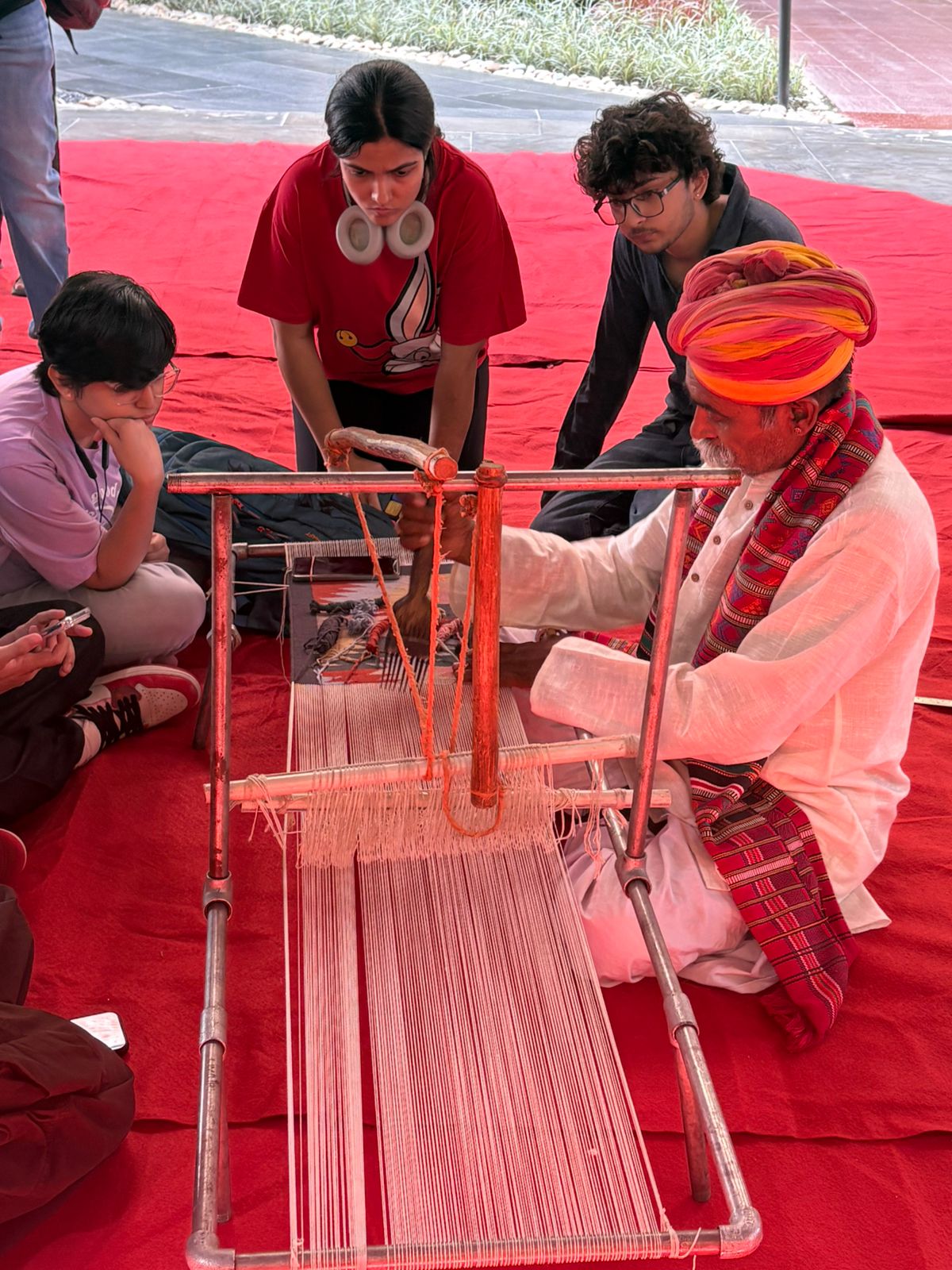
The programme offers a possibility to travel and get global exposure, thereby understanding contemporary trends in design.
The designed curriculum of JWDP is highly curated and aligns definitively with the overarching graduate attributes of both the partnering universities - JGU and AU. The coursework enables all JWDP students to observe, critically think and design as per current global trends. The coursework is highly inter-disciplinary and includes our signature Minor programme as well.
The Jindal Westminster Design Pathway introduces new design learning possibilities for our graduates, who will find themselves exposed to various techniques and methodologies of designing the Built Environment, as per global standards. This learning will make them versatile designers and hence will be highly valued by the industry and several design practicioners and firms.
Students pursuing the JWDP programme will be studying in the United Kingdom for 2.5 years. They will be exposed to a new ecosystem of education and in that process, will explore the international standards of work and practice. Students will get trained by globally exposed faculty members at Westminster, which will give them a holistic perspective on global design trends and processes.
World-class facilities designed to support your creative and technical development
A design degree opens doors to diverse and rewarding career opportunities.
Designs immersive retail environments that integrate branding, spatial planning, customer experience, materiality, lighting, and circulation to influence engagement, behavior, and commercial performance.
Designs and develops immersive AR/VR experiences that blend interaction, storytelling, and technology. Focuses on user flow, spatial interaction, and real-time performance.
Designs immersive, story-driven 3D worlds for games and interactive media. Focuses on environment modeling, lighting, materials, and mood to create believable digital spaces.
Designs spatial environments for film, television, theatre, and digital media, translating narratives into physical sets through materials, scale, detailing, and atmospheric design.
Designs furniture and interior objects by combining ergonomics, materials, fabrication techniques, and aesthetics to create functional, expressive elements within interior environments.
Creates interpretive spatial experiences that communicate narratives through layout, graphics, lighting, multimedia, and material choices while balancing education, conservation, and visitor engagement.
Leads the design of XR products through user research, rapid prototyping, and usability testing. Ensures experiences are intuitive, accessible, and grounded in human-centered design principles.
Designs and models vehicles for games, urban visualizations, and concept design. Balances aesthetics, scale, functionality, and realism across interactive and cinematic contexts.
Creates photorealistic and interactive visualizations for architectural and real estate projects. Uses real-time rendering and storytelling to communicate design intent and spatial experience.
Get answers to common questions about our JWDP programme
To be eligible for the JWDP Programme at Jindal School of Design & Architecture (JSDA), O.P. Jindal Global University, Sonipat, candidates must have successfully completed Class 12 (10+2) from a recognised board in any stream (including science backgrounds). Applicants must meet the academic criterion of a minimum of 50% aggregate marks in Class 12 from CBSE, ISC, State Boards, IB, Cambridge, or other recognised boards. A portfolio of prior creative work is also required as part of the application and interview process.
Admission to the JWDP Programme at JSDA is competitive and merit-based, conducted in multiple
stages:
1. Application submission with a personal statement.
2. Jindal Creative Aptitude Test (JCAT) or submission of a valid UCEED/NID/NIFT score.
3. Personal interview and portfolio evaluation for shortlisted candidates.
Successful candidates are selected based on creative potential, design aptitude, and interview
performance.
Yes — Jindal School of Design & Architecture (JSDA) offers Merit-cum-Means (MCM) Scholarships and other
merit-based financial awards to support deserving students enrolled in the JWDP programme. These
scholarships are designed to encourage high academic achievers and talented applicants by providing
tuition fee support based on family income, board scores, entrance exam results, and interview
performance, with some awards potentially covering a significant portion of tuition fees for eligible
students.
At the wider O.P. Jindal Global University (JGU) level, scholarships are offered on a merit-cum-means
basis across programmes, assessed through a transparent review process that considers academic merit,
financial need, and co-curricular excellence.
These financial aids help make high-quality education more accessible and reward students who
demonstrate strong academic performance and potential.
Graduates of the Bachelor of Architecture (B.Arch) programme at Jindal School of Design & Architecture
(JSDA) are well-prepared for a diverse range of professional paths in India and beyond, blending design,
technical skill, and interdisciplinary expertise. The programme’s CoA-accredited training and unique
minor options equip students to pursue multiple career roles across the built environment sector.
1. Interior Designer / Spatial Designer
Designs functional, aesthetic interior environments across residential, commercial, hospitality, and
institutional projects, integrating materials, lighting, ergonomics, and user experience.
2. Retail & Space Designer
Creates immersive retail environments that align brand identity with spatial planning, customer
behaviour, circulation, and material strategies to enhance engagement and commercial performance.
3. Visual Merchandiser
Designs compelling product displays and spatial narratives using colour, lighting, graphics, and layout
to influence consumer experience in retail and exhibition contexts.
4. Set & Production Designer
Conceptualises and designs spatial sets for film, television, theatre, and digital media, translating
narratives into physical environments through materials, scale, and atmosphere.
5. Object / Furniture Designer
Designs furniture and interior objects by combining ergonomics, material exploration, fabrication
techniques, and aesthetics to support and enhance interior spaces.
6. Exhibition & Museum Designer
Creates interpretive spaces that communicate stories through spatial sequencing, graphics, lighting,
multimedia, and material choices, balancing education, conservation, and visitor experience.
7. Event and Space Curator
Designs and curates temporary spatial experiences for events, festivals, installations, and pop-ups,
focusing on storytelling, scenography, audience interaction, and time-based design.
8. Design Researcher or Stylist
Engages in material, cultural, and trend research to inform interior concepts, styling decisions, and
visual narratives for design studios, brands, or publications.
9. Digital Storyteller / Virtual Production Artist
Creates narrative content and virtual environments using advanced digital tools for film, games, and
experiential media.
10. Gaming & Simulation Designer
Develops engaging gameplay environments and realistic simulations using immersive technologies and
user-centred design principles.
11. Interaction Designer / Interface Architect
Designs intuitive interfaces and interactive systems that optimize user experience across AR/VR and
digital platforms.
12. AR/VR Content Developer
Builds compelling augmented and virtual reality content, blending storytelling with interactive design
and technology.
13. Object / Gaming & Simulation Designer
Designs virtual assets and interactive elements within immersive environments for games, educational
tools, and simulations.
14. Experience Designer / UX Specialist
Crafts seamless and meaningful user experiences across digital, virtual, and hybrid physical-digital
platforms.
These pathways underscore the flexibility and breadth of career options that JSDA’s B.Arch graduates can
pursue—whether in traditional architectural practice, specialised design domains, or evolving roles at
the intersection of technology and the built environment.
Have more questions?
Contact Admissions Team