

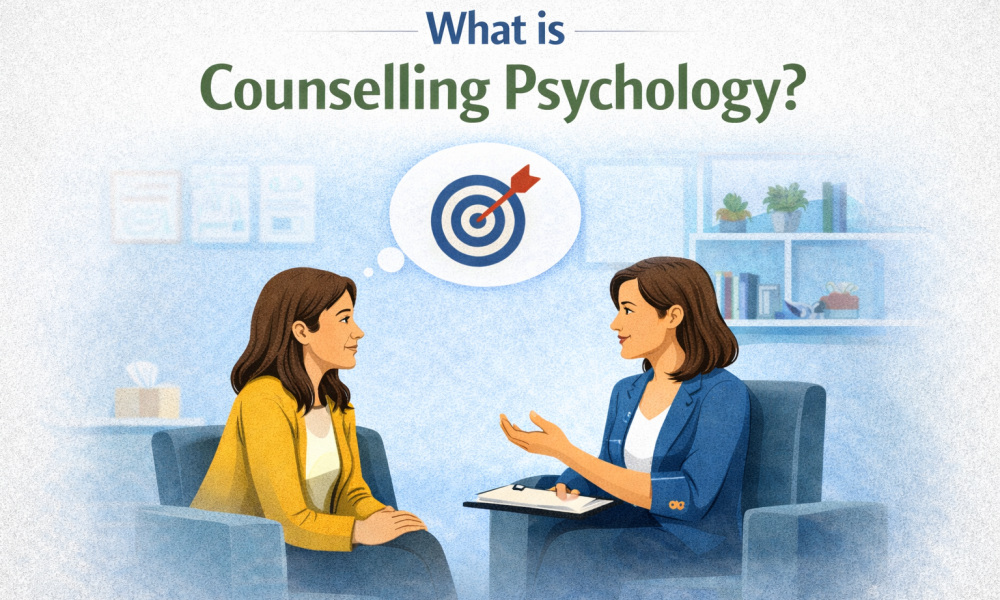
Mental Health awareness has pushed people to consider the impact of stress, emotional challenges, and social implications on their behaviour and actions. This simple realization has allowed people to take mental health concerns as seriously as physical health problems. One of the primary stages for a patient to consider a mental health consultation and book a counselling psychology appointment as soon as possible.
Table of Contents
ToggleWhat is counselling psychology?
Psychology is all about understanding concerns and conditions affecting mental health and devising plans that effectively bring about changes to their lives, and one such way is through counselling. Counselling psychology is a subfield of Psychology, where the patient is sent to a licensed psychologist for counselling sessions to discuss their problems and the best course of treatment.
Counselling psychologists in practice use a broad range of cultural, social, and personal information to determine the cause of crisis or distress, and actively work on resolving each issue so patients can function without mental or emotional outbursts and live a balanced life.
Who Is The Right Candidate For Specializing In Counselling Psychology?
Patients with psychological issues tend to require special care and attention, which the psychologists have been trained and equipped to perform. Hence, the qualities that are most valued in psychology are empathy, compassion, understanding, communication, and lastly, professionalism.
Along with this, a master’s degree in counselling psychology teaches you tactical skills like counselling techniques, personality theory, developmental psychology, and client assessment and evaluation. Aspiring psychologists must complete the following steps to build the knowledge and skills required to start practising as a professional psychologist.
Step 1: To choose psychology as a profession, you will need to get a bachelor’s degree or a basic undergraduate degree from a recognized university. Undergraduate programmed in Counselling Psychology are rare, and the basic undergraduate degrees offer a broader understanding.
Step 2: After completing your 4-year undergraduate programmed, ambitious students will already be seeking to pursue an advanced educational qualification, through a master’s degree in psychology or even a specialized master’s degree in counselling psychology.
Step 3: To further increase your academic qualification and to acquire a license for practising, a doctoral degree is often considered essential. It is a programmed that usually takes about 4 years to complete, and may include research papers as well.
Step 4: While you are at it, you must also apply for internships and may even have to go through several hours of training under the supervision of licensed psychologists. Becoming a counselling psychologist requires years of supervised training and hands-on experience, along with meeting the licensing or registration guidelines set by relevant authorities
These steps are the most straightforward to becoming a successful psychologist with a state licensure to start practising right away. These programmed prepare students with professional expertise and experience, so they become competent with their techniques. A counselling psychologist is specifically known for their counselling sessions and the use of various methods to reach their patients.
Why Should You Major In Counselling Psychology?
Counselling psychology is a course that focuses on practising psychological techniques for counselling and includes medical practices. It enables you to perform psychological evaluation, counselling, and suggest potential solutions to patients to alleviate their mental health troubles. There can be tons of reasons for anybody to major in counselling psychology, and some of them can be as follows:
- The most important reason that often gets undermined in this materialistic world is that mental health counselling is a noble profession that makes a huge difference in the patient’s life, regardless of what they get paid.
- Talking about career prospects and paychecks, after majoring in Counselling Psychology, you can apply to become a counsellor across different sectors, such as education, healthcare, corporate, industry, etc.
- While professional fields are mostly known for the practical application of knowledge, some professional spaces provide the opportunity to learn in the field and improvise on an individual approach accordingly.
If you have a genuine interest in professionally helping other people with their personal and life struggles, then counselling psychology can be something you must look into. Along with the educational qualifications, soft skills like good communication, compassionate behaviour, and exceptional listening skills are highly valued in the field of psychology.
How Will The Counselling Psychology Degree Be Materialized In The Professional Field?
The rise of mental health awareness across sectors and the normalization of psychological practices have obviously been beneficial for psychologists and psychology students, and researchers. As the importance of mental health gets normalized across fields, the need for psychologists and counsellors across sectors has increased significantly. With a Counselling Psychology degree, you can apply for the following job posts.
- Clinical Social Worker
- Adult & Geriatric Counsellor
- School Counsellor
- Sports Psychologist
- Organizational Counsellor
- Health Psychologist
- Group Counsellor or Therapist
- Corporate Wellness Officer
The Counselling Psychology master’s degree allows you to become a counsellor in almost any field or sector, as long as you have the necessary skills and knowledge of various professional techniques to treat patients.
What Can You Expect To Learn In A Counselling Psychology Degree Course?
A counselling psychology degree focuses on the different psychological methods used for treating certain psychological problems and assisting in real-life cases alongside licensed psychologists to gain experience of the actual sessions. The course may include electives or specialized research options, which can be good for aiming for a specific career within psychology.
How Counselling Psychology Differs From Clinical Psychology?
People often get rightfully confused between Clinical Psychology and Counselling Psychology. To be fair, both are only different sub-fields of psychology with a different approach toward psychological treatments and a similarity in the ultimate goal of promoting positive growth and mental well-being.
Clinical psychology is more lenient toward mediational treatment, and the cases often feature severe mental conditions, which demand medical attention and intervention. Whereas counselling psychology is more focused on a dialogue-driven approach with activities and positive changes that lead to a better and healthier way of living.
You can become a counselling psychologist with a master’s degree and by completing the necessary procedure for applying for state licensure. However, to become a clinical psychologist, you need a doctorate degree and hours and years of experience among professionals.