
Introduction
Many misconceptions still exists around the idea of having an established career as an artist, which is often believed to be full of struggle and lacking immediate silver linings. This is why, while most Indian students will choose Science or Commerce streams in the 12th board. However, the rare few who dare to choose the Arts must capitalise on an undergraduate degree. The BFA job opportunities are varied, and students can look for work across different sectors.
What is the Aim of a BFA Degree Course?
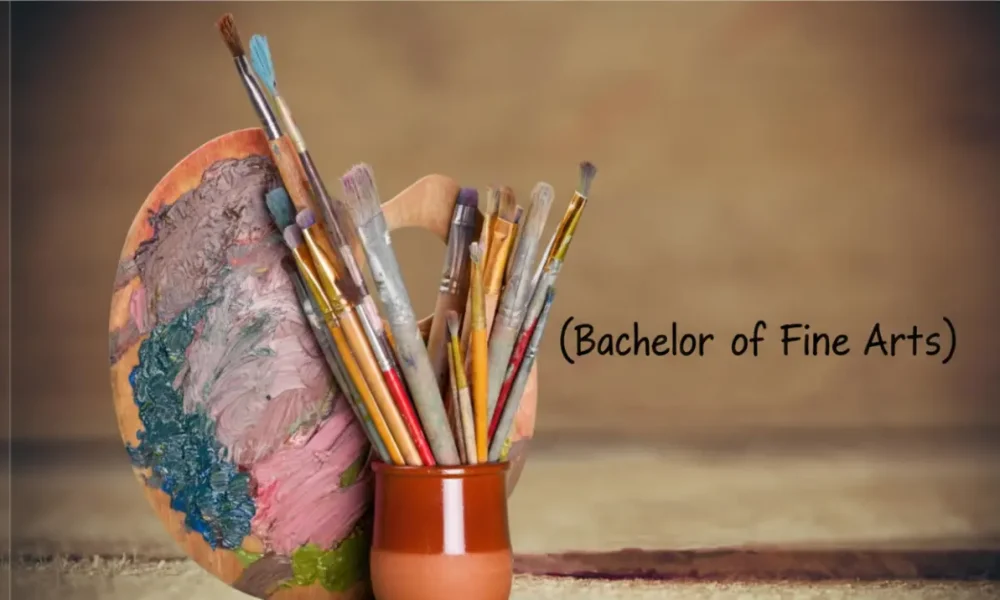
The Bachelor’s Fine Arts is a prestigious degree that allows artistic people to make use of their art to create something beautiful and valuable at the same time. Despite the popular misconceptions, the BFA course has plenty of options for students to choose their subject of interest and specialise in that segment.
If you look at the BFA job opportunities, you will notice an interesting pattern emerging. The course is targeted toward people with an inclination for art and craft, and the BFA degree allows them to identify their talent and skill and encourages them to polish their qualities to meet the market demand. Thus, the BFA degree aims to guide artists toward the best possible course to be successful in life.
Why Should You Study Bachelor’s of Fine Arts?
The Bachelor’s of Fine Arts course is dedicated to budding artists, shaping their futures in ways they never thought of. There are many benefits to the BFA programme, especially to an aspirant in the field of art. Along with their innate artistic taste and talents, they will also learn other vocational skills necessary to make a career in the professional world of art. Here are the reasons for studying a Bachelor’s of Fine Arts.
- Digital tools have changed art, but core skills like drawing, perception, and colour theory are still essential.
- Conceptual thinking and creativity can’t be automated, and a BFA program helps strengthen these human skills.
- A formal Fine Arts course provides a structured learning environment with access to high-quality facilities and resources.
- Expert mentorship from trained faculty offers guidance that self-learning or remote learning can’t replace.
- Hands-on training with professional digital tools prepares students for real-world artistic work.
- A BFA program builds community and networking, connecting students with peers and industry professionals for future opportunities.
The BFA job opportunities are based on several factors, and these are only a few critical reasons why getting a formal academic degree in Fine Arts is incredibly necessary. Having artistic talent is one thing; however, to improve your craft systematically, you will need the BFA course.
What are the Qualities or Skills Needed for a Career in Fine Arts?
The journey from transforming one’s artistic hobbies into a professional outlet is not something that everybody can pull off on their own. This is why courses like BFA exist to guide students to explore their artistic talents and acquire skills that would help them reach their desired career goals. Universities are well-equipped to provide such opportunities, and the skills you could obtain from such programmes are listed below.
Composition: Any artistic piece is entirely dependent on the composition of subjects to create a visual impression that has some meaning to the audience. Composition is basically all the materials and methods used in making art with a definite purpose.
Perspective & Proposition: As a visual artist, perspective and proposition are two things that cannot be taken lightly. Perspective helps artists use different materials to create visual appeal. At the same time, proportion helps them measure the position of different objects to create realism.
Colour Theory: Colours play an integral role in any artistic work by emulating the emotional essence of the final product. Colour theory allows Fine Arts students to understand how colours assimilate in building something visibly meaningful through art.
Computer Skills: There is no escaping technology, so embracing it and using tools that could make your work easier to present, and that too in less time.
Communication & Networking: Lastly, as an emerging artist, it is important to develop good communication skills to establish networks with other artists for collaboration and to look for relevant BFA job opportunities.
Most aspiring artists have certain inborn talents and skills that they need to shape into something great by getting a formal education in the subject with proper guidance to help them refine their craft. To have a successful career in Fine Arts, students need to work hard on both their hard and soft skills. For whatever an artist creates, the idea and artwork must be presented to viewers with the purpose of making a sale.
| Skill | Importance |
| Composition | Helps in organizing elements meaningfully in an artwork. |
| Perspective & Proportion | Adds realism and visual accuracy to the creation. |
| Colour Theory | Guides emotional expression and visual balance through colour. |
| Computer Skills | Essential for digital art, editing, and multimedia presentations. |
| Communication & Networking | Important for collaborations, marketing, and career growth. |
Top 8 Job Opportunities After a BFA in India
Bachelor’s of Fine Arts is a pristine degree course that offers diverse career prospects due to the various industries it has been linked to. However, sincere students in the BFA course already have significant goals as to which specific industry they want to work for. Here are the top 8 job choices one can look into after obtaining the BFA degree.
- Graphic Designer
- Animator
- Art Director
- Photography
- Fashion Designer
- Script Writer
- Visual Artist
- Technical Illustrator
These are the top 8 BFA job opportunities, and the list simply does not end here. As a diverse field with versatile artistic outlets for expression, the BFA is the perfect academic course for creatively gifted individuals to sharpen their skills and hone their crafts for a sizable audience.
| Job Role | Description |
| Graphic Designer | Creates visual concepts using digital tools for branding, ads, and media. |
| Animator | Designs moving visuals for films, games, and advertisements. |
| Art Director | Leads visual styles and content in media like magazines, TV, or advertising. |
| Photographer | Captures moments for commercial, artistic, or journalistic use. |
| Fashion Designer | Develops apparel and accessories with artistic and cultural influence. |
| Script Writer | Crafts storylines and dialogues for films, web series, or plays. |
| Visual Artist | Creates fine art pieces—painting, sculpture, installations, or digital work. |
| Technical Illustrator | Produces precise visuals for manuals, product guides, or educational materials. |
Does Fine Arts Study Have Any Relevance in 2025?
Fine Arts is often thought of as a risky business from a purely careeristic standpoint. However, the rising trends of technology and Artificial Intelligence in the art world tell of a different story. There has also been a rising trend of sustainable art practices. Therefore, the BFA job opportunities are only expected to increase in the coming times, as art gets blended into the digital space for creating an immersive visual appeal.