
By combining art and technique, architects conceptualize building structures that serve a specific purpose. While aesthetic qualities in architecture make it an expression of artistic values, the technicalities to build the structure with principles and practicality are what make it a utilitarian concept. Most of the design institutes in India encourage their students to be artistic and, at the same time, consider useful elements and features that make an architectural design be of value to a potential client or the public at large.
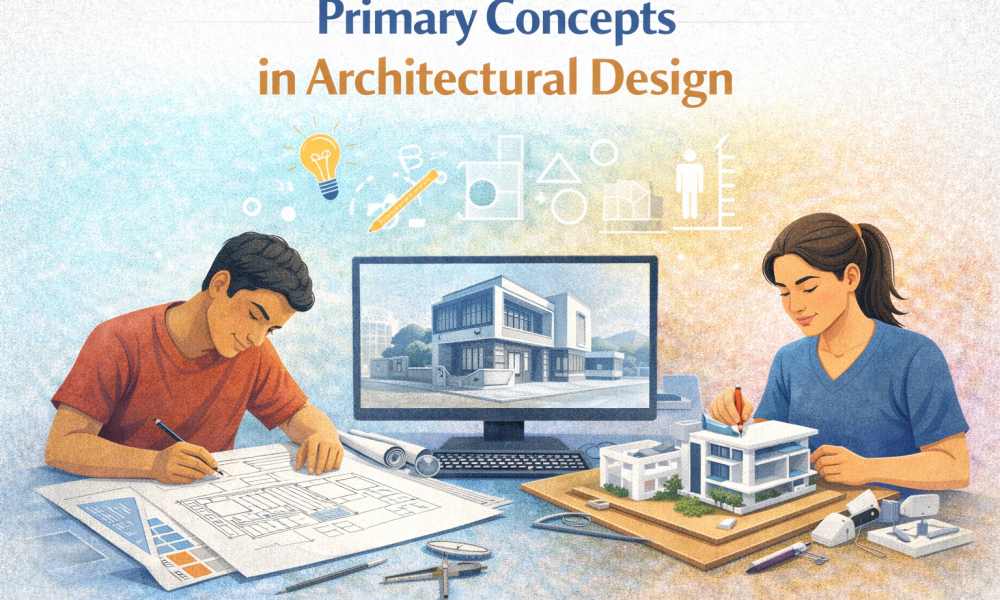
Primary Concepts In Architectural Design
To prepare a functional architectural design plan, an architect needs to follow certain principles and concepts that give the structure the meaning it requires. Every Design institute in India pays significant attention to teaching students on the topic of architectural concepts in detail. An architectural design basically has to consider three core concepts, based on which the structure will eventually be erected and expected to serve its actual purpose for a significant time.
1. Elements Of Design
Design is at the core of architecture, and this is derived from six elements that examine our understanding and interactions with buildings. These six elements of design are: Line, Direction, Proportion, Texture, Color & Value, and Shape & Form. Each of these design elements plays a crucial role in presenting a palpable idea with a realistic and practical footing.
2. Architecture Design Principles
The design elements are applied alongside the design principles to make an architectural structure meet its ultimate potential. There are almost 13 principles that are broadly used in modern design projects, which meet the vision and needs of the client. Emphasis, Axis, Symmetry, Asymmetry, Balance, Datum, Space, Movement, Rhythm, Scale, Unity, Contrast, and Material are the 13 design principles for architects to use in solving architectural problems and delivering the project requirements.
3. Decision-Making Principles Of Architecture
While the elements and principles of design help in primary conceptualisation, to create a viable architecture framework, other decision-making principles must be looked into. There can be numerous things to consider in an architectural decision-making process. However, eight decision-making principles, like bending the rules, building for the environment, integrating technology, focusing on solving the problem, sketching your concepts, repurposing, combining new and old, and appropriateness, are the most important considerations.
These primary concepts of architectural design are at the centre of the fundamental courses offered in any Design institute in India. To become a licensed architect, one must have knowledge of different architectural concepts to design projects as per client requirements.
Fundamental Architectural Courses To Choose From
Architecture is one of the oldest professions, and its value never diminishes. Naturally, many people aspire to become successful architects and build something of significance. Architecture allows an artist to create a lasting impression with their innovative ideas, leaving a definite mark with their work. A Design institute in India helps you get the basic knowledge required for overseeing architectural projects.
1. Bachelor’s Of Architecture
The Bachelor of Architecture is a multidimensional programme featuring different subjects that fall within the umbrella of the arts. The BA degree in Architecture is usually completed between 4 to 6 years, depending on the specializations opted by the student. For the BA Architecture course admission, the minimum requirement is a Class 12 board marksheet and certificate; however, some institutes may have different eligibility criteria.
2. Bachelor’s Of Design
The Bachelor of Design (B.Des) is a versatile programme that focuses on creative and practical aspects of design. It covers design principles, problem-solving, and exploring design in both physical and digital spaces.
Design programmes in India are offered in various specializations, including interior design, immersive design, product design, and more. While architecture-related design may have specific applications, most design fields focus on skill development, creativity, and practical experience rather than licensing requirements.

Learning Innovative Design Skills From An Architectural Programmes
An architectural programme offers each student the opportunity to develop crucial architectural skills and design concepts that can be directly applied to projects to make them as useful as possible. Students learn soft and hard skills along with a few transferable and non-transferable skills. Here are four categories of architectural design skillsets you will obtain from an architectural course.
1. Technical Proficiencies
The design concepts coupled with engineering principles and building-code regulations make an architectural structure live up to its original purpose. As the design part of architecture crosses over to the digital world, learning the technical skills and familiarizing with design tools like CAD has become essential in the architectural profession.
2. Creative & Conceptual Skills
As an architect, your creative skills are the first thing that gets evaluated. The conception of the entire project is the first step, which must consist of creative and functional elements to meet the vision and demands of the client or future residents of the building structure.
3. Communication Skills
If creativity and technicality are the two most essential things for architecture, without proper communication and articulation of concepts, an architect will have trouble selling their ideas to investors. Architects must participate in collaborative efforts and teamwork to deliver the project according to the client’s needs.
4. Project Management Skills
Lastly, as an architect, you must oversee an architectural project from the start to the very end, managing all operations in sync to achieve the desired goal. An architectural project has many elements working together, and the architect is made in charge of managing and monitoring all parts of the project in utmost detail.
 Trending Job Positions For Licensed Architects & Designers
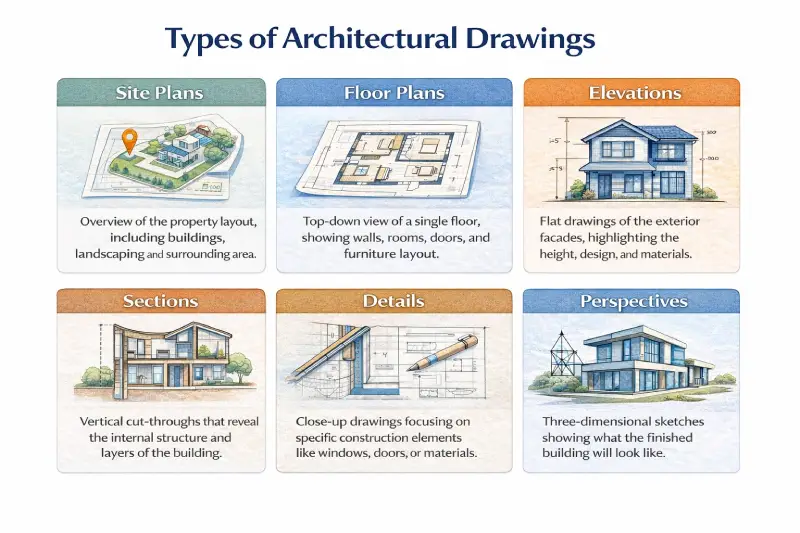
A Design institute in India motivates its students in popular career paths that are currently trending in the field of architecture. To become an independent architect and acquire a license for practice, you will need a specialised degree. If you don’t apply for a license, the degree is still going to be useful in getting the following jobs in the architectural field.
- Architectural Designer
- Architectural Drafter
- Architectural Project Manager
- Building Information Modelling Coordinator
- Urban Planner
- Design Assistant
- Building Code Specialist
When studying in a Design institute in India, students are encouraged to learn from the experts and obtain special knowledge and skills, unlike other certification courses. An institutional degree is still considered the only route for acquiring a license; however, you can always try other options in the meantime.