
The evolution of psychology as a discipline over the years has significantly changed how it was perceived in its early days compared to how it is perceived today. Despite growing awareness of the subject, there remains confusion between psychology and psychotherapy, especially for individuals wanting to build a professional life along the same lines.
What Is Counselling Psychology?
Psychology is a vast subject divided into various specializations. This categorization helps to learn about its intricacies. Counselling psychology is one of the specializations that happens to be quite popular in the healthcare industry. To define counseling psychology, it is a specialization in psychology that relies on psychological principles to promote positive growth, mental health, and overall well-being of individuals, groups, families, or entire communities.

What Is Psychotherapy?
Psychotherapy is one of the psychological processes that helps people get treated for a wide array of mental health conditions and emotional challenges. Psychotherapy treatment helps the mental health professional get to the root of the mental health problems and suggest activities, lifestyle changes, therapy sessions, and, in some cases, medications to ease their troubles. There are different types of psychotherapy or methods for approaching every case from multiple angles.
What is the difference between counselling psychology and psychotherapy?
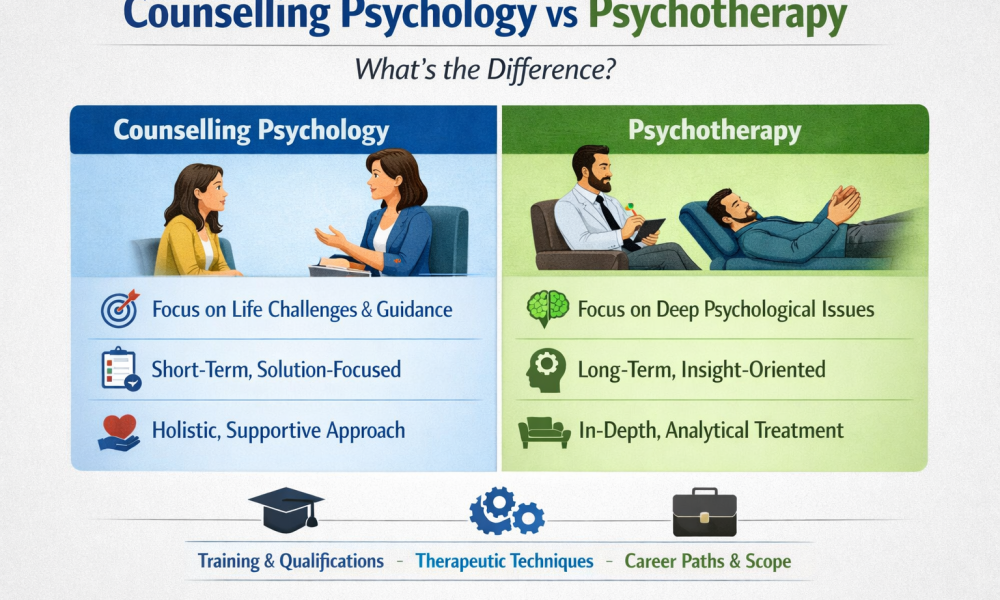
The terminology of psychology and psychotherapy may seem to mean the same thing, but there is more to it than meets the eye. For starters, counselling psychology and psychotherapy are two specialized fields within psychology with distinct professional approaches. Here are the differentiating factors between psychotherapy and counselling psychology.
| Psychotherapy | Counselling Psychology |
| Psychotherapy is required for chronic mental issues. | It’s more about managing your emotions, stress, and current issues. |
| By speaking with the clients, psychotherapists try to identify patterns and behaviour within their thought processes. | Whether a specific event or behaviour, counselling psychology attempts to get to the bottom of it. |
| Psychotherapy patients are more likely to have long-term therapy sessions, spanning over years on end. | Counselling psychology is a short-term practice that typically concludes once the patient feels better. |
| Patients with psychological disorders or other long-term problems affecting their functionality will require psychotherapy. | Functioning individuals with recent issues related to stress, emotional challenges, corporate or educational pressure, etc., are the most suitable candidates for counselling psychology. |
The goal of psychology and psychotherapy may be similar, but their approaches are quite different. Whether you want to become a counselling psychologist or a psychotherapist, you will need a specialized degree in the subject.
Major Types Of Psychology
Psychology is a well-rounded course programmed consisting of various subfields that offer particular knowledge and insights regarding specific areas of psychology. The evolution of psychology has made way for around 18 areas of specialization, noted below.
- Abnormal Psychology
- Clinical Psychology
- Cognitive Psychology
- Cross-Cultural Psychology
- Developmental Psychology
- Educational Psychology
- Environmental Psychology
- Experimental Psychology
- Forensic Psychology
- Health Psychology
- Industrial Organizational (I-O) Psychology
- Neuropsychology
- Physiological Psychology
- Positive Psychology
- Rehabilitation Psychology
- Social Psychology
- Sports Psychology
Ambitious students with a dream of becoming a specialized psychologist can advance their academic qualifications and career by majoring in one of the above-mentioned areas of psychology.
What Are The Types Of Psychotherapy?
Psychotherapy consists of different psychological methods and techniques to intervene, understand, and evaluate the conditions of their patients’ mental well-being. The different forms of psychotherapy treatment procedures are briefly explained in the next segment.
Cognitive Behavioral Therapy: For managing certain mental health conditions and treating emotional concerns, CBT is considered the best option. It helps the patients to regulate their thought patterns towards a positive way and adopt healthier emotional habits for a better and balanced life. Its structure and goal-oriented approach focus on the effective outcome of the process.
Dialectical Behavioural Therapy: Modelled similarly to CBT, the Dialectical Behavioural Therapy is a type of talk therapy session specifically designed for people with intensely emotional experiences and challenges. This sort of therapy allows patients to balance their validation of self and understanding of the emotional challenges, and manage the same through new skills obtained from the sessions.
Interpersonal Therapy: Temporary or short-term therapy sessions are considered interpersonal therapy, which identifies underlying issues, unresolved emotional conflicts, social or work-life changes, and similar problems of everyday life. The goal of interpersonal therapy is to promote healthy ways of emotional expression and improved communication.
Psychodynamic Therapy: In the case of psychodynamic therapy, it is believed that mental well-being and behavioral outcome are predominantly influenced by childhood experiences. It also believes these childhood experiences go on to shape repetitive thoughts and feelings, which are not consciously imagined. The goal for such therapy sessions is to build self-awareness and recognize old patterns and swap them for healthier ones.
There are other types of experimental therapies that have proven to be effective, often when used in combination with the above-mentioned procedures. These are: creative arts therapy, animal-assisted therapy, play therapy, group therapy, marriage therapy, family therapy, and so on. These different techniques are used in combination by a psychologist or psychotherapist to achieve the best outcome possible.
Psychologist Or Psychotherapist, Which Profession Is Better?
Both psychology and psychotherapy are prestigious educational qualifications with great value in the professional space. To become a psychologist, one must at least have an undergraduate degree in psychology, and if you have a specialization in any of the areas of psychology, then it’s even better for quickly landing career opportunities.
Psychotherapists are basically practicing psychiatrists or psychologists, with the license to perform psychotherapy along with prescribing medications for treatment. It is vital to have a master’s degree in counselling psychology or any other subfield to qualify for becoming a psychotherapist and performing psychoanalysis, therapy, and more.
The idea and ultimate goal of psychology and psychotherapy are typically the same, but to achieve this goal, they take different routes. Mental health is an important topic, and it must be valued as much as one values their physical health. The best candidates for the profession of psychology are those with an innate compassion and empathetic qualities that can be utilized to do good for others in an efficient way.