

Home

M.A.; Ph.D. (Southern Methodist University)


M.A. (Economics) (Jawaharlal Nehru University);


B.A. (Economics) (Shri Ram College of Commerce, Delhi University);

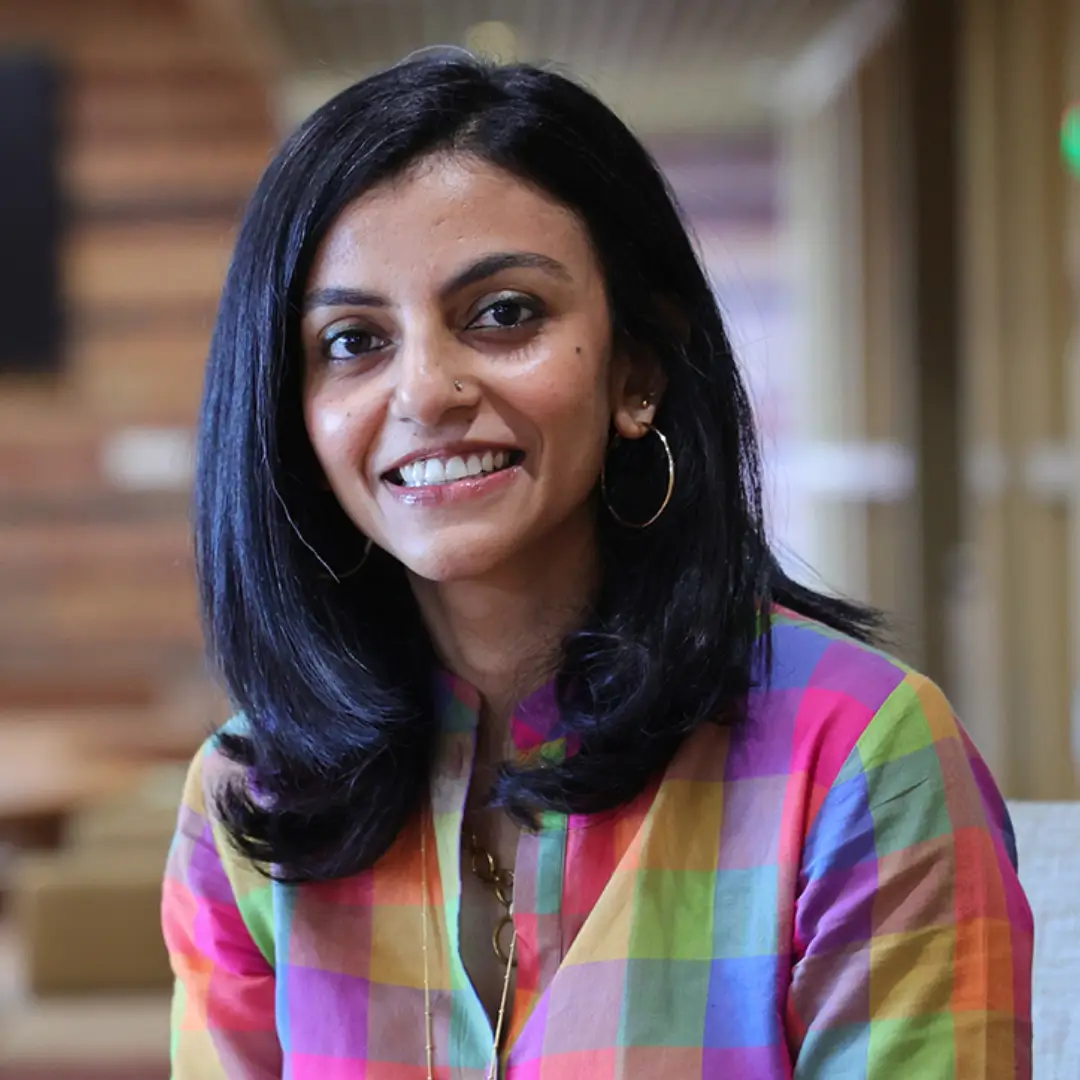
Prof. (Dr.) Manini Ojha

Professor and Editor, Jindal Journal of Public Policy

Email mojha@jgu.edu.in
Connect with me Linkedin
ORCID ID 0000-0001-8933-6560
Key Expertise Applied Econometrics, Development Economics, Economics of the Household, Economics of Education, Economics of Gender, Health Economics and Labour Economics

M.A.; Ph.D. (Southern Methodist University)


M.A. (Economics) (Jawaharlal Nehru University);


B.A. (Economics) (Shri Ram College of Commerce, Delhi University);


Biography

Dr. Manini Ojha is a Professor at the Jindal School of Government and Public Policy, O.P. Jindal Global University, where she has been teaching since 2018. She is also a Fellow of the Global Labor Organization, a Non-Resident Fellow at the Centre for Development Economics and Sustainability, Monash Business School, and a Fellow at the Jindal Institute of Haryana Studies.

She completed her Ph.D. in Economics from Southern Methodist University, Dallas, Texas, in 2018. Prior to joining SMU, she was an Assistant Professor in the Department of Economics at Lady Shri Ram College for Women, University of Delhi. She holds an M.A. in Economics from Jawaharlal Nehru University, New Delhi, and a B.A. from Shri Ram College of Commerce, University of Delhi.

Her research has been published in journals such as Economic Modelling, Economics of Education Review, Journal of Development Studies, and Economics & Human Biology, among others. Her research interests lie in applied microeconometrics, empirical development economics, household economics, economics of education, gender economics, and labour economics. Her current work focuses on household dynamics and gender differences, domestic violence, health and educational outcomes, and the effects of government policies on household and individual behaviour.

She teaches courses in statistics, econometrics, applied econometrics, and development economics.

Development Economics,

Survey Design & Data Analysis, 

Advanced Econometrics, 

Empirical Development Economics, 

Econometrics - I & II (UG)

Econometrics (Masters),

Statistics (Masters),

Statistics and Probability - I & II (UG)

Attitudes and norms about domestic violence: What makes women more impressionable? , with Gaurav Dhamija, Mehreen Mookerjee and Sanket Roy (forthcoming in Feminist Economics)

Towards improved menstrual health: The causal impact of period products on reproductive tract infections, with Karan Babbar, Oxford Development Studies, 2026, 1-27. DOI: https://doi.org/10.1080/13600818.2026.2613965

How period products impact women’s health, with Karan Babbar, Ideas for India, (English version and Hindi version), April 2026.

“Power to choose? Examining the link between contraceptive use decision and domestic violence”, with Karan Babbar, Economics and Human Biology, 2024, Volume 55, 101416. DOI: https://doi.org/10.1016/j.ehb.2024.101416.

Decisions and dynamics: Unpacking the impact of contraceptive decisions on domestic violence, with Karan Babbar, Ideas for India, 2024

Workplace Maternity Benefits Elude 94% Working Indian Women, with T. S. Kavita Rajeshwari and Avanindra Nath Thakur, IndiaSpend, 2024

What NFHS-5 reveals about menstrual health and hygiene practices, with Karan Babbar, The Economic Times, 2024

“Family planning practices: Examining the link between contraception and child health”, with Mehreen Mookerjee and Sanket Roy, Economic Modelling, 2023, Volume 129, 106562. DOI: https://doi.org/10.1016/j.econmod.2023.106562

“In good times and bad: Voice-call based teaching during a pandemic”, with Kartik Yadav, Economics of Education Review, 2023, Vol. 96, 102439. DOI: https://doi.org/10.1016/j.econedurev.2023.102439

“Binary and Ordinal Probit Regression: Applications to Public Opinion on Marijuana Legalization in the United States” with Mohit Batham, Soudeh Mirghasem, and Mohammad Arshad Rahman, in “Applied Econometric Analysis Using Cross Section and Panel Data”, Springer 2023.

Towards an Inclusive National Policy on Menstrual Health and Hygiene, with Karan Babbar, Observer Research Foundation, 2023

Home-based learning through low-cost mobile teaching: Findings from Odisha, with Kartik Yadav, Ideas for India, 2023

Contraceptive decision-making in India, with Karan Babbar, Observer Research Foundation, 2023

“Does Increased Credibility of Elections Lead to Higher Political Competition? Evidence from India”, with Somdeep Chatterjee, Mehreen Mookerjee, Sanket Roy, European Journal of Political Economy, 2022, 102277.

“Fertility targets: Linkages between desire for sons and sterilization in India”, with Mehreen Mookerjee and Sanket Roy, Applied Economics, 2022, DOI: 10.1080/00036846.2022.2083069.

“Hunger and Health: Reexamining the Impact of Household Food Insecurity on Child and Adolescent Malnutrition in India”, with Punarjit Roychowdhury and Gaurav Dhamija, Journal of Development Studies, 2022, 1-28.

Food insecurity and child malnutrition: New empirical evidence from India, with Gaurav Dhamija and Punarjit Roychowdhury, Ideas for India, 2022

“Gender gap in schooling: Is there a role for health insurance?”, Journal of International Development, 2021, 1-26.

“Who’s your neighbour? Social influences on domestic violence”, with Mehreen Mookerjee and Sanket Roy, Journal of Development Studies, 2021, DOI: https://doi.org/10.1080/00220388.2021.1969012.

“Spousal beliefs and intimate partner violence: Are women conditioned to internalize patriarchal norms?”, with Mehreen Mookerjee and Sanket Roy, Economics Letters, 2021, 202, 109811.

“Do Online Courses Provide an Equal Educational Value Compared to In-Person Classroom Teaching? Evidence from US Survey Data using Quantile Regression”, with Mohammad Arshad Rahman, Education Policy Analysis Archives, 2021, Vol. 29, No. 85, 1-25.
Email mojha@jgu.edu.in
Connect with me Linkedin
ORCID ID 0000-0001-8933-6560
Key Expertise Applied Econometrics, Development Economics, Economics of the Household, Economics of Education, Economics of Gender, Health Economics and Labour Economics