
For students deriving inspiration from storytelling, investigative reporting, or digital communications, or for that matter, the thrill of just telling the truth, journalism offers a very exciting path. But before diving into a world leading to newsrooms, documentaries, podcasts, and digital content, the right institution has to be chosen.
The answer to the best college for journalism in India lies not just in brand names but in understanding what truly defines a future-ready journalism education. Media is changing faster than ever, driven by technology, global perspectives, data, and a growing need for ethical and responsible storytelling. The best colleges are those that prepare students for this new reality with a mix of academic depth, practical exposure, mentorship, and innovation.
What Should You Look for in a Top Journalism College?
The perfect journalism institution isn’t one that has the largest number of courses, but one that best gives you the strongest foundation for starting a career in today’s media environment. That means a curriculum shaped around real needs of the industry, professors who have lived newsroom life, and a campus ecosystem that encourages curiosity, creativity, and courage.

A strong programme in journalism today should have:
- Cross-platform multimedia storytelling in video, audio, digital and print
- Leadership abilities and Fearlessness
- Data literacy and digital research methods
- Fact-checking and ethical reporting
- Digital media tools, SEO, analytics, and audience engagement
- Practical newsroom-style training
- Exposure to global media trends
- Interdisciplinary learning
- Above all, it should provide chances to practice journalism, not just study it.
Why JSJC, O.P. Jindal Global University stands out among other journalism schools?
When it comes to finding the best college for journalism in India, the Jindal School of Journalism & Communication, O.P. Jindal Global University (JGU), has invariably emerged as one of the most forward-looking and transformative institutions of the country. JGU is an Institution of Eminence (IoE) recognised by the Ministry of Education, Government of India—an elite status given to only a handful of universities in the country.
Different from most other journalism programs, which rely heavily on theory, the JSJC incorporates liberal arts, technology, global perspectives, and practical production into one integrated learning process.
JGU has over 430+ global collaborations, including partnerships with leading media schools and universities across the US, UK, Europe, and Asia. The university has a 1:9 faculty–student ratio, among the best in the country, ensuring personalised mentorship. JGU has been ranked as India’s No. 1 Private University in the QS World University Rankings for multiple consecutive years, strengthening the value of a JSJC degree in both India and abroad.
Holistic Curriculum Customized for the Newsrooms of Today
Journalism isn’t static-so why should a curriculum be?
The JSJC program is always kept current to reflect the changing tools and trends of the contemporary media. Students learn:
- Storytelling with multimedia
- Mobile journalism
- Documentary production
- Editing, sound, and visuals
- Social media strategy
- Data journalism
- Digital storytelling
- Media law and ethics
Each course provides the building blocks of skill and perspective to enable students to successfully work in digital-first media environments.
Expert Faculty Who Bring Real-World Expertise
One of the key differentiators of JSJC is the faculty-an acknowledged amalgamation of prominent practitioners, scholars, and international researchers in journalism and mass media. With stalwarts like Sreenivasan Jain-a devoted journalist with several awards to his credit-in the faculty, it adds immense value. Students learn from those who were/are in newsrooms, reported from the ground, handled high-pressure situations, and shaped national conversations.
The mentorship-driven model thus helps students evolve as responsible, reflective communicators, in addition to becoming accomplished journalists.
World-Class Infrastructure and Media Labs
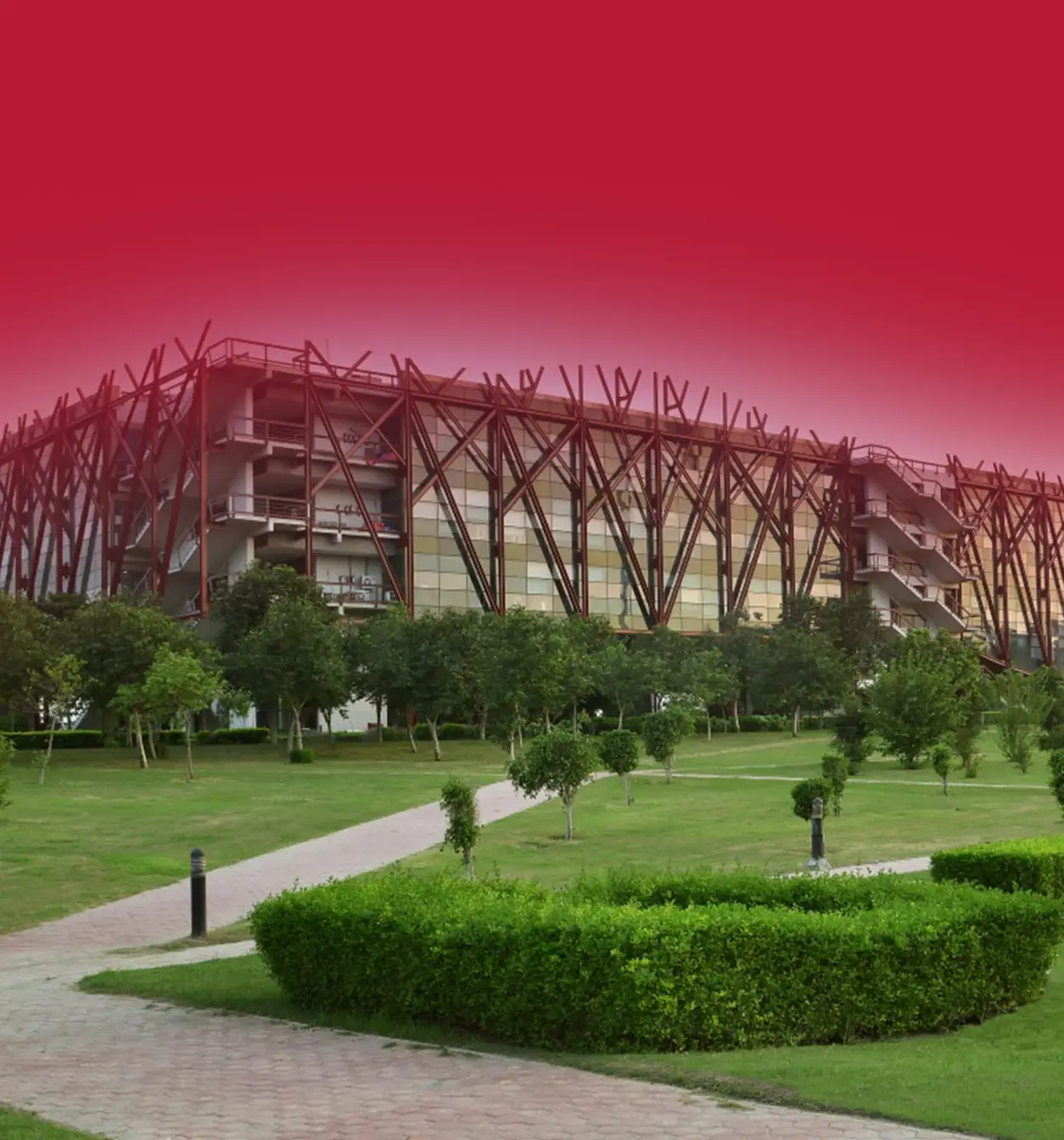
Providing state of the art facilities, JGU’s campus has an Immersive Media Learning Environment.
JSJC is home to –
- Professional video and broadcast studios
- Editing labs equipped with industry-standard software
- Green screen production facilities
- Audio studios for podcasts and radio production
- Journalism labs with multimedia equipment
- Dedicated lab spaces for virtual reality (VR) and augmented reality (AR) storytelling.
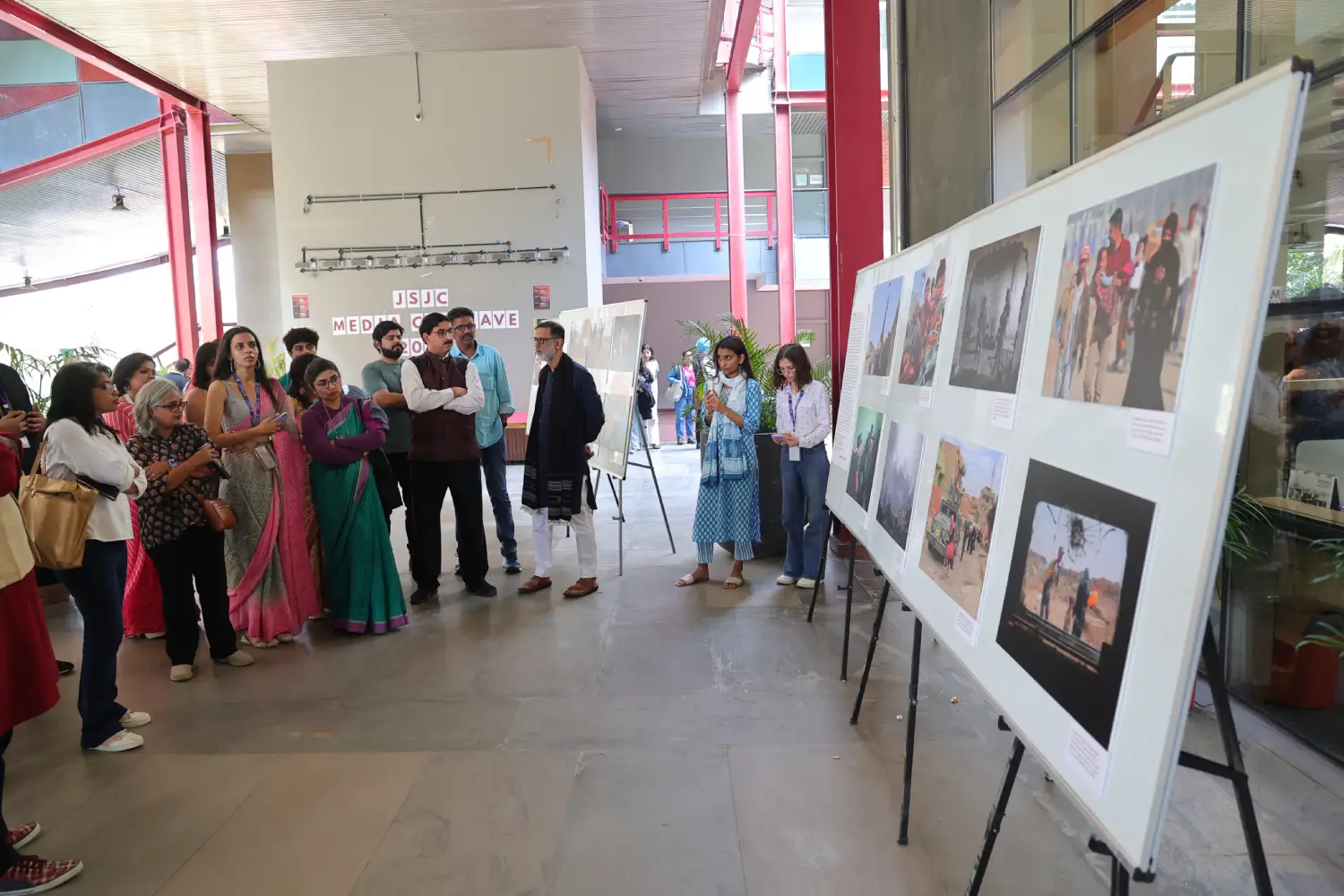
Students not only study journalism, but they also produce journalism. From news packages and reports to podcasts and documentaries, the hands-on learning approach mirrors real newsroom functioning.
Global Exposure That Broadens Perspectives
Journalism is global. A strong journalist must be cognizant of what happens around the world, cultural nuances, and global communication frameworks.
JGU’s collaborations with more than 450 universities worldwide allow students to participate in:
- Student exchange programmes
- International summer schools
- Workshops with international journalists
- Joint projects with partner universities
This exposes JSJC to global influences, unlike most institutions, and gives the students an added advantage in international media.
Interdisciplinary Learning: The JGU Advantage
Media intersects with politics, business, technology, public policy, psychology, environmental studies, and law. Located within India’s top multidisciplinary university, JSJC gives students unmatched access to diverse academic disciplines.
A journalist trained in such an environment is naturally sharper, more analytical, and better informed—qualities essential for good reporting.
Strong Placement and Industry Connections
JSJC ensures that students receive real newsroom experience through various internships with leading digital platforms, media houses, news networks, think tanks, NGOs, and corporate communication departments.
Graduates build careers as:
- News reporters
- Digital journalists
- Content creators
- Documentary filmmakers
- Corporate communication specialists
- Editors and producers
- Media researchers
- Social media strategists
The career development cell of the university helps students explore a broad spectrum of media professions.
Ethical Journalism
The university’s emphasis on ethical journalism stands out at a time when misinformation and sensationalism challenge the credibility of newsrooms and people are eventually losing faith in the trustworthiness of unverified facts spread all over the internet and media. JSJC prioritizes truthfulness, verification, transparency, and accountability as foundational values, ensuring that students internalize the responsibilities that come with shaping public opinion.
Other institutions
There are some great government institutions of journalism in India, like IIMC, AJK MCRC, Jamia Millia Islamia, Guru Gobind Singh Indraprastha University’s University School of Mass Communication, Delhi, Delhi University’s Delhi School of Journalism, Kushabhau Thakre Patrakarita Avam Jansanchar Vishwavidyalaya, Raipur and media-related programmes in institutions like FTII, and they are known for their strong traditional training, structured programmes, experienced faculty, and affordability. They have long-standing reputations and have formed the backbone of India’s journalistic schools.
However, JSJC takes a more 21st-century approach, blending:
- Global collaborations
- Advanced multimedia training
- Interdisciplinary learning and innovative curriculum
- international faculty
- modern infrastructure
- real-time industry alignment
That makes JSJC particularly attractive for students who want to pursue a program set around the realities of today’s digital-first media ecosystem.
Conclusion
The best college for journalism in India will be one that prepares you for much more than just news reporting: to understand society, think critically, communicate ethically, and innovate with technology. The JSJC at O.P. Jindal Global University offers precisely that—and more. With its world-class faculty, cutting-edge media labs, global exposure, interdisciplinary strength, and practice-driven curriculum, JSJC provides students with the perfect foundation to build a meaningful and impactful career in journalism. If you aspire to be a multimedia storyteller, an investigative reporter, a digital creator, a communication strategist, or a socially responsible journalist, JGU is one of the most future-ready and transformative spaces to begin that journey.