
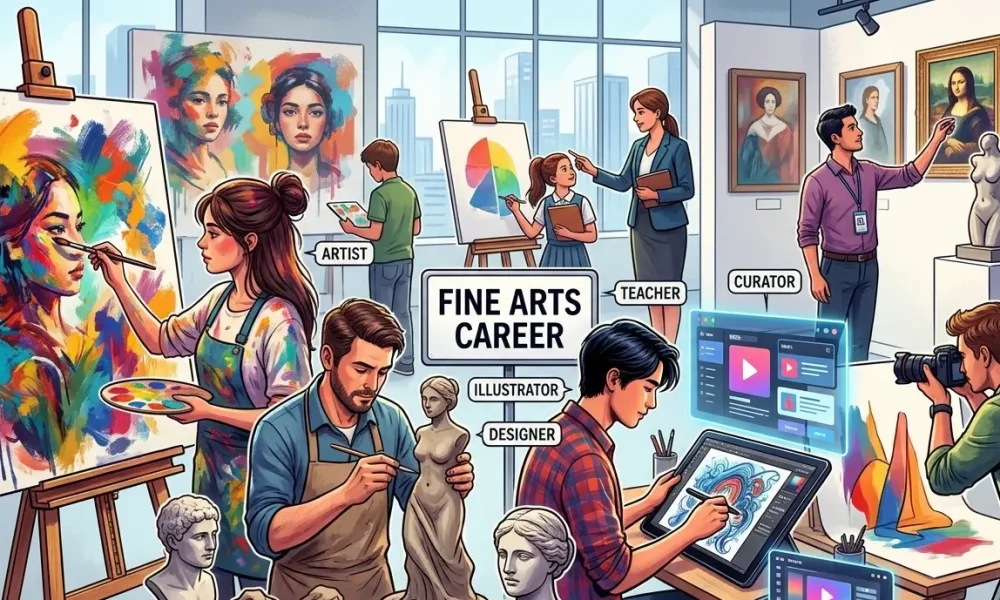
Building a career in fine arts is not easy. However, many have proven that with hard work, dedication and right guidance, this can be achieved. A fine arts degree usually helps aspiring artists decide on the course of action for their career and proceed accordingly. The subject of fine arts encompasses various ideas, philosophies, principles, and other valuable elements that are broadly discussed and meticulously dissected in classrooms and field observations, as part of degree courses.
How Fine Arts Came To Be?
There is no definite timeline to attest to the origin of fine arts, but it is safe to say that signs of artistic expression can be found in several ancient sites. Greeks and Romans left a huge impression on the history of fine arts; however, it was the Renaissance period that really brought fine arts to the forefront and achieved new heights.
This era was marked by names like Leonardo da Vinci and Michelangelo, establishing an indomitable standard for fine arts as a whole. In the following centuries, fine arts evolved greatly, like any other discipline, with the changing scenarios of the world and in the 21st century, the idea of fine arts embodies a modern take on the world.
What Does the Spectrum of Fine Arts Encompass?
In earlier times, the fine arts were believed to be created purely for aesthetic purposes. However, modern art also invoked the practicality of artistic pieces. In all of these, the essence of fine arts drastically shifted, and the original spectrum of fine arts was expanded to include other forms. Here are the 7 spectrums of fine arts, or the 7 fine arts that you need to know as a student of the field.
Architecture: As modern art started prioritizing practical purpose along with aesthetics, architecture became one of the fine arts disciplines to entirely embody the phenomenon by mixing artistic ideals with the functional purpose.
Film: Photography and cinema are 20th-century inventions, and films became a part of the fine arts soon after. In a little over 100 years of cinema, the purpose of filmmaking has been varied for creators with a singular aim to artistically portray a story.
Literature: Literature is one of the primitive forms of fine arts that began with the history of writing, and artists need to capture the world and the times in words. Unlike the visual arts, the rich history of literary works still manages to encapsulate young minds and inspire newer generations.
Music: Since the Paleolithic period, music has been an integral part of the art and culture of different civilizations. Archaeologists have found many simple forms of musical instruments throughout human civilizations, which proves the importance of music and explains why it makes the list of seven fine arts.
Painting: As one of the oldest forms of visual art, paintings are perhaps the first thing that comes to mind when talking about fine arts. The history of painting dates back to prehistoric times, some 40,000 years ago, and it has evolved dramatically over the thousands of years to become a part of the seven fine arts.
Performing Arts: Among the new editions of fine arts, performing arts is the newest to make it to the list, even though it has been around for quite some time now. Dance, drama, and other performances for an audience fall under the performing arts category.
Sculpture: The history of sculpting is quite old, not as old as music and painting, but old and valuable enough to make it in the list of seven fine arts. It started with simple figures and forms, especially of animals, evolving into more dynamic and nuanced portrayals of the modern world.
A career in fine arts comes with mastering one or more forms of the 7 fine arts and knowing how to exhibit or perform them before an audience or any interested clients. This is why a formal degree in fine arts helps you establish networks and speak to clients with the intent of convincing them.
What are the Primary Elements of Fine Arts?
Now that we know about the different forms of fine arts, it is time to establish the primary elements that make a piece of art stand out. The purpose of knowing these elements allows artists and audiences to appreciate an artwork with genuine intent. The primary elements of fine arts are as follows:
Line: In an artwork, line works as a guiding light for the artist to highlight certain aspects, forms, and shapes and eliminate other unnecessary elements present within the frame.
Shape & Form: Each fine art presentation consists of certain shapes and forms, whether visually identifiable or ideologically recognizable. The shape and form allow an artwork to have a purpose or a message of sorts.
Color: Visual art has been heavily relying on color, especially photography, films, and paintings, which often depend on color or lack of it to create a visual appeal and give it a specific visual connotation.
Texture: Again, texture in the visual arts plays a very important role in elevating certain elements of an artwork. In music, texture also plays an integral part in creating a special sound.
Space: We often tend not to give enough value to the idea of space in an artwork; however, this is what makes all the difference, especially in fine arts. Painting, music, camerawork, architecture, and sculpting all use space to amplify their artistic appeal and also serve a functional purpose.
When you are thinking of building a career in fine arts, it is essential to understand the primary elements of fine arts for dissecting great artworks and creating your own expression. A degree in fine arts teaches you the application of these elements to your own artwork.

What are the Different Principles of the Arts?
Art may seem like a free-spirited endeavor with boundless opportunities to express ideas without requiring a systematic approach. However, that is not the case, and the eight principles of the arts are established with the very purpose of tactically and sensibly presenting art for a greater appeal.
- Rhythm
- Harmony
- Balance
- Contrast
- Movement
- Pattern
- Proportion
- Variety
A career in fine arts demands systematic training, regular practice, and proper guidance. Degree courses for fine arts allow students to learn about the different forms, principles, and elements of fine arts, broadening their understanding of the field and helping them choose a path that exerts their full potential while establishing a successful career as a result.