

Introduction
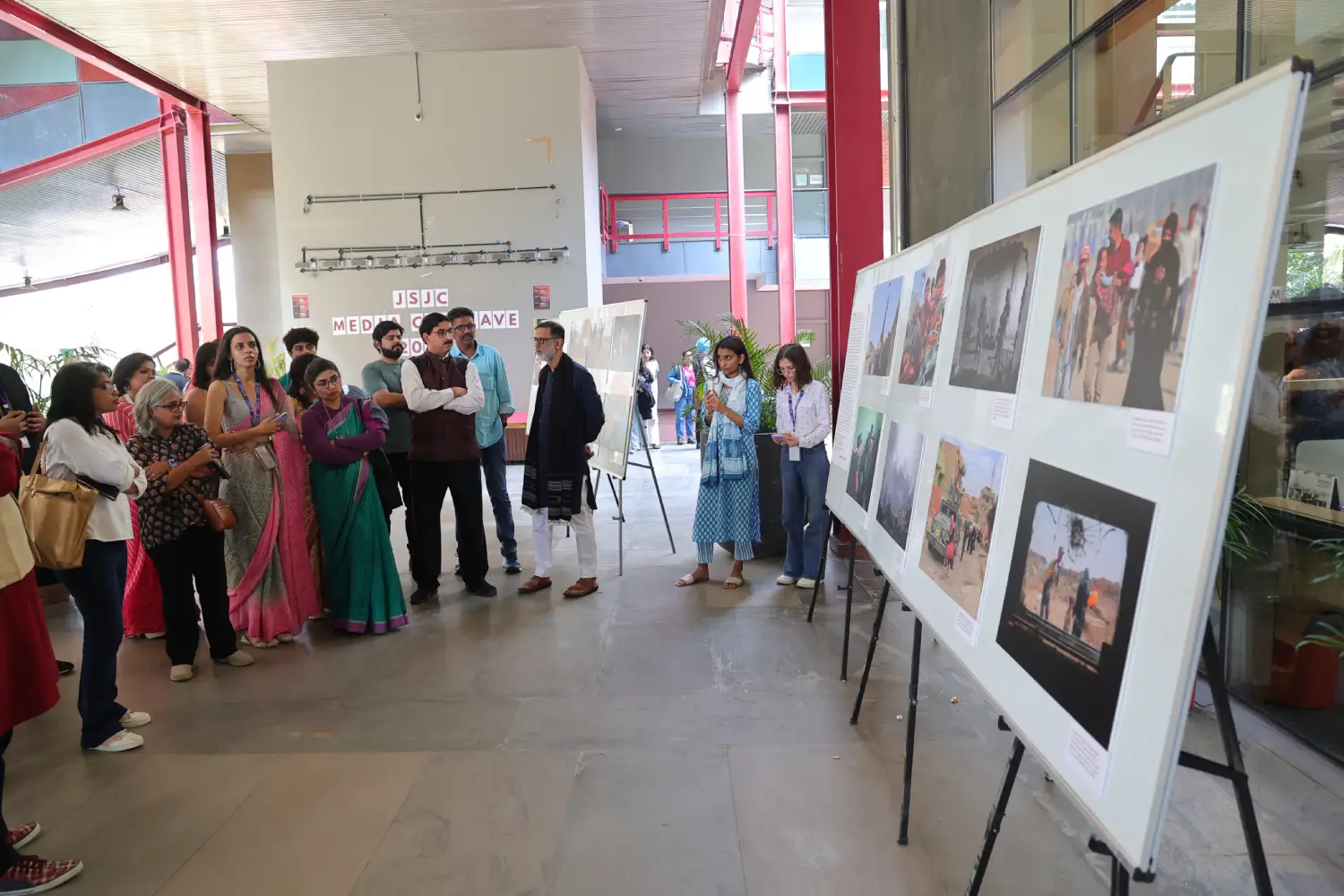
India’s Media & Entertainment (M&E) industry is projected to reach ₹2.68 trillion (approximately US$31.6 billion) by 2025, representing an annual growth rate of 7.2%. This expansion is predominantly driven by the rapid adoption of digital media, which has emerged as the largest segment within the industry, reflecting an increasing demand for skilled professionals in digital content production and distribution. The Jindal School of Journalism and Communication (JSJC) has emerged as a significant academic center for aspiring media professionals, offering structured programmes, experiential learning, and research-focused study. Students at JSJC explore both traditional and digital communication strategies while developing analytical, creative, and ethical skills.
How is the Academic Curriculum at a Mass Communication College in India Structured?
All the programmes at a mass communication college in India are designed to blend theory and practice. Undergraduate and postgraduate students engage in courses covering journalism, media studies, communication theory, advertising, public relations, and digital media production. The curriculum emphasises research-based learning, critical analysis, and storytelling across multiple platforms.
For instance, students at the best mass communication college in India explore modules such as:
- News Reporting and Editing – emphasizing fact-checking, ethics, and investigative techniques.
- Digital Media Strategies – covering social media analytics, content creation, and multimedia production.
- Media Law and Ethics – enabling understanding of Indian media regulations, defamation law, and digital rights.
- Development and Environmental Communication – integrating communication with social change initiatives.
Media colleges such as Jindal School of Journalism and Communication also introduces cross-disciplinary electives from sociology, political science, and economics to provide contextual understanding, preparing students for informed reporting on societal issues.
| Focus Area | Details | Purpose / Insight |
| News Reporting & Editing | Emphasis on fact-checking, ethics, investigative techniques | Develops critical journalistic skills |
| Digital Media Strategies | Social media analytics, content creation, multimedia production | Prepares students for modern digital platforms |
| Media Law & Ethics | Indian media regulations, defamation law, digital rights | Ensures responsible reporting and legal awareness |
| Development & Environmental Communication | Integrates social change initiatives | Encourages community-focused storytelling |
| Cross-disciplinary electives | Sociology, Political Science, Economics | Provides contextual understanding for informed reporting |
| Research Projects | Guided projects on media ethics, audience behavior, emerging tech | Fosters analytical and research-oriented mindset |
What Makes JSJC’s Teaching Methodology Distinctive?
JSJC prioritizes experiential learning through a combination of:
- Campus-based media labs – including professional-grade equipments, editing suites, and broadcast rooms, enabling hands-on production experience.
- Internships and live projects – students collaborate with media houses, NGOs, and digital platforms to apply classroom knowledge in real-world scenarios.
- Research-focused learning – every student undertakes a guided research project, exploring areas such as media ethics, audience behavior, or emerging technologies.
This approach fosters a blend of creative, analytical, and technical skills, ensuring graduates can produce content across multiple media forms while understanding audience dynamics and societal impact.
How Does JSJC Integrate Innovation and Emerging Trends in Media?
JSJC maintains a curriculum that responds to current media challenges and technological advances:
- Data Journalism – students learn quantitative reporting, statistical analysis, and visualization tools for evidence-based storytelling.
- AI and Media – courses explore artificial intelligence in news verification, content recommendation, and automated reporting systems.
- New Media Platforms – modules examine short-form video, podcasts, and interactive media, reflecting modern consumption patterns.
- Community and Development Journalism – focusing on outreach, regional issues, and public service communication.
By integrating digital tools, cross-platform production, and social impact frameworks, this mass communication college in India equips students to adapt to changing media ecosystems while maintaining ethical and research-oriented reporting standards.
| Skill Area | Learning Method | Outcome / Benefit |
| Reporting & Editing | Practical assignments, newsroom simulations | Develops accuracy, clarity, and investigative skills |
| Multimedia Production | Campus studios, video/audio projects | Builds technical proficiency in digital content creation |
| Research & Analytics | Guided projects, empirical studies | Enhances critical thinking and evidence-based reporting |
| Communication Strategy | Case studies, campaign projects | Strengthens strategic planning and persuasive communication |
| Ethics & Media Law | Seminars, legal scenario discussions | Instils understanding of regulations, digital rights, and responsible journalism |
| Leadership & Collaboration | Student-led media initiatives, group projects | Fosters teamwork, project management, and editorial decision-making |
| Cross-Platform Storytelling | Social media, podcasts, interactive media | Trains students to engage diverse audiences effectively |
How is Campus Life Structured for Learning and Collaboration?
JSJC promotes a collaborative and research-intensive environment. Students engage in:
- Student-led publications and media houses – offering practical exposure to editorial processes, production schedules, and leadership in content creation.
- Workshops and guest lectures – industry experts and academicians provide insights into investigative journalism, documentary filmmaking, and public relations trends.
- Research seminars and symposiums – encouraging peer review, academic presentations, and publication of research papers in media studies journals.
Infrastructure supports both creative and intellectual engagement, with access to libraries, archives, digital labs, and collaborative spaces designed for multimedia projects.
How Does a Mass Communication College in India Prepare you for Future Careers in Media and Communication?
The M&E sector in India is anticipated to generate over 2.9 million direct employment opportunities and more than 5.1 million indirect jobs by 2027. Significant growth is expected in segments such as online gaming, OTT platforms, and animation & VFX, where annual direct job growth rates are projected to exceed 15% in several sub-sectors. The academic framework at a mass communication college is career-oriented without sacrificing intellectual depth. Graduates develop skills relevant to:
- Newsrooms and broadcast media – including print, television, radio, and digital platforms.
- Digital content creation – across social media, podcasts, and branded storytelling.
- Public Relations and Strategic Communication – for NGOs, government, and corporate sectors.
- Research and Policy Analysis – particularly in media trends, development communication, and audience studies.
Students are prepared for careers by reinforcing structured mentorship programmes, internships, and project-based evaluation, ensuring students gain both practical experience and critical thinking capabilities.
What Research and Analytical Opportunities Does a Mass Communication College in India Offer?
Institutes offering mass communication courses encourage students to explore media studies through empirical research:
- Audience Studies – measuring engagement, perception, and consumption patterns.
- Media Impact Analysis – studying influence on public opinion, policy, and social development.
- Ethical and Legal Research – examining media regulations, digital rights, and misinformation management.
Students can also participate in collaborative research with faculty or contribute to academic journals, enabling early immersion in scholarship and evidence-based reporting.
How Does JSJC Balance Tradition and Modernity in its Curriculum?
The school integrates classic communication theories (e.g., Lasswell’s model, Schramm’s theory) with contemporary digital media practices. Students learn:
- Traditional journalism techniques – reporting, editing, investigative practices.
- Digital-first communication skills – social media strategy, video storytelling, and mobile journalism.
- Cross-cultural and multilingual communication – emphasizing regional, national, and global perspectives.
This dual focus ensures students understand historical media evolution, even as they develop skills to navigate emerging technologies and changing audience behaviors.
| Focus Area | Figure | Insight |
| Campus media lab count | 5 professional-grade studios | Enables hands-on training in video, audio, and digital production. |
| Internship collaborations | 50+ media and communication organizations | Students gain real-world exposure during programme tenure. |
| Average student research projects per year | 120+ | Demonstrates strong emphasis on analytical and empirical learning. |
| Number of guest lectures annually | ~40 | Provides students with direct engagement with industry experts. |
| Student-to-faculty ratio | 15:1 | Ensures personalised mentorship and guided project work. |
Final Thoughts
Jindal School of Journalism and Communication is follows a progressive and research-driven approach to mass communication education in India. Its emphasis on experiential learning, emerging technologies, ethical frameworks, and rigorous research equips students with the technical skills and analytical capacities required for a rapidly evolving media landscape. The school’s focus on digital media, audience insights, and cross-disciplinary electives creates graduates capable of navigating journalism, public relations, digital strategy, and research-oriented careers.

Students considering a career in media can benefit from JSJC’s unique blend of practical exposure, academic rigor, and intellectual exploration, offering a comprehensive understanding of communication as both a profession and a scholarly pursuit.