B.A., Aligarh Muslim University
M.A., CSRD, Jawaharlal Nehru University, New Delhi
Ph.D. in Geography, Delhi School of Economics
Assistant Professor
| prahmad@jgu.edu.in | |
| Connect with me | |
| ORCID ID | 0000-0002-3268-2507 |
| Key Expertise | Political Economy of the State, Hydro-politics, Neoliberalism, Internet Shutdowns, Climate Change and Indigenous Responses. |
B.A., Aligarh Muslim University
M.A., CSRD, Jawaharlal Nehru University, New Delhi
Ph.D. in Geography, Delhi School of Economics
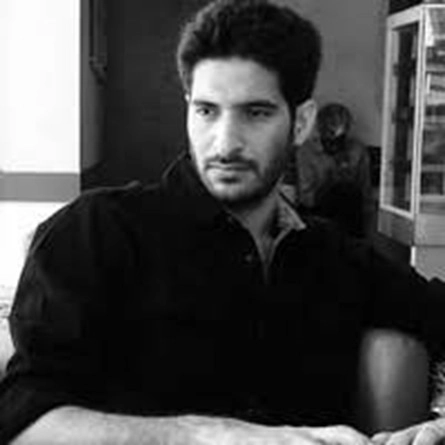
Dr. Peerzada Raouf Ahmad is an Assistant Professor at Jindal Global Law School, O.P. Jindal Global University, whose work sits at the critical intersection of political geography, legal theory, and political economy. He holds a Ph.D. in Geography from the Delhi School of Economics, University of Delhi, where his doctoral thesis, “The Political Economy of Spatio-Geographical Dimensions of Hydro Politics: A Case Study of the Energy Paradigm of Jammu and Kashmir,” laid the groundwork for his enduring engagement with the material and discursive politics of infrastructure, territory, and sovereignty.
Theoretical Grounding and Research
Dr. Ahmad’s scholarship is distinguished by its theoretical rigour and its commitment to excavating the spatial logics of power. Grounded in Marxist political economy and critical legal geography his work interrogates how capitalist accumulation, state formation, and juridical exceptionalism are co-constituted through landscapes of dispossession, extraction, and surveillance. His theoretical apparatus draws productively on the work of Marx, Engeles, Lenin, among others, to read the contemporary political condition through the lens of space, scale, and territoriality.
His primary research interests converge around Hydro Politics, Big Water Infrastructure, Infrastructural Imperialism, climate change, and Indigenous responses, where he theorizes the dam as a technology of governance and a site of multiplex claims. This work is complemented by critical interventions in the study of:
He has published extensively in leading international journals such as Gender, Place and Culture, Journal of Peasant Studies, Projections, Globalizations, Human Geography, and History of the Present. His work has been recognized with a Special Mention at the Red Ink Awards (2019) and shortlisting for the Ramnath Goenka Award for Conflict Reporting (2019).
Scholar-Activism and Public Engagement
Dr. Ahmad's scholarship is animated by a deep commitment to scholar-activism, a reflexive practice that bridges rigorous academic inquiry with political solidarity and public engagement. He understands theory not as an end in itself but as a tool for elucidating the material conditions of marginalized communities and contributing to struggles for justice and emancipation. His field-based research in Kashmir is characterized by an ethnographic attentiveness that foregrounds the voices and agency of those navigating securitized landscapes, producing work that is at once analytically sharp and politically attuned.
He is an active member of the (CASAS) , a network of scholars committed to decolonial and critical approaches to the study of the societies in the Global South. Through CASAS, he participates in collective intellectual projects that challenge dominant development paradigms and amplify alternative, justice-oriented futures.
Teaching and Mentorship
At Jindal Global Law School, Dr. Ahmad teaches a wide array of courses including Political Theory, Carceral Geographies, and International Politics, Foundations of Social Science, Gender Caste and Society that reflect his interdisciplinary commitments and encourage students to think spatially, critically, and ethically about law, power, and social justice. He is a dedicated mentor to emerging researchers, supervising projects on digital rights, urban development, and conflict geographies.
Grants and Projects
His research has been supported by prestigious national and international bodies, including the Indian Council of Social Science Research (ICSSR), the Department of Science and Technology (DST), and the Institute of Human Geography London (IHG), Higher Education Department Government of Haryana. He currently leads projects on café culture and youth subjectivity, Internet shutdowns in Jammu and Kashmir, and the gendered dimensions of the digital divide in Panchkula Haryana, consistently bridging theoretical inquiry with empirical depth and political relevance.
ICSSR Project- ‘Mapping Geospatial Dimensions of Hydro Politics in Jammu & Kashmir’ from May 2018 – 2020, worked as a Research Fellow on this project with Indian Council of Social Science Research.
Ministry of Science and Technology, Govt. of India Project- ‘Women Empowerment Atlas of India Science Technology Perspective’, Jan 2020-2023, Sanctioned, from the Department of Science and Technology (DST) in collaboration with NATMO.
Institute of Human Geography London (IHG) Research Grant (2024) ‘Dispossession as State Building: Understanding Securitized Social Formations of Gurez’. https://www.hugeog.org/home/grants
Introduction to Political Theory
Carceral Geography: Law, Space, and Power, International Politics
Foundations of Social Science
Gender, Caste and Society
International Politics
Red Ink Award, Special Mention (2019) – Gender and Women’s Empowerment (Mumbai Press Club)
Ramnath Goenka Award, Shortlisted (2019) – Conflict Reporting (The Indian Express Group)
Institute of Human Geography, Under Process (IHG) 2024
Junior Research Fellowship (JRF) & NET, University Grants Commission (UGC), June 2012
YFFP-Jindal Fellowship on Strategic Affairs, JSIA, Jindal Global University (Oct–Dec 2015)
“The Infrastructural Turn in Kashmir: The Kishanganga Dam and Multipolar Claims”- Infra Empires Workshop at Netherlands Institute Istanbul- 2026
“Dispossession as State Building: Understanding Securitized Social Formations of Gurez” — JPS-PLAAS Write shop, University of Western Cape, South Africa (Dec 2022)
“Ethnicity, Conflict and Inequality in Global Perspective” — BIARI, Brown University (May 2016)
“Genealogies of Development in Kashmir” — MESAAS, Columbia University, New York (Feb 2016)
“Dependent Development: Law and Sovereignty in Sopore, Kashmir” — Stanford Law School, CA (May 2015)
Presented paper titled Educational Transformation and Transformative Education: Possibilities and Alternatives to the Educational Crisis, South Asian University, New Delhi; the Rosa Luxemburg Foundation (22.03. 2014)
Presented paper titled Geo Hazards, Bio-Diversity and Resource Sustainability and Mountain Response to Global Change at International Geographical Union conference, Kashmir University, Srinagar (5.06. 2014)
International conference, Reorienting Gender: Geographies of Resistance Agency Violence and Desire in Asia, Delhi School of Economics, Delhi University, (19- 21.11.2014)
Brown International Advanced Research Institute (BIARI), Brown University, May–June 2018
Water Atlas of Jammu, Kashmir and Ladakh - Research Assistant (ICSSR, 2018–2020)
Gender Atlas of India: A Science and Technology Perspective - Research Fellow (Ministry of Science and Technology/NATMO, 2020–2023)
Café Culture in Urban Kashmir and Youth Subjectivity – Principal Investigator (2019–present) in collaboration with Jindal Global University, Sonipat Haryana,
Outputs: 1 article published (Gender, Place and Culture), 1 under revision (Nations and Nationalism), and a monograph in progress.
Internet Shutdowns in Jammu and Kashmir: Legalities and Politics- Principal Investigator(2022–present)
Outputs: 2 articles published (Human Geography), 1 under review, total of 5 articles planned with Human Geography Journal along with an Internet Shutdown Report.
Securitized Climates, Psychocultural Ruptures and Indigenous Futures in Kashmir’s Himalayan Borderlands- Co-PI (Under Review).
Navigating the Digital Divide: Gender, Access, and Participation among Adolescent Girls in Panchkula- Co-Principal Investigator (Haryana Government).
Master’s Thesis: “Hosting G20 in Srinagar: How G20 prompted rapid urban infrastructural development in Srinagar?” by Rutba Aalee
Independent Research Project ‘Internet Shutdowns in Jammu and Kashmir: A Quantitative Analysis’ by Gayatri Malhotra
Independent Research Project ‘The Politics of Internet shutdowns: Legality and Politics’ by Samyuktha Kannan
| prahmad@jgu.edu.in | |
| ORCID ID | 0000-0002-3268-2507 |
| Key Expertise | Political Economy of the State, Hydro-politics, Neoliberalism, Internet Shutdowns, Climate Change and Indigenous Responses. |