Jal Swavlamban Abhiyan
February 26, 2026 2026-02-26 5:09Jal Swavlamban Abhiyan
Jal Swavlamban Abhiyan
Source: News of Rajasthan
By Sneha Chakraborty
Executive Summary
The Jal Swavlamban Abhiyan, launched on 27th January 2016 in the north-western state of Rajasthan aimed to create a change in the waterscape of this arid state. Also called the Mukhya Mantri Jal Swavlamban Abhiyan, the policy aimed to make the villages self-reliant in relation to water sources, through the help of community participation and use of technology. By relying on the assistance of Gram Sabhas in the various villages of Rajasthan and the use of drone-assisted water body restoration plan, this multi-stakeholder policy aimed to decentralize water governance and bring about considerable change in the waterscape of this arid state.
Background
A ground report by UNICEF, United Nation’s Children Emergency Fund conducted in the Kanasar village of Rajasthan captured the lived realities of the Jal Sahelis or “Friends of the Water” through one of the very poignant songs composed by these women in tribute to the solidarity they share as women and the dying water resources of Rajasthan. Rajasthan is the largest state in the country, with almost sixty one percent of the state being covered by the Thar Desert. Rajasthan is a geographically diverse state and extremely water starved with just 1.16 % of surface water and 1.72% of groundwater availability. The rainfall patterns in this state are also equally erratic, which makes the situation even more dire.
The main agenda behind the scheme was to make the villages self-reliant in terms of water availability, with the inclusion of community participation. Geo-tagging and implementation of mobile applications was done to ensure that work is carried out effectively.
Key Objectives of The Jal Swavlamban Abhiyan
- The primary objective of this scheme was to make the villages struggling with intense water supply self-reliant in relation to water resources. The policy tried to look into domestic, drinking and livestock water requirements. As these villages and the state in general face challenges in terms of groundwater and surface water, the Jal Swavlamban Abhiyan and the scientifically designed Four Waters Concept was curated to support the villages to become self-reliant with water resources.
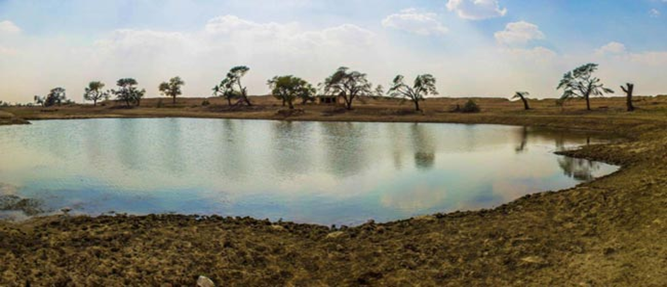
- The Four Waters Concept, which takes into consideration rainwater, surface water, soil moisture and groundwater, provides a well-grounded approach to this policy. Through this method, small structures are built at minimal cost such as a percolation tank, which helps to restore groundwater, a liquid treasure in this country.
- The idea was also to implement the construction and use of low-cost structures such as ponds, check dams, roof top water harvesting, percolation tanks and using drip irrigation to boost the level of groundwater, which the state is facing an extreme crisis against. This was to ensure that the villages are self-reliant in terms of both drinking and domestic use of water.
- Along with water rejuvenation, the scheme aims to boost the agricultural productivity of the state. Through water preservation and controlling soil erosion with the help of intensive green cover plantation programs, increasing agricultural yield was also a primary objective of this scheme.
- Reaching water self-reliance is also marked by the increase in groundwater level, which was also a primary objective of the scheme.
What Has been Achieved So Far?
The state-led Mukhya Mantri Jal Swavlamban Abhiyan had been planned to be carried out in four phases. The campaign had aimed to cover 21, 563 villages in these four phases. The criteria for selection of the villages mostly ranged around the factor of them being sanctioned for watershed development, facing immense scarcity of water and also not having access to portable water. The first phase to fourth phase was carried out from January 2016 to October 2018, with 3529, 4200, 4248 and 4000 villages being targeted along these four phases respectively. According to official reports, an increase of 4% of groundwater was recorded, along with 4.5 million people being affected. In the first phase itself, 28 lakh plants were grown beside water bodies and green cover enhancement by plantation of 3678 Ha was fulfilled, which also helped to curb soil erosion. The number of open wells in the villages covered by the Jal Swavlamban Abhiyan also increased by 1435 from 2015 to 2017 and also a reduction of water tankers was observed in the same villages in this time frame.
Key Issues
- Erratic Weather Conditions of the State: Even as the intention of the policy was to increase the groundwater of the region, in a state like Rajasthan where the weather conditions are not predictable, it is difficult to per say change the level of groundwater in such a short time. Also as surface and portable water is so scarce, people still turn to groundwater for agricultural and drinking purposes. Even though official records such as the NITI Aayog state that there has been an overall 4% increase in groundwater and also a decrease in soil erosion, climate change and the erratic rainfall pattern in the state does not allow officials to register the growth in groundwater efficiently.
- Groundwater Overexploitation : Despite improvements, high reliance on groundwater persists for drinking and agriculture, sometimes undermining sustainability.
- Implementation Variability : The results and community engagement vary across districts; some villages lag in project completion or maintenance. Hence, even as the scheme has broadly good intentions in mind, it is difficult to implement a scheme in the similar way across all the regions and districts of the state.
Key Policy Recommendations
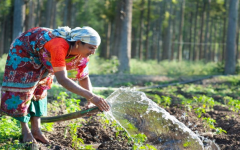
- Inclusion of Women as Stakeholders: Rajasthan as a state has had a history of the suppression of women rights. But, this policy is designed to include the community as a stakeholder in the process of water conservation. In this case of water scarcity, women have been active agents in the form of “Jal Sahelis”, who bear the responsibility of fetching water and have taken active efforts to restore the water at the “nadi” or “talaab” of their village. By involving women as stakeholders, the policy shall not only take into consideration the voices of agents who are suffering due to the dearth of water but also provide a platform for women in a state, where women have been historically marginalized.
- Merging With Other State or National Level Policies: The Jal Swavlambhan Abhiyan has core themes of reducing soil erosion, increasing forest cover and also of increasing the level of groundwater. Thus, by partnering with other other policies, which work along the same lines like the Atal Groundwater Scheme, the Jal Swavlamban Abhiyan can reach further heights.
- The state government had announced last year that the Mukhya Mantri Jal Swavlamban Abhiyan 2.0 shall be launched in the remaining villages after a gap of around eight years. Around 3500 Crores shall be implemented across the 5,000 villages, which have been chosen to be a part of the first phase of this newly re-launched model of the Jal Swavlamban Abhiyan. Despite the challenges faced and issues still pertaining in several regions of Rajasthan, the vitality and pervasiveness of this policy can be comprehended by observing how this scheme is being re-introduced in the state again after eight years.
References
Tnn. (2024, February 10). After 8 years, state govt to implement MJSA again. The Times of India. https://timesofindia.indiatimes.com/city/jaipur/after-8-years-rajasthan-government-to-reintroduce-mukhyamantri-jal-swavalamban-abhiyan/articleshow/107572123.cms
https://nregaplus.nic.in/netnrega/Data/JSA_sucessstory/Mukhyamantri-Jal-Swavlamban-Abhiyan-Impact-Assessment-Booklet.pdf
https://www.nabard.org/auth/writereaddata/File/Rajashthan%20Desp.pdf
Dr. P Sudha Rani, Nalla Naresh, “Impact of Water Concept on Agriculture in Jhalawar District, Rajasthan,” August-2018 International Journal of Scientific & Engineering Research Volume 9, Issue 8
https://www.unicef.org/india/stories/jal-sahelis-lead-water-conservation-efforts-rajasthan
Bio:
Sneha Chakraborty is a student, who is currently pursuing her Masters in Social Work from Tata Institute of Social Sciences. Her research interests lie in gender, climate change and livelihood.