Outreach, Field Learning & the Campus Carbon Mapping Project
These initiatives reflected CBC’s commitment to linking academic knowledge with real-world ecological practice through expert interaction and hands-on field exposure.
Campus Carbon Mapping Project
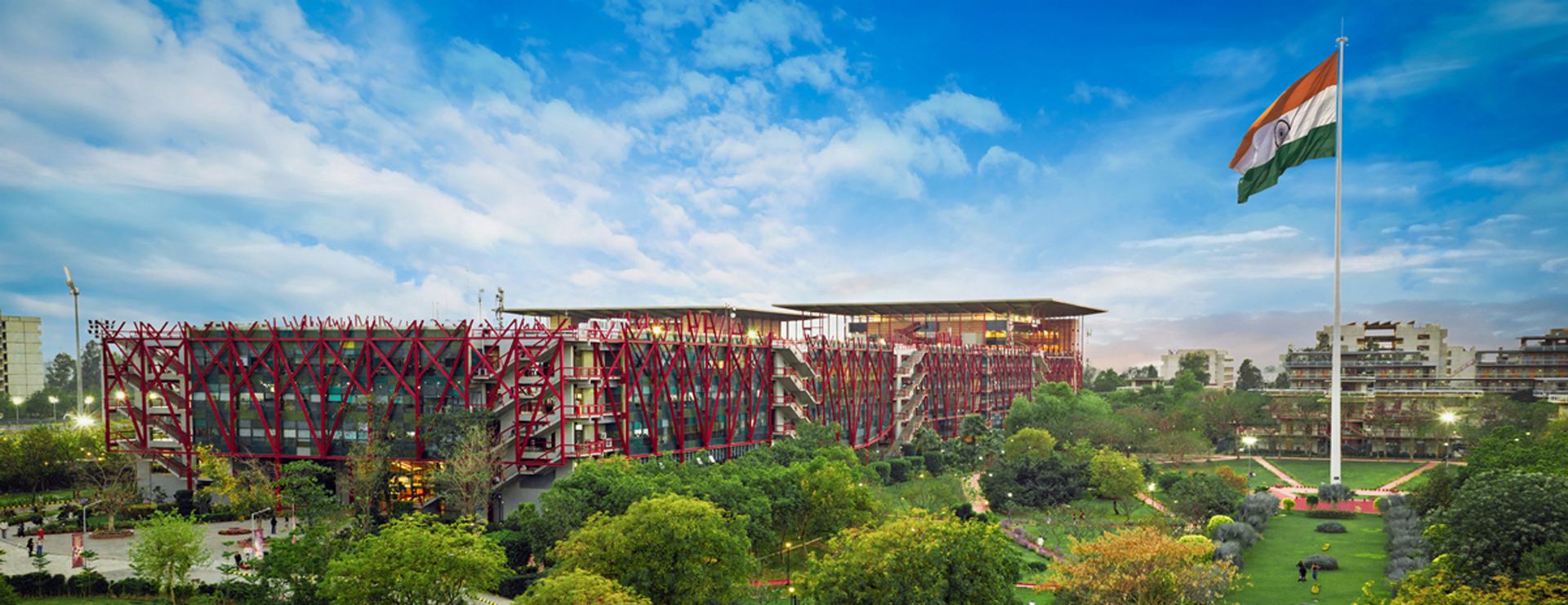
The Campus Carbon Mapping Project 2025 was a hands-on sustainability initiative offered by the Office of Sustainability in collaboration with the Jindal School of Environment & Sustainability (JSES) and the Centre for Biodiversity and Conservation (CBC) at O.P. Jindal Global University (JGU). Designed as a data-driven experiential learning programme, the internship aimed to create JGU’s first comprehensive digital database of carbon and trees while building students’ capacity in biodiversity mapping, ecological assessment, and sustainability reporting.
As part of the project, students worked on detailed field-derived datasets covering 1,742 individual trees spread across the approximately 80acre JGU campus. Each tree was documented using 10 ecological and biometric parameters, and individual QR-linked Word documents were generated for every tree, enabling species level traceability and future monitoring. These efforts culminated in the successful completion of the campus carbon mapping project, supported by structured datasets and digitally accessible records.
A key outcome of the internship was the quantification of campus level carbon storage. Using tree girth-based estimation methods, the analysis revealed that JGU’s green cover has cumulatively stored 1,713 tonnes of CO₂ equivalent (CO₂e) over the campus’s approximately 15year development period. This translates to an average carbon sequestration of about 114 tonnes of CO₂e per year, or 1.4 tonnes of CO₂e per acre per year, highlighting the significant climate mitigation role played by campus plantations. These results directly align with the achievement of Sustainable Development Goals SDG 11 (Sustainable Cities), SDG 13 (Climate Action), and SDG 15 (Life on Land).
Beyond quantification, the internship laid the groundwork for digital tree tagging through QR codes, strengthening transparency, outreach, and long-term sustainability planning. Overall, the Campus Carbon Mapping Project represented a landmark collaborative effort at JGU, combining ecological science, digital innovation, and student engagement to support evidence-based sustainability governance and environmental stewardship on campus.
Outreach Events & Field Trips
Centre for Biodiversity Conservation (CBC) organized a series of well-curated outreach events and field trips aimed at strengthening ecological literacy, experiential learning, and public engagement with biodiversity conservation.
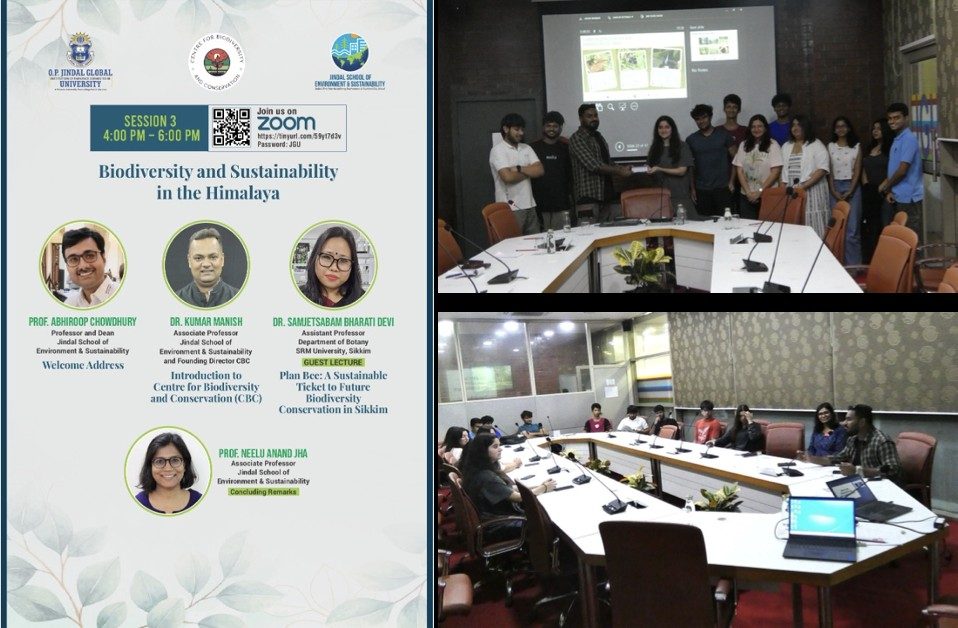
Biodiversity and Sustainability in the Himalaya
An academic session bringing together experts including Prof. Abhiroop Chowdhury, Dr. Kumar Manish, Dr. Samjetsabam Bharati Devi, and Dr. Neelu Anand Jha. The session highlighted biodiversity patterns, sustainability challenges, and conservation efforts in the Himalayan region, while also showcasing institutional research perspectives.
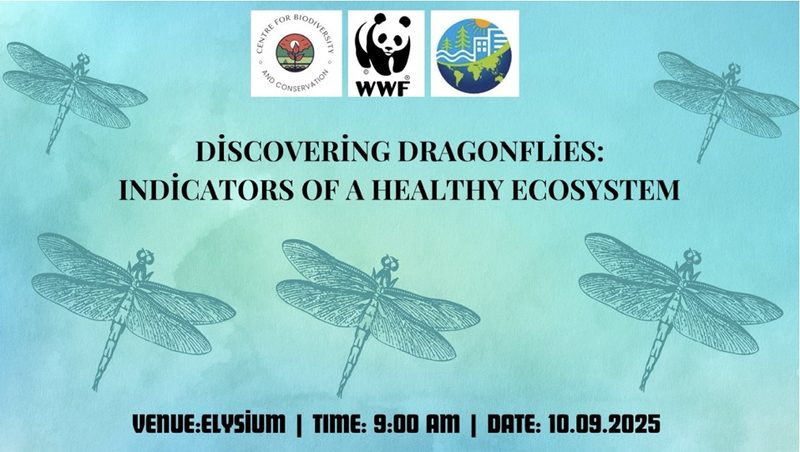
Discovering Dragonflies: Indicators of a Healthy Ecosystem
An interactive workshop led by Mr. Nikhil John. The session emphasized the role of dragonflies as bioindicators and encouraged participants to develop observational and ecological interpretation skills.
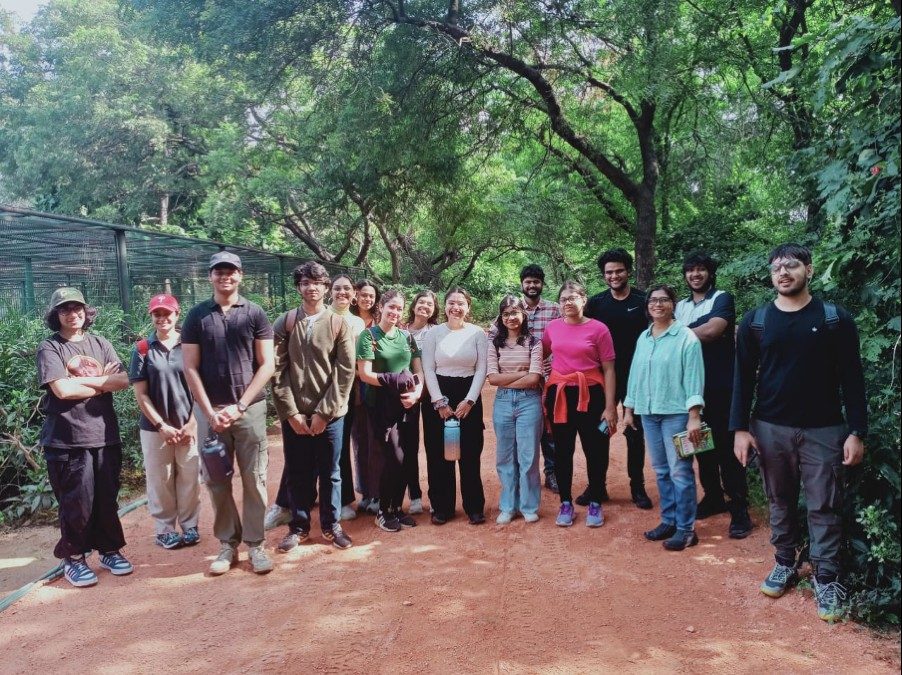
Field Trip to Sanjay Van
A field trip to Sanjay Van, Delhi, guided by Dr. Neelu Anand Jha and Dr. Kumar Manish, exposed participants to urban forest biodiversity and ecological dynamics.
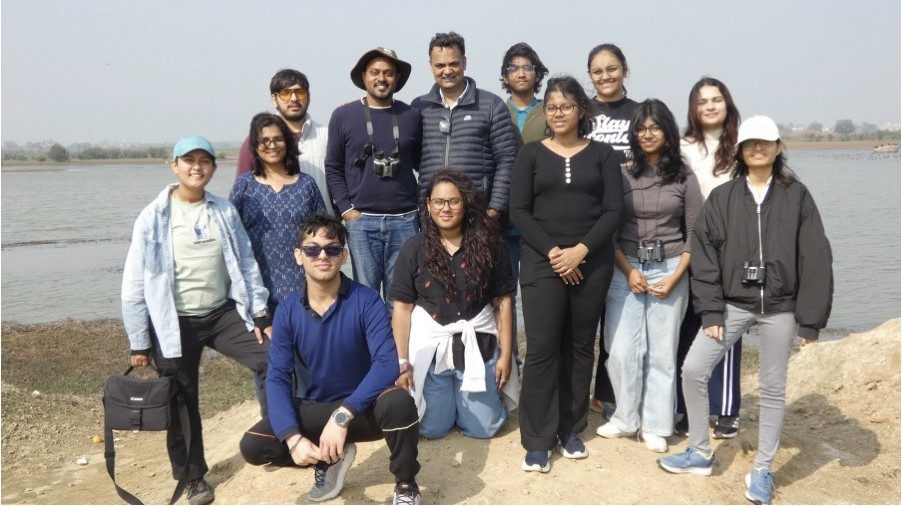
Celebrating Wetlands: Avian Behavioural Ecology in Wetland Landscapes
Led by Mr. Arbin Kr Thakur along with CBC faculty, the workshop provided hands-on training in bird observation and behavioural ecology within a wetland ecosystem.
Collectively, these outreach events and field trips reinforced CBC’s role in fostering experiential education, ecological awareness, and applied biodiversity conservation.
Want to attend or collaborate on a future event?
Reach out to the CBC team to learn about upcoming seminars, workshops and field trips.