
Home

Ph.D., (Operational Research), University of Delhi


Master’s (Operational Research), University of Delhi


Bachelor’s (Computer Applications), University of Delhi

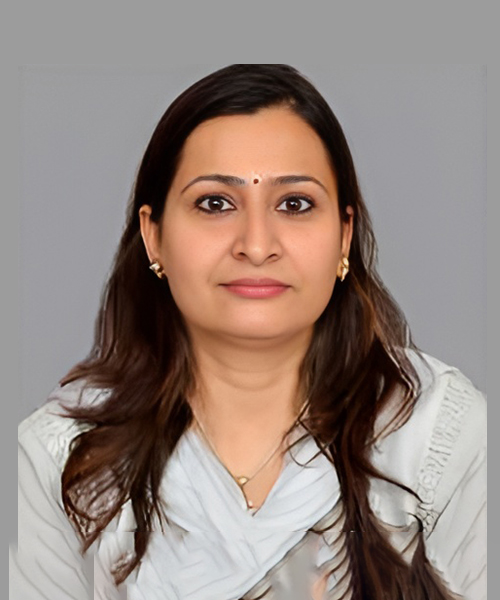
Prof. (Dr.) Shivani Bali

Professor

Email shivani.bali@jgu.edu.in
Connect with me
ORCID ID 0000-0001-5618-1857
Key Expertise Emerging Technologies, Sustainability, Circular Economy, Optimization & Decision-Making Techniques

Ph.D., (Operational Research), University of Delhi


Master’s (Operational Research), University of Delhi


Bachelor’s (Computer Applications), University of Delhi


Biography

Dr. Shivani Bali is a Professor of Data Science & Analytics at Jindal School of Banking & Finance (JSBF) at O.P. Jindal Global University. She holds a Master’s and Ph.D. degrees from the Department of Operational Research, University of Delhi, India, and brings over two decades of expertise in teaching, corporate training, and consultancy in Artificial Intelligence, Machine Learning, Data Science, and Business Analytics. 

Prior to JSBF, Prof. Bali served as Professor and Area Chair – Business Analytics, and also as Chair of Management Development Program (MDP) and Executive Education Cell at Jaipuria Institute of Management, Noida. In the capacity of MDP Chair, she led corporate trainings and consultancy initiatives. 

She has also worked at Lal Bahadur Shastri Institute of Management, Delhi, where she served as the founding Program Chair of the PGDM (Research & Business Analytics) and Area Chair of Business Analytics and Operations Management areas.

Her teaching and training approach emphasizes practical industry-relevant application, helping students and professionals bridge the gap between theory and real-world business problems. She has designed and delivered advanced courses such as Generative Artificial Intelligence for Managers, Advanced Machine Learning, & Supply Chain Analytics, making them highly interactive and business focused. 

With a strong focus on AI-driven business transformation, Dr. Bali has trained professionals across industries including Banking, Financial Services, Oil & Gas, to leverage AI for operational efficiency, strategic decision-making, and innovation. She has worked on consulting assignments & imparted training programs in organizations like Rajiv Gandhi Cancer Institute & Research Center, Punjab National Bank, India Mart, RITES, Indraprastha Gas Limited, Indian Oil Corporations Ltd., and KRIBHCO to name a few. She has also delivered guest sessions at the Faculty of Management Studies (FMS, Delhi University), Indian Institute of Foreign Trade (IIFT, Delhi), National Institute of Technical Teachers Training and Research (NITTTR, Chandigarh), National Statistical Systems Training Academy (NSSTA), Ministry of Statistics, National Institute of Banking Studies & Corporate Management (NIBSCOM) and many more.

Dr. Shivani has been recognized for her contributions to academia, receiving multiple accolades, including the Best Professor in Operations Management award (2019), an Academic Excellence award (2021) and Teaching Excellence Award (2023, 2024 & 2025). 

She has published around 50 research articles in many reputed journals, book chapters, cases and conference papers, all indexed in ABDC/SCI/WoS/Scopus and has authored two academic and five edited books. Her research and consulting work span emerging technology adoption, sustainability, circular economy, and hybrid decision-making techniques, contributing to both academic and practitioner-focused knowledge. She also has five Patents granted in her name by the Government of India. Two of them are “Reduce, Re-Cycle and Reuse (RRR) IoT Intelligence Waste Management System” and “Blockchain-based Drug Traceability System for Pharmaceutical Supply Chain.” 
 

Business Statistics and Decision Science

Introduction to Analytics and Artificial Intelligence

Received the Outstanding Paper Award at the Strategic Management Forum – NITI Aayog Conference, held at IIM Jammu, in December 2025.

Received the Teaching Excellence Award at Jaipuria Institute of Management, Noida for three consecutive years: 2023, 2024, and 2025

Received the Best Professor in Operations Management Award at the 11th Innovative Education Leadership Awards, sponsored by Daily News Analysis (DNA), in Mumbai in February 2019.

Sehgal, S., Gugnani, R. & Bali, S. (2025) Navigating circular economy transition at a firm level: A Systematic Literature Review of the Electronic Industry. International Journal of System Assurance Engineering and Management. https://doi.org/10.1007/s13198-025-02948-5. SCOPUS – Q2, WoS

Gaur D., Chaudhary K., Kumar P., Bali S., Kumar V. (2025). Optimal Testing Effort Allocation for a Software Reliability Growth Model in a Fuzzy Environment. Journal of Reliability and Statistical Studies. Vol. 18 No. 2, doi: 10.13052/jrss0974-8024.1823, 312-342. SCOPUS – Q2, WoS

Sehgal S., Bali S., Gunasekaran A., Roy M.H., Gugnani R. (2025), Leveraging Circular Economy Transition to Achieve Resilient and Sustainable Supply Chains of the Future: A study of EEE Industry. Sustainable Futures. Vol. 10 No. 12, doi: https://doi.org/10.1016/j.sftr.2025.101053. SCOPUS – Q1, WoS

Gaur D., Bali S., Gunasekaran A., Joshi N., Chaudhary K., Bali V. 2025). A Multi-Criteria Decision-Making Framework for Blockchain Technology Adoption in Smart Healthcare. International Journal of Mathematical, Engineering and Management Sciences. Vol. 10 No. 5, doi: https://doi.org/10.33889/IJMEMS.2025.10.5.070. WOS – ESCI, SCOPUS – Q2.

Srivastava, S., Singh, A., & Bali, S. (2024). Does psychological empowerment transmit the effects of organizational justice on employees' knowledge sharing? A study on the Indian hospitality industry. Benchmarking: An International Journal, Vol. 62 No. 1, e12390, doi: 10.1111/1744-7941.12390. ABDC ‘B’, SCOPUS – Q1

Bali, S., Agarwal, D., & Tayal, S. (2024). Innovations and Technology Implementation in the Indian Agricultural Sector. International Journal of Business Information Systems, Vol. 46 No.3, 310-329. https://doi.org/10.1504/IJBIS.2024.140441, ABDC ‘C’, SCOPUS – Q3

Arora, S., Mittal, R., Shrivastava, A.K. and Bali S. (2024), Blockchain-based deep learning in IoT, healthcare and cryptocurrency price prediction: a comprehensive review, International Journal of Quality & Reliability Management, 41(8), 2199-2225. https://doi.org/10.1108/IJQRM-12-2022-0373. ABDC ‘B’, SCOPUS – Q2

Joshi, N., Khanna, T., Bali, V., & Bali, S. (2024). NBSOC framework for team structure to develop blockchain-based applications. International Journal of Industrial and Systems Engineering, 46(1), 126-149. https://doi.org/10.1504/IJISE.2024.135832. SCOPUS – Q3

Bali S., Bali V., Gaur D., Rani S., Kumar R., Vatin N.I. (2023), A framework to assess the smartphone buying behaviour using DEMATEL method in the Indian context, Ain Shams Engineering Journal, https://doi.org/10.1016/j.asej.2023.102129. SCOPUS – Q1, WoS-SCIE.

Bali, V., Bali, S., Gaur, D., Rani, S., & Kumar, R. (2023). Commercial-off-the-Shelf Vendor Selection: a Multi-Criteria Decision-Making Approach Using Intuitionistic Fuzzy Sets and TOPSIS. Operational Research in Engineering Sciences: Theory and Applications. SCOPUS – Q1.

Bali, S., Gunasekaran, A., Aggarwal, S., Tyagi, B., & Bali, V. (2022). A strategic decision-making framework for sustainable reverse operations. Journal of Cleaner Production, 381, 135058. ABDC ‘A’, SCOPUS – Q1

Juneja, S., Dhankhar, A., Juneja, A., & Bali, S. (2022). An Approach to DNA Sequence Classification Through Machine Learning: DNA Sequencing, K Mer Counting, Thresholding, Sequence Analysis. International Journal of Reliable and Quality E-Healthcare (IJRQEH), 11(2), 1-15. http://doi.org/10.4018/IJRQEH.299963. SCOPUS – Q2.

Bali, S., Bali, V., Mohanty, R.P. and Gaur, D. (2022), "Analysis of critical success factors for blockchain technology implementation in healthcare sector", Benchmarking: An International Journal, https://doi.org/10.1108/BIJ-07-2021-0433. ISSN- 1463-5771. ABDC ‘B’, SCOPUS – Q1, WoS-ESCI.

Shyla, S., Bhatnagar, V., Bali, V., & Bali, S. (2022). Optimization of Intrusion Detection Systems Determined by Ameliorated HNADAM-SGD Algorithm. Electronics, 11(4), 507. SCOPUS – Q2, WoS-SCIE.

Chaudhary, K., Bali, S., Mehta, S. (2021). Optimal Promotional Effort Policy for Innovation Diffusion Model in a Fuzzy Environment. Journal of Information Technology Management. Vol. 13, No. 1, pp. 142-161. SCOPUS. (https://jitm.ut.ac.ir/article_80029.html). ISSN-2008-5893

Gupta M., Semwal S., Bali S. (2021). "Financial Portfolio Optimization: An AI-based Decision-making Approach", Vikram Bali, Kakoli Banerjee, Narender Kumar, Sanjay Gour, Sunil Kumar Chawla (Eds.), Industry 4.0, AI, and Data Science: Research Trends and Challenges. CRC Press, Taylor & Francis Group. eISBN: 9781003097181

Kaur, J., Arora, V. & Bali, S. (2020). Influence of Technological Advances and Changes in Marketing Strategies Using Analytics in the Retail Industry. International Journal of System Assurance Engineering Management. Vol. 11, No. 5, pp. 953–961, https://doi.org/10.1007/s13198-020-01023-5. SCOPUS, WoS-ESCI, ISSN: 0975-6809

Bali V., Bali S., and Singhania G., (2020), "Project Estimation and Scheduling Using Computational Intelligence", Ankita Bansal, Abha Jain, Sarika Jain, Vishal Jain, and Ankur Choudhary (Eds.), Computational Intelligence Techniques and their Applications to Software Engineering Problems, CRC Press, Taylor & Francis Group, eISBN: 9781003079996, https://doi.org/10.1201/10.1201/9781003079996.

Vishesh, Mittal S., Bali S. (2019). A Study of Key Decision Criteria for the Buying Decision-Making Process with reference to Smart Phones using DEMATEL. Unnayan: International Bulletin of Management & Economics. January 2019, Vol. X, pp. 24-35. ISSN: 2349-7165

Vishesh, Mittal S., Bali S. (2018). Factors Affecting Consumer Buying Behavior Toward Mobile Phones. Journal of Management, Vol. 5, No. 4, July – August 2018, pp. 465–480. ISSN: 2347-3940

Bali V., Bali S., Madan S. (2018). “IFSOM: A Two-Phase Framework for COTS Evaluation and Selection”. In: Krishna C., Dutta M., Kumar R. (eds) Proceedings of 2nd International Conference on Communication, Computing and Networking. Lecture Notes in Networks and Systems, vol 46. Springer, Singapore. SCOPUS. eISBN: 978-981-13-1217-5

Bali S., Mehta S.B., Jena A., Banwet D.K. (2017). A predictive model approach to distinguish between the benign and malignant cases in breast cancer. International Journal of Imaging and Robotics. Vol. 17, No. 3, 128-135. SCOPUS, H-index 9.

Bali S., Amin S.S. (2017). An analytical framework for supplier evaluation and selection: a multi-criteria decision-making approach. International Journal of Advanced Operations Management, Inderscience. Vol. 9, No. 1., 57-72. SCOPUS, H-Index- 4, ISSN: 1758-9398

Bali, S., Kishore, K. (2015). STPCH: a framework for planning software maintenance and support projects in Int. J. Software Engineering, Technology and Applications, Vol. 2, No. 2/3/4, 135-144, Inderscience Publications. ISSN:

Bali, S, Jha, P.C., Kumar, U.D., Pham, H (2014). Fuzzy Multi-Objective Build-or-Buy Approach for Component Selection of Fault Tolerant Software System under Consensus Recovery Block Scheme with Mandatory Redundancy in Critical Modules. International Journal of Artificial Intelligence and Soft Computing, Inderscience, vol. 4, No. 2/3, pp. 98-119. ISSN: 1755-4950

Bali, S., Dhir, R. (2014). S.D. Synthetics: A Case Study. Asian Journal of Research in Business Economics and Management, Vol. 4, Issue 5, pp. 11-13. ISSN: 2249-7307

Jha, P.C., Bali, S., Kumar, U.D., Pham, H. (2014). Fuzzy optimization approach to component selection of a fault-tolerant software system. Memetic Computing Journal, Springer, Vol. 6, Issue 1, pp. 49-59. SCI impact factor – 3.86, SCIE (WoS), SCOPUS, ISSN - 1865-9284

Jha P.C., Kaur R., Bali, S., Madan, S (2013). Optimal Component Selection Approach for Fault-Tolerant Software System Under CRB Incorporating Build-or-Buy Decision. International Journal of Reliability, Quality and Safety Engineering (IJRQSE), World Scientific, Vol. 20, Issue 6. pp. 1350024-1-25. SCOPUS, ESCI (WoS), H Index – 19. ISBN: 0218-5393

Jha P.C., Kaur R., Bali S., Madan S. (2013), “Optimal build-or-buy decision for component selection of application packaged software”, Swarm Evolutionary and Memetic Computing, Panigrahi, B.K., Suganthan, P.N., Das, S., Dash, S.S. (Eds.), ACM Digital Library, Vol. 8298, 546-558. Impact Factor 0.51. 4th International Conference, SEMCCO 2013, SCOPUS. ISBN: 978-3-319-03755-4

Sharma G.L., Sinha G., Bali S., Arya P. (2012). Supply Chain – Issues and Opportunities in a Volatile Global Environment, 2012, Excel India Publishers, ISBN 978-93-82062-52-3

Bali, S., Gupta, A., Kumar, U.D. (2012), "Fuzzy Multi-Objective Build-or-Buy Approach for Component Selection of Fault Tolerant Modular Software System under Consensus Recovery Block Scheme", Advances in Intelligent and Soft Computing, Kusum Deep, Atulya Nagar, Millie Pant and Jagdish Chand Bansal (Eds.), SpringerLink. Vol. 130, pp. 1011-1023, SCOPUS, ISBN: 978-81-322-0486-2

Jha, P.C., Bali, S. (2012), “Optimal COTS Selection for Fault Tolerant Software System with Mandatory Redundancy in Critical Modules using Consensus Recovery Block Scheme under Fuzzy Environment”, IEEE Xplore Digital Library, Recent advances in Computing and Software Systems (RACSS) International Conference, pp.273-280. SCOPUS, ISBN: 978-1-4673-0252-4

Jha, P.C., Bali, S., Kumar, U.D. (2011). A Fuzzy Approach for Optimal Selection of COTS Components for Modular Software Systems under Consensus Recovery Block Scheme Incorporating Execution Time. Turkish Journal of Fuzzy Systems, Vol. 2, No. 1, pp. 45-63.

Jha, P.C., Bali, S., Kapur, P.K. (2011). Fuzzy Approach for Selecting Optimal COTS-Based Software Products under Consensus Recovery Block Scheme. BVICAM's International Journal of Information Technology, Vol. 3, No. 1, pp. 48-53. SCOPUS, WoS, ISBN-2511-2104

Bali V., Bali S. (2011), Software Engineering, Delhi, S.K. Kataria & Sons, 2011, ISBN 978-93-80027-19-7 (Third Edition)

Bali V., Bali S. (2011), Fundamentals of Software Engineering, Delhi, S.K. Kataria & Sons, 2009, ISBN 978-93-80027-76-0.

Chaudhary, K., Malik. P., Bali, S. (2011), "Dynamic Testing Resource Allocation of Modular Software System for SRGM Incorporating Testing Efficiency using Differential Evaluation", Advances in Intelligent and Soft Computing, Kusum Deep, Atulya Nagar, Millie Pant, and Jagdish Chand Bansal (Eds.), SpringerLink. Vol. 130, pp. 1025-1036. SCOPUS, ISBN: 978-81-322-0486-2

Chaudhary, K., Bali, S., Jha, P.C. (2011), Dynamic Testing Resource Allocation of Modular Software System for Exponential SRGM, Mathematical Modelling, Optimization and their Applications, Narosa Publication, 166 – 176. ISBN: 978-81-8487-067-1

Jha, P.C., Kapur, P.K., Bali, S., Kumar, U.D. (2010). Optimal Component Selection of COTS-Based Software System under Consensus Recovery Block Scheme Incorporating Execution Time. International Journal of Reliability, Quality and Safety Engineering (IJRQSE), World Scientific, Vol. 17, Issue 3, pp. 209-222. SCOPUS, ESCI (WoS), H Index – 19, ISBN-0218-5393

Bali, S., Paul, A. (2010). Measuring the Efficiency of Indian Sector Banks – A Hybrid Approach. Galgotias Journal of Management, Volume 3, No. 1, 48-55, Jan-Jun 2010, ISBN-0974-3324

Kushwah, S., Mathur, G., Bali, S. (2009). Capital Management: A Study of the Cement Sector. The Journal of Indian Management and Strategy 8M, Vol . 14, Issue 4, 21-26.
Email shivani.bali@jgu.edu.in
ORCID ID 0000-0001-5618-1857
Key Expertise Emerging Technologies, Sustainability, Circular Economy, Optimization & Decision-Making Techniques
Apply Now