
This constellation brings together critical interdisciplinary theories and research focused on the interplay between socialization, spatial dynamics, new media, the construction of everyday norms, and cultural topologies. It is positioned at the nexus of cultural studies, sociology, architectural theory, anthropology, geography, media studies, and diasporas in the digital spaces. Research under this constellation delves into a nuanced exploration and critique of the intersection between new media and our everyday environments, highlighting dialogues and contestations surrounding power dynamics, virtual identities and citizenships, internet socialities, cultural norms, and public moralities and consciousness.
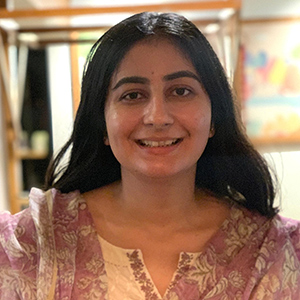

Assistant Professor (German), Centre for Foreign Languages, Office of English & Foreign Languages,
Email: payal.kumari@ jgu.edu.in
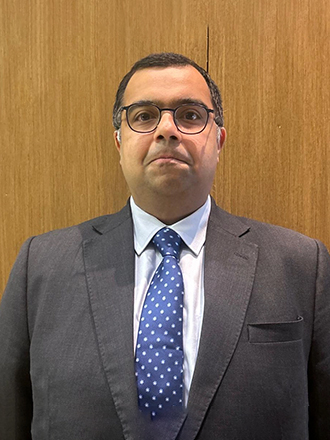
Associate Professor and Deputy Director, IDEATE Labs & Family Business Centre

Researcher: Dr Prachy Hooda (Assistant Professor, IDEAS, JGU)
Abstract:
This project approaches sport in Haryana through the lens of representation, inclusion, access and its democratic possibilities. It examines whether sport can be seen as a democratic space of (social and economic) mobility and recognition especially for the subaltern. By focusing on the lives, careers and experiences of Dalit Bahujan players, it analyses the role of caste and class in shaping access to opportunities and sporting trajectories. The considerable participation of the marginalised groups in hockey must be understood in terms of the potential of sport to disrupt social hierarchies and how the idea of the sport is itself reshaped by the aspirations of those positioned at the margins.
Researcher(s): Dr. Payal Kumari (Asst Prof, German in Centre for Foreign Languages), and Prof. Dr, Shruti Jain (Professor and Director, Centre for Foreign Languages)
Abstract: This article argues that Generative AI, as it is currently being absorbed into education, does not merely change how we learn — it changes what we count as learning in the first place. Drawing on feminist epistemology, Butlerian performativity, and the philosophy of education, the article develops an epistemological critique of GenAI as a paradigm, not a tool. The central figure is Draupadi, read through feminist performance studies as an epistemic dissenter: her question to the Kaurava court, her dishevelled hair as embodied counter-memory, and the inexhaustible saree as a symbol of cognitive surplus — the generative excess of situated, effortful, embodied human cognition that no probabilistic retrieval system can replicate. The article situates this critique within debates about cognitive offloading, memory, and academic integrity in higher education, with particular attention to language pedagogy.
Researcher(s): Dr Madhumita R Dhupar (Assistant Professor, JSPC, JGU) & Prof Vaishali Raval, Professor (Miami University, Ohio)
Abstract:
This project examines the affective dimensions of acculturation by foregrounding Indian immigrant mothers as “cultural emotion managers” who navigate emotional labor alongside cultural transmission in transnational family contexts. Conducted in collaboration with Prof. Vaishali Raval (Department of Psychology, Miami University, Ohio, USA), the study is situated at the intersection of cross-cultural psychology, emotion socialization, and acculturation theory. It investigates how mothers regulate their own and their children’s emotional experiences while mediating between competing cultural norms, and how culturally embedded “feeling rules” are negotiated and transmitted across generations.
Using a mixed-methods design with a qualitative emphasis, the research integrates in-depth interviews, and quantitative measures of emotion regulation and bicultural identity. By incorporating both maternal and adolescent perspectives, it captures the relational and intersubjective nature of affective transmission. Analytically, interpretative phenomenological analysis and thematic coding are employed to develop typologies of maternal roles. The project advances theory by linking emotional labor with cultural transmission, offering a framework for understanding acculturation as an affectively structured process, with implications for culturally responsive mental health and parenting interventions.
Researcher: Dr. Nayanjyoti (Assistant Professor, IDEAS, JGU)
Abstract:
The research project attempts to make sense of the rapidly changing rubric of folk music production, faced with new digitization models, legal mechanisms of intellectual property regimes, and decision-making power of folk artists in the same. It looks at these changes in production and inheritance, performance, livelihood and appropriation, archiving and transmission of various folk music forms. While all forms of cultural production face new questions with digitization, folk music is uniquely placed in investigating these questions being part of the cultural commons. It also investigates alternative practices which folk artists are engaging with, which attempt to give a larger place to the commons. The conceptualization, research, documentation and analysis of this project is a collaborative process with folk artists from six Indian states.