As societies have become culturally, religiously, and ethnically diverse, the politics of identity has assumed greater importance as well has taken new forms. Given the diverse manifestations of identity politics in today’s time, this particular constellation aims to draw insights from different disciplines like history, sociology, political science, philosophy, and economics to explore and understand the ever-evolving field of politics, its impact on issues vital to society and their roots in historical processes. Adopting a critical social inquiry approach, the constellation research will combine empirical research, theoretical reflection, and archival work to problematise ideas and raise questions pertaining to the political.
Associate Professor, Jindal School of International Affairs
In the run-up to the 2024 elections, the Bharatiya Janata Party-led government has made conscious political outreach to Pasmanda Muslims, who constitute 85 percent of the Muslim population in India. With an eye on backward Muslims, the BJP planned a sneh (affection) and samman (respect) yatra in the year 2023 highlighting the plight of Pasmanda Muslims and Muslim women. However, these overtures belie the everyday violence that underpins the demonisation of Muslims by the majoritarian government, with the majority of victims belonging to the Pasmanda community, whether lynching, demolition of properties, or incarceration.
Highlighting the issue of disproportionate violence inflicted on Pasmanda Muslims, the All India Pasmanda Muslim Mahaz report Bihar Caste Survey 2022-2023 and Pasmanda Agenda stated, “Ninety-five per cent of the victims of mob lynching and excesses by government bulldozers belong to the Pasmanda community.” This contradiction complicates the categories of caste and religion in the (Indian) Muslim context. This study aims to explore the interplay of caste and religion in the backdrop of Hindu majoritarian politics that produces Muslims as a homogenous category while at the same time projects itself as the messiah of the backward Muslims in its politics of exclusion and (mis)representation.
Through ethnographic fieldwork in the Muslim-dominated Rampur district of Uttar Pradesh, where BJP won in civic polls, this study will investigate how Pasmanda Muslims reconcile with BJP’s duplicitous politics that promises to empower them on the one hand and systematically targets them on the other.
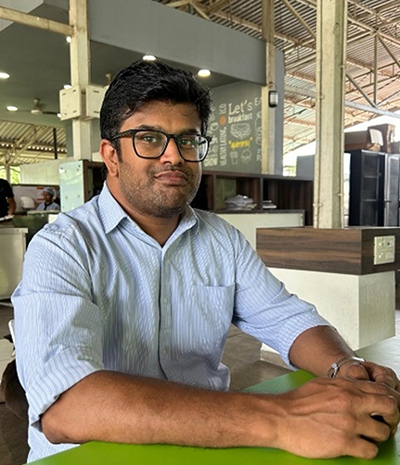
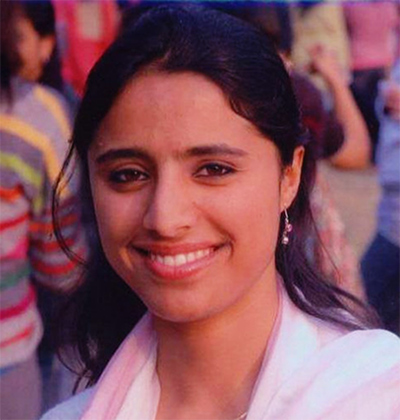
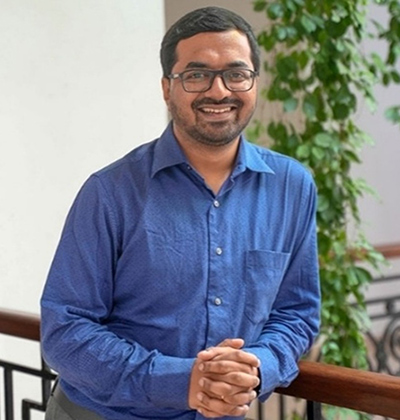
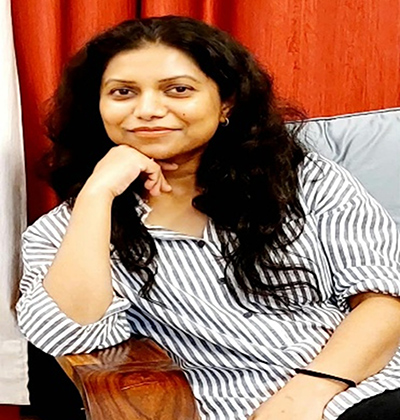
Ambreen Agha, Swapnil Dhanraj,Tahiba Banu
The intersection of religion and politics remains a perennial feature of postcolonial societies. In recent times, the nature of West Asian politics has been described as having shifted to an era of post-Islamism, particularly in the aftermath of what have been deemed ‘failed experiments’ in the case of the Muslim Brotherhood in Egypt and even the partial success of Ennahda in Tunisia. The discourse on the intersection of religion and politics itself has been limited to the Orientalist perceptions of specific movements. Yet looking beyond the Western prism of narrowly defined ‘isms’, religion continues to pervade social life, and thereby political life. What has shifted is the nature of the engagement, participation and influence, as well as the attitudes of states and political elites. This has led to a far more complex set of intersectionalities between religion, state, polity and society, which need to be urgently interrogated. This project explores two aspects of the intersections of religion and politics with reference to political Islam in WANA. First, it seeks to examine the role of religion beyond positivist approaches as a far more expansive set of phenomena. And second, it examines the shifting landscapes of political Islam in contemporary politics, focusing on ideas, ideologies, actors and cultural manifestations which continue to shape and impact public life and inform politics directly and indirectly. The study argues that political Islam must be understood as a spectrum of thought that operates across political, social and cultural domains, and that its influence and role expands beyond the binaries of religious-secular debates that have dominated public discourse particularly since the Arab Uprisings of 2011. This project brings critical studies perspectives to examine notions of belonging, unbelonging and agency in contemporary politics. By bringing in a focus on newer resources, marginalized epistemes and unconventional archives along with conventional and mainstream approaches, this project will bring a nuanced study of these themes and the theoretical concepts as well as praxis emerging from them.
By Dr. Priyanka Chandra
In recent years, the role that emotions play in public life has taken center stage in debates and discussions around the rise of populist leaders across the world. These debates have delved into the productivity and counter-productivity of anger as well as relating it to ‘dialogical politics’.
In the philosophical traditions, anger has been relegated from the political sphere, which is primarily identified with “reason.” This dichotomy of reason and emotion is further problematized with the rise of right-wing populist parties that employ emotions and feelings of fear, anxiety, powerlessness, and anger in their political rhetoric. For anger to be channelized, political parties create an internal or external “enemy.”
However, anger is not monolithic. Understood as a political emotion, anger is a heterogeneous expression—an ongoing dialectical process that is both individual and collective, historical and social. This paper aims to conceptualize anger both as an expression of resentment that is mobilized by populist parties and an expression of resistance from below that challenges the dominant political narrative and hegemonic ideologies.
In doing this, the paper will explore the manipulation and mobilization of resentment into collective political anger by conservative parties and the existence of resistance movements to the exclusionary politics that comes with the resurgence of conservative politics, globally.
Ambreen Agha
27th March, 2026
26th February, 2026
August 21: Muslims in Postcolonial Bollywood
Ambreen Agha & Aejaz Ahmad Wani