Ph.D. (Vrije Universiteit Amsterdam)
MA in Social Work (Tata Institute of Social Sciences)
BA in Tourism Studies (Indira Gandhi National Open University)
Assistant Professor, Assistant Dean – Academic Affairs and Director – Online Learnings
| abdul.azad@jgu.edu.in | |
| Connect with me | |
| Key Expertise | Human Development, Capability Approach, Global Health Ethics, Global Health, Human Rights, Citizenship, Transdisciplinary Research |
Ph.D. (Vrije Universiteit Amsterdam)
MA in Social Work (Tata Institute of Social Sciences)
BA in Tourism Studies (Indira Gandhi National Open University)
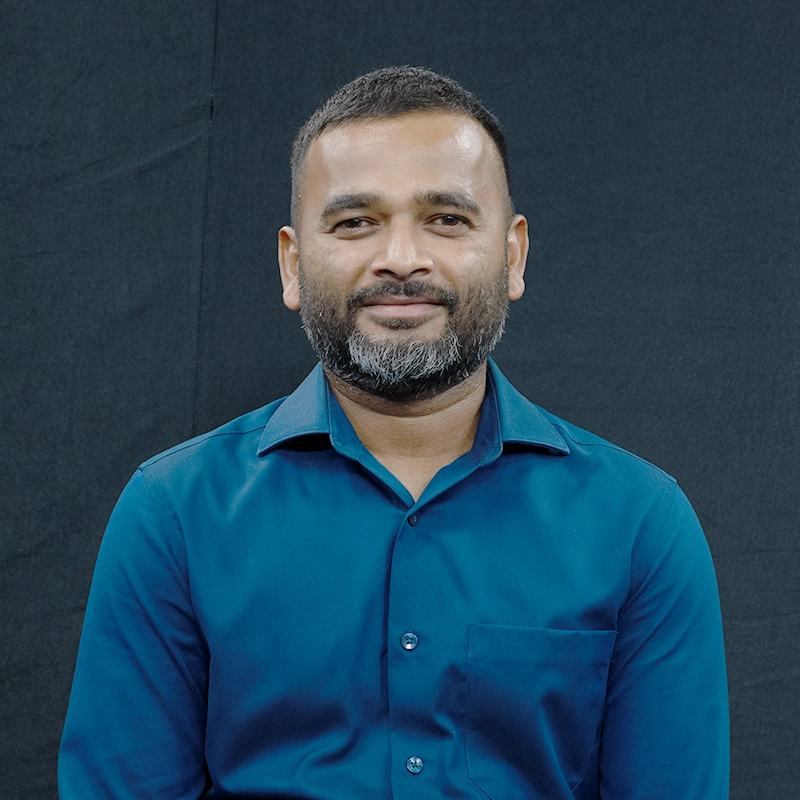
Abdul Kalam Azad is an Assistant Professor at the Jindal School of Public Health (JSPH) at O.P. Jindal Global University (JGU). Azad is an activist scholar dedicated to transdisciplinary research and transformative practices through knowledge co-creation. His work centers around issues of epistemic justice, resilience, human rights, and well-being.
At JSPH, he leads the MSc Global Health and Human Development programme. He previously worked as a postdoctoral fellow in the Global Health Division at Athena Institute, Vrije Universiteit Amsterdam. At Athena, he led the development and formative evaluation of consensus-building methodology to address medical desertification in Europe in the “Action for Health and Equity: Addressing Medical Deserts” project funded by the European Commission.
He serves as an Advisory Board Member at the Centre for Applied Human Rights, University of York, supporting its Protective Fellowship for Human Rights Defenders, and as a core committee member of the Pathways to Just Peace Small Grants Program, run by Division 48 of the American Psychological Association.
Foundations in Global Health and Human Development
This course introduces students to the conceptual and historical foundations underpinning the fields of global health and human development. Beginning with an orientation to core debates and definitions, the course traces the historical evolution of global health as a field of inquiry and practice, before turning to key theoretical frameworks—most notably the Capabilities Approach—that inform contemporary understandings of human development and well-being. The course also explores the relationship between health and economics, and traces the trajectory from the Alma-Ata to Astana Declarations, unpacking shifts in primary health care over four decades. The latter half of the course deepens engagement with the Capabilities Approach through its intersections with equity and justice, democracy and political participation, culture, and religion, examining how each shapes the capability to be healthy. The course concludes by considering the implications of these frameworks for public policy. This course equips students with conceptual tools to critically analyze global health as a development issue.
Global Health Ethics
This course introduces students to the ethical foundations and contemporary critical debates shaping the field of global health. It begins by establishing core concepts in ethics and tracing the history and principles of bioethics, before examining the international frameworks that guide ethical practice in global health today. The course then turns to a sustained engagement with colonialism, exploring its historical entanglement with the development of science and tracing the ways coloniality continues to structure global health practice, knowledge production, and institutional power. Students critically examine the ethical concerns raised by emerging health technologies, as well as the ongoing project of decolonising global health, including debates around the gentrification of thought and the role of philanthrocapitalism in shaping research and funding agendas. The course concludes by considering decolonial praxis and by reimagining what an ethical global health might look like in an age of political, technological, and epistemic flux.
Global Mental Health at JGU
This course aims to provide a comprehensive understanding of global mental health using a human development approach. Taking inspiration from the Lancet Commission on Sustainable Development Goals (SDGs) and Mental Health this course acknowledges the collective failure to respond to the global health crisis as a monumental loss of human capabilities. This course endeavors to equip the students with the necessary knowledge and skills to contribute positively in this field to alleviate suffering and contribute to realizing better human potential. The course explores various aspects of global mental health, including the socio-structural determinants of mental health disparities, inclusive policies, and evidence-based interventions.
Health and Human Rights at JGU (Co-teaching with Prof. Stephen P. Marks)
This is a core course for MPH students at Jindal School of Public Health and Human Development. This course aims to introduce students to applying human rights and ethical frameworks to a wide range of critical areas of public health. The focus is on the human rights and ethical perspectives applied to selected public health policies, programs, and interventions. It ranges broadly over theoretical approaches and concrete issues relating to the realization of internationally recognized human rights in the context of domestic and international policies of public health and human rights engagement. Our aim is to acquire insights and understanding of social, economic, cultural, legal, and political processes by which human rights complement the ethics approach and advance public health objectives.
Research Methods at JGU (Co-teaching with Prof. Nandita Bhan)
This is a core course for MPH students at Jindal School of Public Health and Human Development. This course provides students with an overview of research methods and undertaking research in public health and development. Over the coursework, students will develop an understanding of research, methodologies, ethics, and study development and work as an intervision group on developing a research proposal. The course is crucial for students in being able to undertake their research either through internships or dissertations, as well as for their careers in public health and related studies.
Models of Qualitative Inquiries at JGU (Co-teaching with Dr. Sambuddha Choudhury)
This is a core course for MPH students at Jindal School of Public Health and Human Development. This course provides students with an overview of research methods and undertaking research in public health and development. Over the coursework, students will develop an understanding of research, methodologies, ethics, and study development and work as an intervision group on developing a research proposal. The course is crucial for students in being able to undertake their research either through internships or dissertations, as well as for their careers in public health and related studies.
Grant Writing and Ethics in Global Health at VU Amsterdam
This is a mandatory course for the global health research master’s program. The student will gain insight into designing competitive transdisciplinary research proposals, understanding financing mechanisms and appraisal processes, composing research consortia, and addressing ethical issues in global health research. They will develop reasoning skills for ethical reflection, preparing them to contribute effectively to scientific grants and promote ethical practices in research and practice
International Public Health at VU Amsterdam
This is an elective course for 2nd and 3rd-year health and life sciences students. The main objective of the course is to enable the students to explain and discuss basic notions related to the main public health issues transcending national borders and to health systems-related issues and social-cultural and political dynamics impacting the health of people in various regions of the world.
International Public Health (Biomedical Sciences) at VU Amsterdam
This is also an elective course for 2nd and 3rd-year biomedical sciences students. This is course is also open for international students.The main objective of the course is to enable the students to explain and discuss basic notions related to the main public health issues transcending national borders and to health systems-related issues and social-cultural and political dynamics impacting the health of people in various regions of the world.
Key Strategies in Disability and Neuropathy at VU Amsterdam
This is an elective course for the global health minor program. This course aims to deepen students’ understanding of disability and neuropathy by exploring diverse models and perspectives. They will analyze causes, consequences, interventions, and ethical considerations. Reflective practice, research skills, and community engagement will be fostered, preparing students to contribute to the field with empathy and informed perspectives.
Jerry Lockspeiser Award for Social Justice, granted by the Centre for Applied Human Rights, University of York, United Kingdom for Gender Justice work with the women living in river islands in Assam, India.
Project Title: Experiential Learning in Higher Education
Role: Co-Investigator
Funding Agency: University of Leeds, UK
Project Title: Feasibility Study of a Technology-assisted Buddy System for Improvement of DOTs Adherence among Homeless TB Patients in New Delhi.
Role: Principal Investigator
Collaborators: Athena Institute, VU Amsterdam, and Digital Empowerment Foundation, New Delhi
Project Title: Achieving Sustainable Development through Women’s Empowerment: A Case Study of char-women in Assam
Role: Principal Investigator
Funding Agency: Center for Applied Human Rights, the University of York
Year: 2022-2023
Project Title: Action for Health and Equity: Addressing Medical Deserts – or AHEAD
Role: Principal Investigator (Work Packages 3 and 5)
Funding Agency: European Union
Year: 2022-2023
Project Title: Increasing Access to Healthcare for Undocumented Migrants in Amsterdam
Role: Principal Investigator
Funding Agency: VU Foundation
Year: 2022
Project Title: Reimagining citizenship: The politics of India’s amended citizenship laws
Role: Co-Investigator
Funding Agency: Arts and Humanities Research Council, UK
Year: 2021-2022
Project Title: Understanding the NRC Process: Social workers and community perspectives
Role: Co-Investigator
Funding Agency: University of Toronto
Year: 2020-2021
Project Title: Opportunity for drowning reduction and aquatic disaster preparedness in India
Role: Site Investigator
Funding Agency: Life Boat Foundation
Year: 2018
Project Title: Citizenship Laws in India
Role: Research Partner
Funding Agency: University of California Berkeley
Year: 2020-2021
Project Title: Making and Unmaking of Citizens in Assam
Role: Research Associate
Funding Agency: University of Warwick
Year: 2019
| abdul.azad@jgu.edu.in | |
| Key Expertise | Human Development, Capability Approach, Global Health Ethics, Global Health, Human Rights, Citizenship, Transdisciplinary Research |