
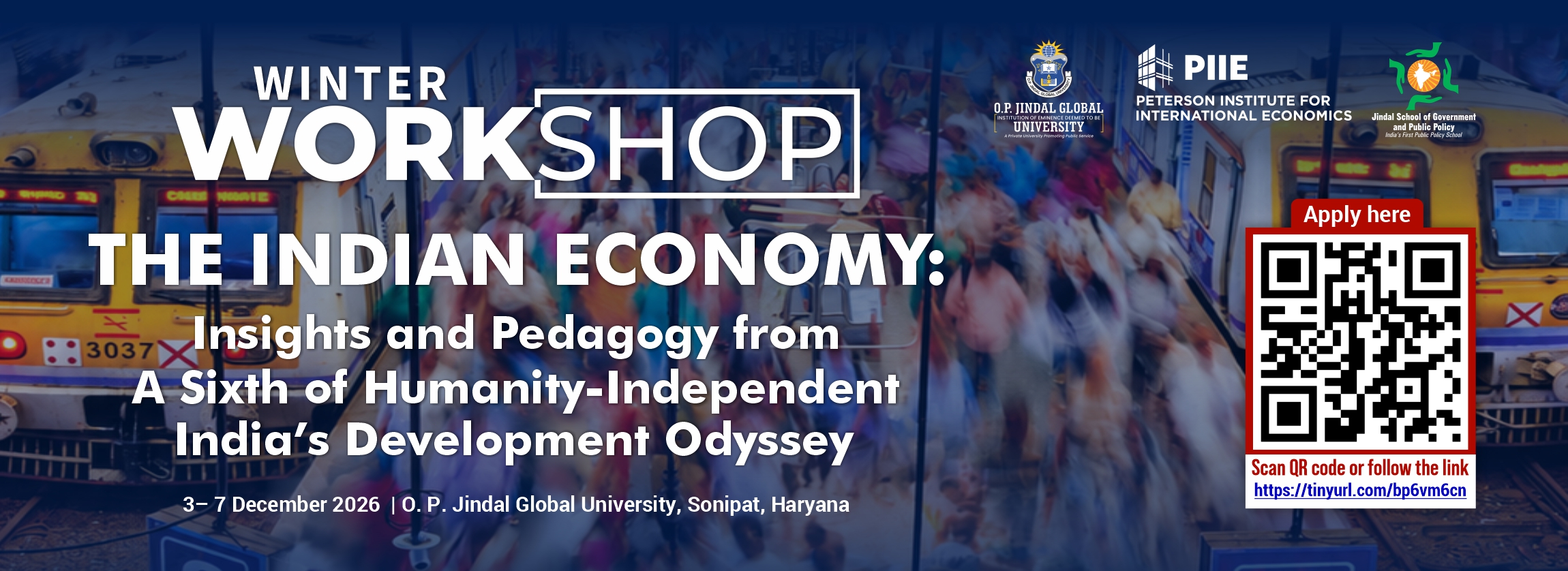
A Winter Workshop on the Indian Economy, led by Devesh Kapur and Arvind Subramanian
About the Winter Workshop
For a country that is home to a sixth of humanity, India’s economic story deserves better than the fragments in which it is usually taught and understood. This winter workshop, jointly convened by the Jindal School of Government and Public Policy at O.P. Jindal Global University and the Peterson Institute for International Economics, Washington, DC, sets out to close that gap.
The programme takes as its point of departure A Sixth of Humanity: Independent India’s Development Odyssey, the Financial Times Book of the Year for 2025, co-authored by Devesh Kapur and Arvind Subramanian. Over five days at the Jindal campus, the two authors will deliver ten lectures tracing India’s development path from the founding of the republic to the present, covering state-building, growth, nation-building, and the pathologies that continue to shape policy choices today. Each morning’s lectures are followed by an afternoon workshop, led by the authors and by a set of policy researchers and practitioners, in which participants engage directly with data, empirical methods, and, where relevant, AI tools.
The workshop is not conceived as a passive lecture series. Its ambition is threefold: to deepen participants’ understanding of the Indian economy as a connected whole rather than a set of isolated topics, to strengthen how that economy is taught in university classrooms, and to seed new research by exposing participants to primary data sources and the analytical tools now available to work with them.
Over five days, participants will accumulate 30 hours of direct interaction with the resource persons, earning the equivalent of two academic credits for those enrolled in degree programmes. Enrolment is capped at 100, selected through a competitive process from among undergraduate and graduate students and university faculty across India.
Learning Objectives
- Develop a systematic understanding of the trajectory of the Indian economy since independence, from the initial conditions of the 1950s to the challenges of the present.
- Engage directly with the empirical and conceptual apparatus set out in A Sixth of Humanity, including its treatment of state-building, growth, and nation-building as interlinked rather than separate processes.
- Acquire working fluency in the principal Indian statistical sources, including what they measure well and where they mislead.
- Learn how AI tools can be used responsibly in economic research and incorporated into university teaching.
- Initiate original research on a specific issue in the Indian economy, carried forward from the application essay into further work after the workshop.
Key Highlights
Pedagogic Structure
The workshop follows a simple structure, repeated each day across five days. Two lectures, each two hours long, are delivered every morning by Devesh Kapur and Arvind Subramanian, moving sequentially through the arguments of A Sixth of Humanity: state-building, growth, nation-building, and the pathologies that now confront Indian policy. A two-hour workshop follows in the afternoon, led on different days by the authors and by other resource persons, including policy researchers and practitioners, covering topics ranging from the data resources available for analysing the Indian economy to the use of AI in research and pedagogy.
Over the five days, this amounts to 30 hours of live interaction with the resource persons. The intent is that the lectures and workshops reinforce one another: the mornings build the argument, the afternoons show how it is built.
Eligibility
The winter workshop is open to:
- Undergraduate students in their third or fourth year of study in Economics or Philosophy, Politics and Economics (PPE)
- Master’s students in Economics or Public Policy
- First or second-year PhD scholars working on topics related to the Indian economy
- Faculty teaching Indian Economics or Development Economics
Application Process
Admission to the workshop is competitive and capped at 100 participants, with 70 places reserved for students and 30 for faculty members. Applicants are required to submit an essay of 800 to 1,000 words on a specific issue in the Indian economy, with references in APA style and any use of AI tools explicitly acknowledged, along with a nomination letter from their college/university.
Applications close on 25 October 2026, and selected participants will be informed by 5 November 2026. Limited travel support is available, and outstation participants will be provided with shared on-campus accommodation. All participants who complete the programme will receive a certificate

Faculty and Resource Persons
Led by the Authors
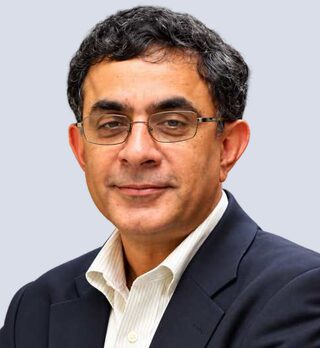
Devesh Kapur
Starr Foundation Professor of South Asia Studies, Johns Hopkins University, Baltimore
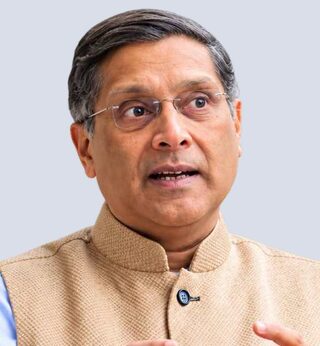
Arvind Subramanian
Senior Fellow, Peterson Institute for International Economics (PIIE), Washington, DC.
Workshop Resource Persons
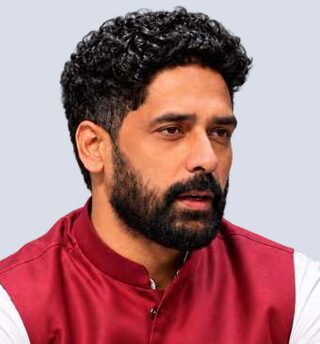
Abhishek Anand
Managing Director, Insignia Policy Research and Visiting Fellow, Madras Institute of Development Studies, India
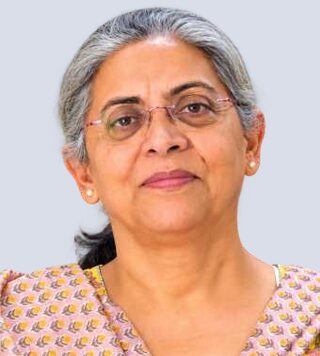
Rukmini Banerji
Senior Advisor Pratham Education Foundation
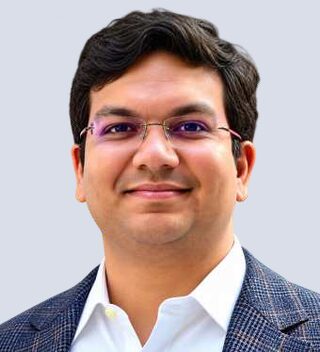
Shoumitro Chatterjee
Assistant Professor, International Economics, Johns Hopkins University, Baltimore
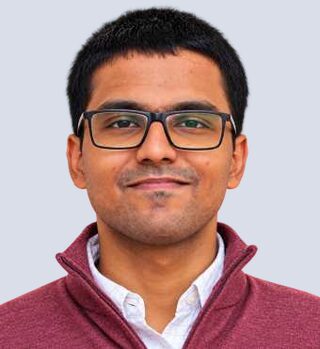
Vagesh Rai Goud
Lead Researcher, A Sixth of Humanity: Independent India’s Development Odyssey
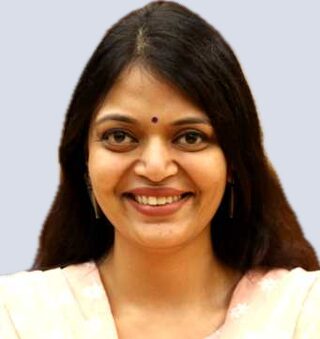
Mrinalini Jha
Professor, Jindal School of Government and Public Policy and Director, Jindal Institute of Haryana Studies O.P. Jindal Global University, India
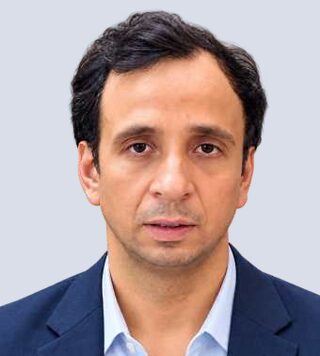
Navneeraj Sharma
Economist
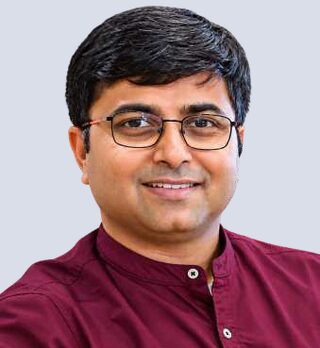
Naveen Joseph Thomas
Professor and Executive Dean, Jindal School of Government and Public Policy, O.P. Jindal Global University, India
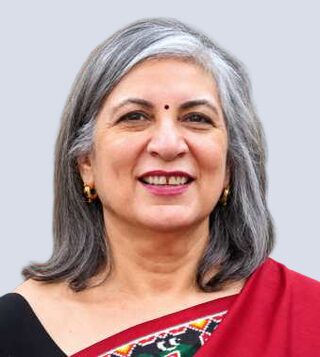
Wilima Wadhwa
Director, ASER Centre, Pratham Education Foundation
Programme Schedule
DAY 1 — THURSDAY, 3 DECEMBER 2026
Lecture 1: India in Development
Lecture 2: State-building
Workshop 1: GDP Measurement: Issues and Insights
DAY 2 — FRIDAY, 4 DECEMBER 2026
Lecture 3: Growth, the Fiscal State and Globalisation I
Lecture 4: Growth, the Fiscal State and Globalisation II
Workshop 2:
Part 1: Data for Development: Lessons from India’s Economic Odyssey
Part 2: Policy Making at the Centre and the States
DAY 3 — SATURDAY, 5 DECEMBER 2026
Lecture 5: Growth, the Fiscal State and Globalisation III
Lecture 6: Nation-building and India’s Indias I
Workshop 3: AI in Research and Pedagogy I
DAY 4 — SUNDAY, 6 DECEMBER 2026
Lecture 7: Nation-building and India’s Indias II
Lecture 8: State Capitalism in Business and Banking
Workshop 4: AI in Research and Pedagogy II
DAY 5 — MONDAY, 7 DECEMBER 2026
Lecture 9: Looking Back
Lecture 10: Pathologies and Looking Ahead
Workshop 5:
Part 1: Beyond Enrolment: Measuring Learning in India
Part 2: Open session with workshop resource persons
About the Organisers
Jindal School of Government and Public Policy (JSGP)
JSGP is one of twelve schools at O.P. Jindal Global University in Sonipat, Haryana, an institution designated an Institute of Eminence by the Government of India. Established in 2012, JSGP has pioneered public policy and economics education in India, offering undergraduate, graduate, and doctoral programmes across public policy, economics, and governance. The school engages with the contemporary policy environment through interdisciplinary studies, teaching, and research, and works to develop a comparative perspective on local and global policy issues.
Peterson Institute for International Economics (PIIE)
PIIE is an independent, nonpartisan research organisation dedicated to strengthening prosperity and human welfare in the global economy through expert analysis and practical policy solutions, based in Washington, DC. Founded in 1981 and led since 2013 by President Adam S. Posen, the Institute anticipates emerging issues and provides rigorous, evidence-based policy recommendations through a team of more than 50 internationally recognised economists and policy scholars, including Arvind Subramanian, a Senior Fellow at the Institute.